Pharmacogenetic Testing: How Your Genes Affect Your Medicines
When you take a pill, your body doesn’t treat it the same way as everyone else’s. That’s because of pharmacogenetic testing, the science of how your genes influence how your body processes drugs. Also known as genetic drug testing, it’s not science fiction—it’s already changing how doctors choose medications for heart disease, depression, pain, and cancer.
Your DNA holds clues about whether a drug will work for you, cause side effects, or even be dangerous. For example, some people have a gene variant that makes them break down blood thinners like warfarin too slowly, raising the risk of dangerous bleeding. Others have a version that turns codeine into morphine too fast, leading to life-threatening breathing problems. These aren’t rare cases—they’re common enough that labs now routinely test for them before prescribing. gene-drug interactions, the biological link between specific genes and how drugs behave in the body are behind many of the side effects patients experience. And personalized medicine, tailoring treatment based on individual genetic, environmental, and lifestyle factors isn’t just a buzzword anymore. Hospitals and clinics are starting to use this data to pick the right drug at the right dose from day one.
It’s not about predicting disease. It’s about predicting response. A drug that works wonders for one person might do nothing—or cause harm—for another, simply because of their genetic makeup. That’s why pharmacogenetic testing is becoming part of routine care for conditions like depression, where 70% of patients don’t respond to their first antidepressant. It’s why cancer centers test for specific mutations before giving chemotherapy. And it’s why some pharmacies now offer free genetic screening with certain prescriptions. You don’t need to be sick to benefit. Even if you’re on a common drug like statins or aspirin, your genes could be telling your body to react in ways your doctor never knew.
What you’ll find below are real stories and practical guides from people who’ve been there—how to interpret test results, when to ask your doctor for testing, what to do if your insurance won’t cover it, and how genetic data connects to everyday meds like blood pressure pills, painkillers, and antidepressants. This isn’t theory. It’s about making your next prescription work better, safer, and faster.
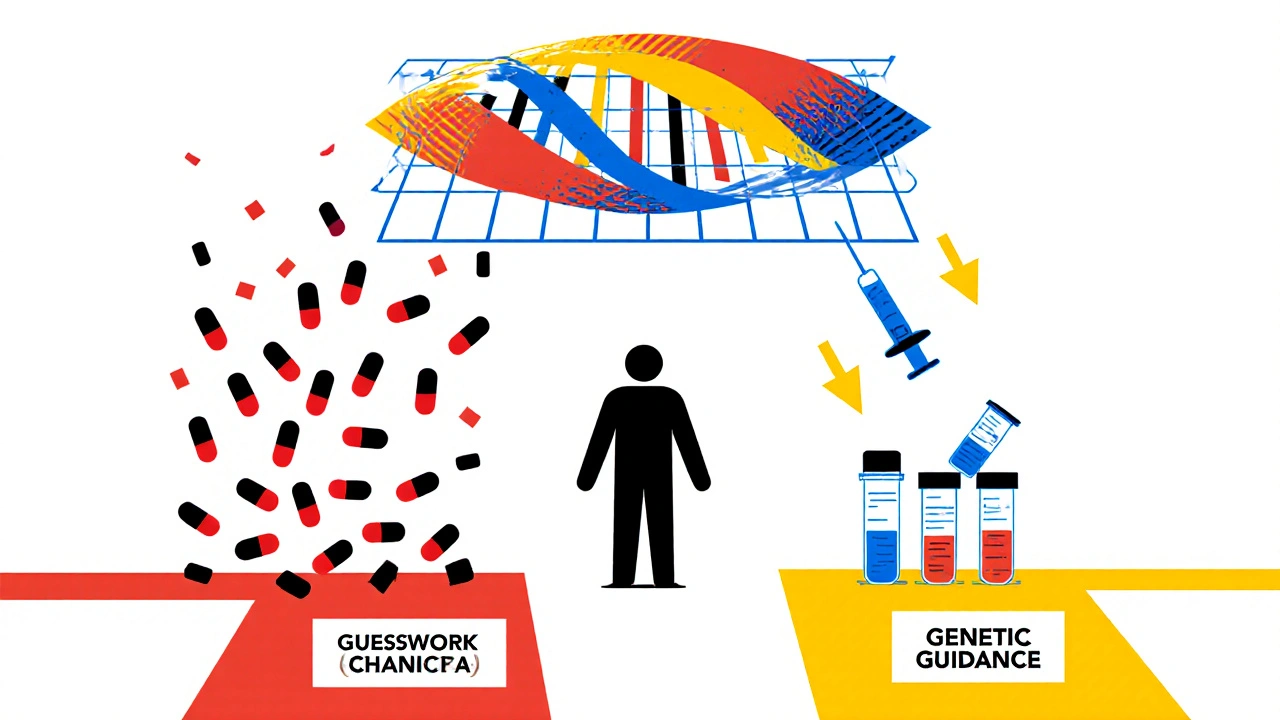
Pharmacogenetic testing uses your DNA to predict how you'll respond to medications, preventing dangerous side effects before they happen. Studies show it cuts adverse drug reactions by 30%.