Medication Side Effect Assessment Tool
Side Effect Assessment Form
Every time you start a new medication, there’s a quiet moment of uncertainty: Is this side effect normal, or should I be worried? You might feel drowsy after your antidepressant, have a dry mouth from your blood pressure pill, or get stomach upset from metformin. It’s easy to assume these are just part of the deal - and sometimes, they are. But other times, ignoring them can lead to serious problems. The line between tolerating a side effect and demanding a change isn’t obvious. And that’s exactly why so many people end up stopping their meds entirely - or suffering in silence.
Not All Side Effects Are Created Equal
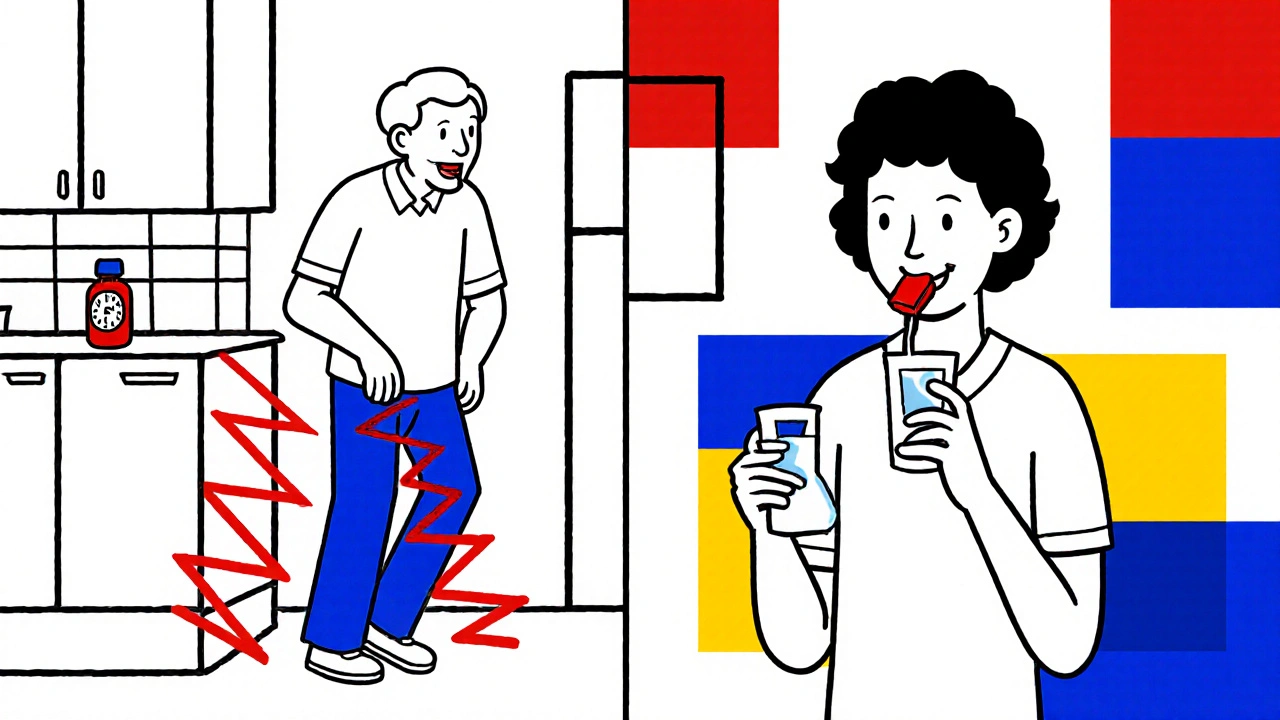
The Food and Drug Administration (FDA) defines side effects as unintended responses to medications at normal doses. But not all unintended responses are the same. Some are mild, temporary, and harmless. Others are dangerous, persistent, or signs of something worse. Take dry mouth. It’s one of the most common side effects, especially with antipsychotics and some antidepressants. Around 60% of people on these drugs report it. But if it’s just a bit of discomfort - you’re drinking more water, chewing sugar-free gum, and it’s not affecting your sleep or eating - it’s usually safe to manage on your own. The beMedWise program says this kind of mild symptom (rated 1-3 on a 10-point scale) often improves without changing your dose. Now compare that to dizziness that makes you wobble when you stand up. If you’re 70 and taking blood pressure meds, and you’ve started falling near the kitchen counter, that’s not normal. The American Heart Association says any side effect that affects your mobility, balance, or ability to do daily tasks should be addressed immediately. Dizziness isn’t just annoying - it’s a fall risk. And falls in older adults can mean hospitalization, fractures, or worse. Same goes for nausea. If you’re on antibiotics and feel queasy for the first two days, eating a small protein snack before your pill might fix it. That’s what one 62-year-old patient did - reduced her nausea from five times a day to just one or two. But if the nausea turns into vomiting, or you start seeing black stools or blood in your vomit? That’s not a side effect. That’s gastrointestinal bleeding. The National Institute on Aging says this happens in 0.5-1% of NSAID users each year, and it’s an emergency.When It’s Okay to Wait It Out
Some side effects are like a bad first impression. They show up early, stick around for a week or two, then fade. The body adjusts. Drowsiness from SSRIs or SNRIs is a classic example. About 35-40% of people starting these antidepressants feel tired in the first week. But Dr. Sarah Johnson’s 2022 study found that in 70% of cases, the drowsiness lifts by day 7-10. If you’re taking it in the morning and it’s dragging you down, try moving your dose to bedtime. The FDA’s Patient Communication Network found that 30-40% of people who made this simple switch saw their sleepiness vanish. Weight gain from mood stabilizers or certain antidepressants like mirtazapine? It happens in 25-30% of users. If you’re treating treatment-resistant depression, and the medication is finally lifting your mood after years of trying others, a few extra pounds might be worth it. The beMedWise program says this is one of the clearest cases for accepting a side effect - when the benefit is life-changing and the side effect is manageable. Even mild headaches, occasional constipation, or slight tremors can fall into this category - if they’re not getting worse and don’t interfere with your life. But here’s the catch: you need to track them.When You Must Act - Right Away
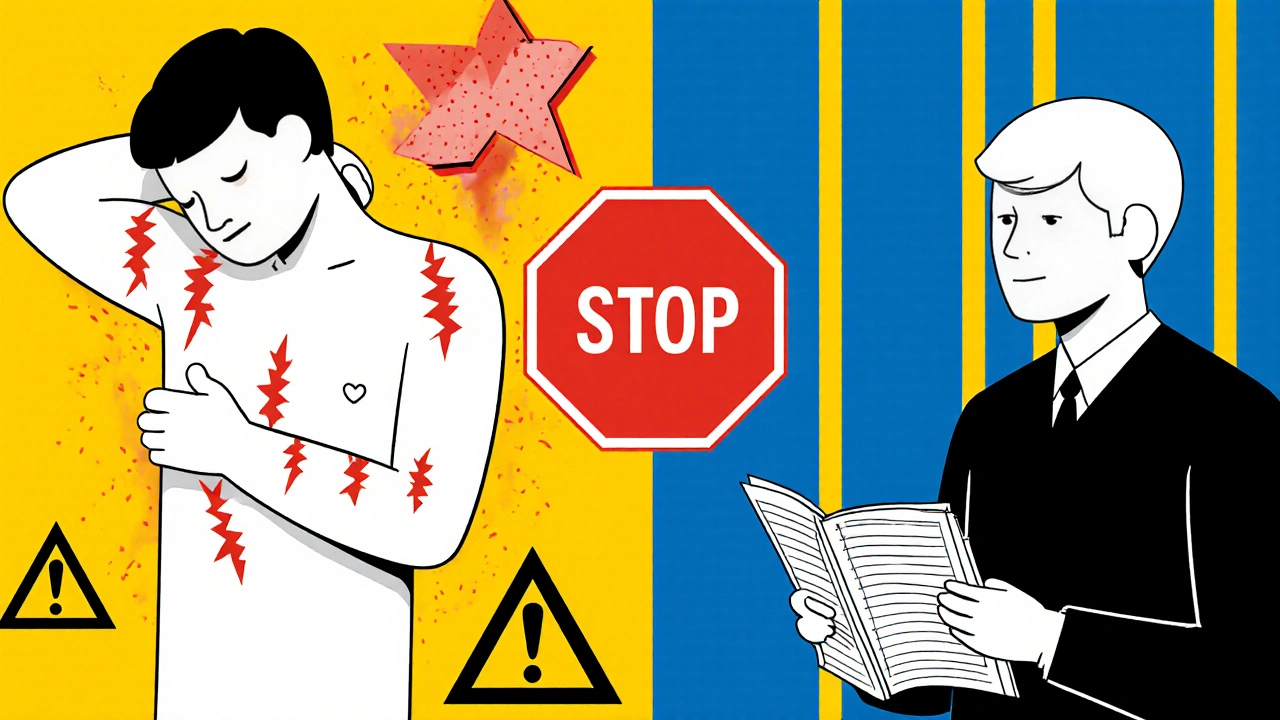
There are side effects that aren’t just uncomfortable. They’re red flags. If you develop hives, swelling in your face or throat, or trouble breathing after taking a new pill? Call 911. These are signs of anaphylaxis. The FDA’s adverse event database shows these occur in 1-2% of new medication starts. They don’t wait for you to “see how it goes.” Same with neurological symptoms. Confusion, memory lapses, trouble walking, or sudden slurred speech - especially if you’re over 65 and on multiple meds - are warning signs of drug interactions or toxicity. The CDC’s 2022 alert says these require immediate evaluation. Elderly patients are especially vulnerable. One study found that 5-7% of seniors on three or more medications develop these symptoms, and half of them didn’t realize it was drug-related until they ended up in the ER. And then there are the black box warnings. These are the FDA’s strongest alerts. Allopurinol, used for gout, carries one for severe skin reactions. A rash might seem minor - but in 0.1% of cases, it turns into Stevens-Johnson syndrome, a life-threatening condition. The FDA says: stop the drug at the first sign of rash and get to a doctor. Don’t wait for it to get worse. Don’t hope it’s “just a bug.” If it’s sudden, severe, or unusual - act.
How to Track Side Effects So Your Doctor Actually Listens
Most people tell their doctor: “I feel weird.” That’s not helpful. Dr. Michael Chen at Johns Hopkins found that patients who track side effects with details are 4.2 times more likely to get the right fix. So how do you do it? Start a simple log. Write down:- What side effect you felt (e.g., “nausea,” “tremor,” “rash”)
- When it started (e.g., “Day 3 after taking the pill”)
- How bad it was (1-10 scale)
- What you were doing when it happened (e.g., “after breakfast,” “when standing up”)
- Did it get better or worse?
- Did anything help? (e.g., “ate crackers,” “took with food”)
What to Ask Your Doctor
You don’t have to figure this out alone. But you need to ask the right questions. The National Institute on Aging recommends these three:- Is this side effect expected with this medication?
- What’s the timeline for it to go away?
- What specific signs should make me call you or go to the ER?
What Not to Do
The biggest mistake? Stopping your medication because you don’t like the side effect. The CDC’s 2023 adherence survey found that 28% of patients quit their meds because of side effects. And in 73% of those cases, their original condition got worse - depression returned, blood pressure spiked, seizures came back. Another common error? Assuming all side effects are the same across people. Just because your friend had a rash on lamotrigine doesn’t mean you will. Or that you should stop it just because you read about it online. Reddit threads from the r/medication community show that 65% of users try to handle side effects alone before calling their doctor. And 42% of those ended up in worse shape - because they misjudged the risk.It’s Not Just About the Drug - It’s About You
The decision to accept or address a side effect isn’t one-size-fits-all. It depends on:- Your condition: For cancer chemo, nausea and hair loss are expected. For mild anxiety, a headache might not be worth it.
- Your life: If you’re a truck driver and your blood pressure med makes you dizzy, that’s not just inconvenient - it’s dangerous.
- Your options: Is there another drug in the same class with fewer side effects? Can you try a lower dose? Is there a non-drug alternative?
Final Rule: Your Body Talks - Listen
Medications are powerful tools. But they’re not magic. They come with trade-offs. The goal isn’t to avoid all side effects - it’s to make sure the trade-off is worth it. If a side effect is mild, temporary, and doesn’t touch your life - track it, manage it, and give it time. If it’s severe, new, worsening, or interfering with your ability to live - don’t wait. Don’t Google it. Don’t hope it goes away. Call your provider. Write down the details. Be specific. Be clear. Your health isn’t about enduring discomfort. It’s about making smart, informed choices - with your doctor, not against them.Is it normal to feel tired when starting a new antidepressant?
Yes, drowsiness is a common side effect of many antidepressants, especially in the first week or two. About 35-40% of people on SSRIs report feeling sleepy. If it’s mild and improves after 7-10 days, it’s usually okay to wait it out. Try taking the medication at night to reduce daytime drowsiness. If it lasts longer than two weeks or gets worse, talk to your doctor - it could mean the dose is too high or another medication might work better.
Can I stop my medication if the side effects bother me?
No, never stop a medication without talking to your provider first. Stopping suddenly can cause withdrawal symptoms or make your original condition worse. The CDC found that 28% of people quit their meds due to side effects - and 73% of them ended up with a relapse. Instead of stopping, track your symptoms and ask your doctor about alternatives: lower dose, different timing, or a different drug. There’s almost always a better option than quitting.
How do I know if a side effect is serious enough to go to the ER?
Go to the ER if you have: trouble breathing, swelling of the face or throat, hives, chest pain, sudden confusion, memory loss, trouble walking, black stools, vomiting blood, or a rash that spreads quickly. These can signal allergic reactions, internal bleeding, or severe skin reactions. Even if you’re unsure, it’s better to be safe. The FDA’s black box warnings exist for a reason - some side effects become life-threatening fast.
What if my side effect is annoying but not dangerous - like dry mouth?
Dry mouth is very common with many medications, especially antipsychotics and antidepressants. If it’s mild and doesn’t affect your eating or sleeping, you can manage it without changing your meds. Drink more water, chew sugar-free gum, or use a saliva substitute. The beMedWise program says this works for most people. But if your mouth is so dry you can’t swallow or your teeth start hurting, talk to your doctor. You might need a different medication or a prescription mouth rinse.
Why does my doctor ask me to track side effects?
Because vague complaints like “I feel weird” don’t help them help you. When you track details - like when the side effect started, how bad it is (1-10), what helps, and how it affects your day - your doctor can make precise decisions. Johns Hopkins research shows patients who track side effects are 4.2 times more likely to get the right fix. It’s not about being perfect. It’s about giving your doctor the facts they need to adjust your treatment safely.
Are there alternatives if I can’t tolerate the side effects?
Almost always, yes. For every medication, there are usually other options in the same class - or even different classes - with different side effect profiles. For example, if one antidepressant causes weight gain, another might not. If a blood pressure pill causes coughing, there are others that don’t. Your doctor can switch you, adjust the dose, or add a second medication to counteract the side effect. Don’t assume you’re stuck with the first one you tried.
Can lifestyle changes help with side effects?
Yes, and they often work better than people expect. Taking metformin with food cuts stomach upset in 60-70% of cases. Taking a sedating medication at night reduces daytime drowsiness. Drinking water and chewing gum helps dry mouth. Eating high-protein snacks reduces nausea from antibiotics. These aren’t just tips - they’re proven strategies backed by the FDA and the American Heart Association. Talk to your pharmacist or doctor about which ones work for your specific drug.
Comments (12)
hannah mitchell
November 26, 2025 AT 07:37
I started sertraline last month and the drowsiness was brutal at first. Tried taking it at night and boom - no more 2 p.m. naps. Still get a little dry mouth, but I keep a water bottle at my desk and chew gum. Not perfect, but worth it since my anxiety finally chillin’.
Also, side effect tracking? Game changer. I started writing down times and severity in my notes app. My doctor actually had a plan after one visit. Who knew?
Also, never stop meds cold turkey. I saw someone on r/mentalhealth do that with citalopram. Not pretty.
Vanessa Carpenter
November 27, 2025 AT 11:16
Just wanted to say thank you for writing this. I’ve been on gabapentin for nerve pain and the dizziness had me scared to walk to the mailbox. I thought it was just aging - turns out, it was the med. I tracked it for a week, showed my doc the log, and we dropped the dose. Now I can actually stand up without feeling like I’m on a tilt-a-whirl.
Side effects aren’t a badge of honor. They’re data. And you deserve to feel okay.
Mqondisi Gumede
November 29, 2025 AT 08:54
Why do we treat meds like theyre magic pills from the gods when theyre just chemicals that mess with your brain chemistry like everything else. You take a pill you get side effects. Big deal. People used to just deal with shit. Now we need spreadsheets and journals to handle a dry mouth. The system is broken. The meds are not. Stop overthinking and just live
Douglas Fisher
November 30, 2025 AT 20:25
Oh my gosh, YES. I had this exact experience with fluoxetine-dizziness, nausea, brain fog... I thought I was dying. I called my doctor, and she said, ‘Try taking it with a small piece of toast at 8 p.m.’-and within three days, it was like a switch flipped. I didn’t even realize how much I was suffering until it was gone.
Also, the dry mouth thing? I started using Biotene mouthwash and it’s been a lifesaver. Seriously, don’t suffer silently-there are tiny tweaks that make HUGE differences. And please, please, please don’t stop your meds without talking to someone. I’ve seen people spiral.
Also, tracking side effects? I use Google Keep. It’s dumb-simple. But it works.
And also-thank you for mentioning cost. That’s the silent killer.
Ginger Henderson
December 2, 2025 AT 12:53
I mean... I just stopped my meds. It was too much hassle. My doctor said ‘it’s normal’ but I didn’t feel normal. So I quit. Now I’m fine. Sometimes the side effects are worse than the problem.
Bethany Buckley
December 3, 2025 AT 16:53
It’s fascinating how the biomedical paradigm has pathologized the somatic experience of pharmacological intervention, thereby infantilizing patient autonomy under the guise of ‘safety protocols.’ The very act of tracking side effects via Likert-scale logging constitutes a Foucauldian panopticon of self-surveillance, wherein the subject internalizes the physician’s gaze as epistemic authority.
Meanwhile, the commodification of ‘patient engagement’ through apps and digital diaries reduces embodied experience to quantifiable KPIs. Is this healing-or just datafication dressed in empathy?
Also, I use Notion for my med log. It’s aesthetic and has a dark mode. 🌙
Cynthia Boen
December 5, 2025 AT 09:36
This article is so long I got bored. I just googled my side effect and found a Reddit thread that said ‘stop it.’ So I did. My depression came back. Oh well. Maybe next time I’ll read the whole thing before I quit my meds. #sarcasm
Amanda Meyer
December 7, 2025 AT 04:11
I appreciate the nuance here, but I’m concerned about the implicit assumption that all patients have equal access to the resources needed to track side effects, consult specialists, or afford alternatives.
For many, ‘talk to your doctor’ is a luxury. Insurance denials, long wait times, and language barriers make this advice feel tone-deaf. The real issue isn’t patient ignorance-it’s systemic neglect.
That said, the tracking framework is excellent. But it should be paired with structural advocacy-not just individual responsibility.
Jesús Vásquez pino
December 8, 2025 AT 07:55
Okay, but what about when your doctor doesn’t listen? I had a rash after starting lamotrigine. Said it was ‘probably just a reaction.’ I waited two days because I didn’t want to be ‘that patient.’ By day three, it was spreading. ER said Stevens-Johnson. I was in the hospital for 11 days.
Don’t wait. Don’t hope. Don’t trust ‘it’ll go away.’ If it’s weird, it’s weird. Call. Now.
Also, I’m mad that my insurance wouldn’t cover the skin specialist I needed after. But that’s another rant.
vikas kumar
December 8, 2025 AT 23:04
From India here-my uncle was on blood pressure meds and got dizzy. He thought it was just getting old. Fell once, broke his hip. Now he’s on a different med, takes it with dinner, and walks every morning. Simple stuff, but nobody told him.
Also, dry mouth? We use betel leaf chew here. Works better than gum. No sugar, just natural. Might be weird for some, but hey-local wisdom counts too.
Point is: your body speaks. You just gotta learn how to listen. And sometimes, you need someone to help you hear it.
Bea Rose
December 9, 2025 AT 15:16
Stop taking meds if they make you feel bad. It's that simple. You're not a lab rat.
Michael Collier
December 11, 2025 AT 12:58
Thank you for this comprehensive and evidence-based overview. The integration of clinical guidelines from the FDA, CDC, and AHA with patient-centered strategies such as symptom tracking and medication timing represents a paradigm shift in pharmacovigilance.
I would only add that the role of the pharmacist is often underutilized in this process. Pharmacists are trained to identify drug interactions, recommend non-pharmacological mitigations, and provide patient education-often with shorter wait times than physicians.
For those who feel dismissed, consider scheduling a medication therapy management (MTM) session. It’s often covered under Medicare Part D and many private plans.
Ultimately, the goal is not to eliminate side effects, but to optimize therapeutic outcomes through informed, collaborative decision-making.