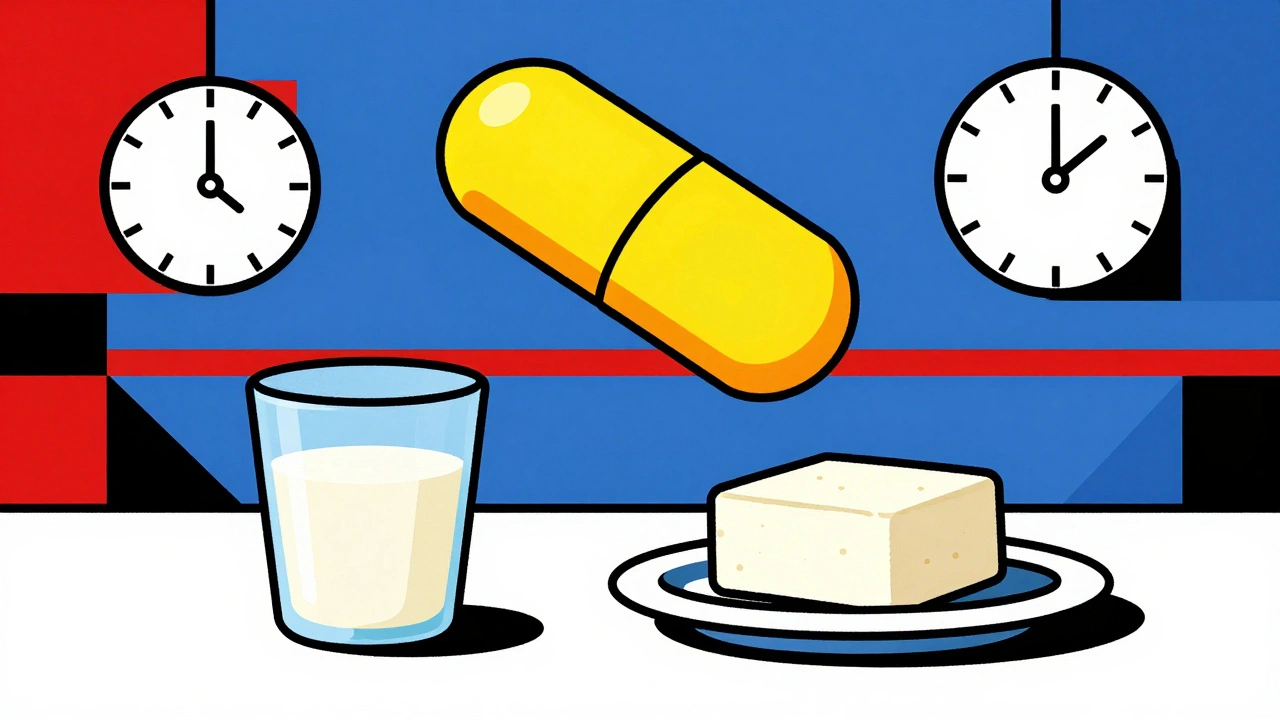
Levothyroxine-Soy Timing Calculator
Levothyroxine absorption can be reduced by 20-40% when taken with soy products. To ensure proper absorption, you should avoid soy for at least 3-4 hours after taking your medication.
How this works: Enter your levothyroxine dose time below. We'll calculate the earliest safe time you can consume soy products like soy milk, tofu, or edamame.
Your safe soy consumption time:
--:--
3 hours until next meal
When you’re taking levothyroxine for hypothyroidism, what you eat can make a real difference - not just in how you feel, but in whether the medicine works at all. One of the most common but overlooked culprits? Soy. It’s in everything: soy milk, tofu, edamame, protein bars, even some breads and sauces. And if you’re consuming it around the time you take your thyroid pill, you might be unknowingly blocking your body from absorbing the medication properly.
How Soy Interferes with Levothyroxine
Levothyroxine is a synthetic version of the thyroid hormone T4. Your body needs it to regulate metabolism, energy, temperature, and brain function. But for the pill to work, it has to be absorbed in your small intestine. Soy contains compounds called isoflavones - mainly genistein and daidzein - that bind to levothyroxine in your gut. This binding stops the hormone from entering your bloodstream the way it should. Studies show this interference can reduce absorption by 20% to 40%. In one 2021 review analyzing 63 studies, researchers found that when soy was taken at the same time as levothyroxine, the peak level of hormone in the blood dropped by 22.4%, and the total amount absorbed over time fell by nearly 19%. That’s not a small drop. For someone already struggling with low thyroid function, it can mean persistent fatigue, weight gain, brain fog, or worse. Unlike caffeine or fiber, which affect absorption inconsistently depending on the brand of levothyroxine, soy messes with all forms - whether it’s Synthroid, Levoxyl, or generic versions. The effect is direct, measurable, and well-documented in clinical settings.Who’s at the Highest Risk?
Not everyone who eats soy will have problems. But certain groups are far more vulnerable. Infants with congenital hypothyroidism are in immediate danger. A 2012 study tracked two newborns who were given standard levothyroxine doses but also fed soy-based formula. Their TSH levels - a key indicator of thyroid function - skyrocketed to over 200 µIU/mL (normal is under 10). One baby’s free T4 dropped below 0.4 ng/dL - a dangerously low level. Even after increasing the levothyroxine dose to 112 mcg per day (far above the normal infant dose), their hormone levels didn’t improve until the soy formula was stopped. Delayed diagnosis in these cases can lead to permanent developmental delays. Elderly patients are another high-risk group. As people age, their stomach acid production drops. That already makes levothyroxine absorption harder. Add soy into the mix, and the problem multiplies. Nearly half of all levothyroxine users in the U.S. are over 65. Many of them drink soy milk or eat tofu regularly, thinking it’s a healthy choice. Vegetarians and vegans are also at increased risk. Soy is a primary protein source in plant-based diets. One survey found that 78% of vegetarians on levothyroxine consume soy at least three times a week. For many, it’s not a choice - it’s a dietary necessity.How Much Soy Is Too Much?
It’s not just about how often you eat soy - it’s about how much. A single serving of soy milk or tofu typically contains 30 to 100 mg of isoflavones. That’s enough to cause measurable interference. A 2006 study found that 20 grams of soy protein reduced levothyroxine absorption by 15.8%. But when the dose jumped to 40 grams - about two cups of soy milk or half a block of tofu - absorption dropped by over 35%. And here’s the tricky part: soy isn’t always obvious. It’s in soy lecithin (used in 70% of packaged foods), soy protein isolate (found in 68% of vegetarian meat substitutes), and even some supplements. You can’t always tell just by looking at the label. If you see “soy,” “soy protein,” “soy isolate,” or “soy lecithin,” assume it’s a potential blocker.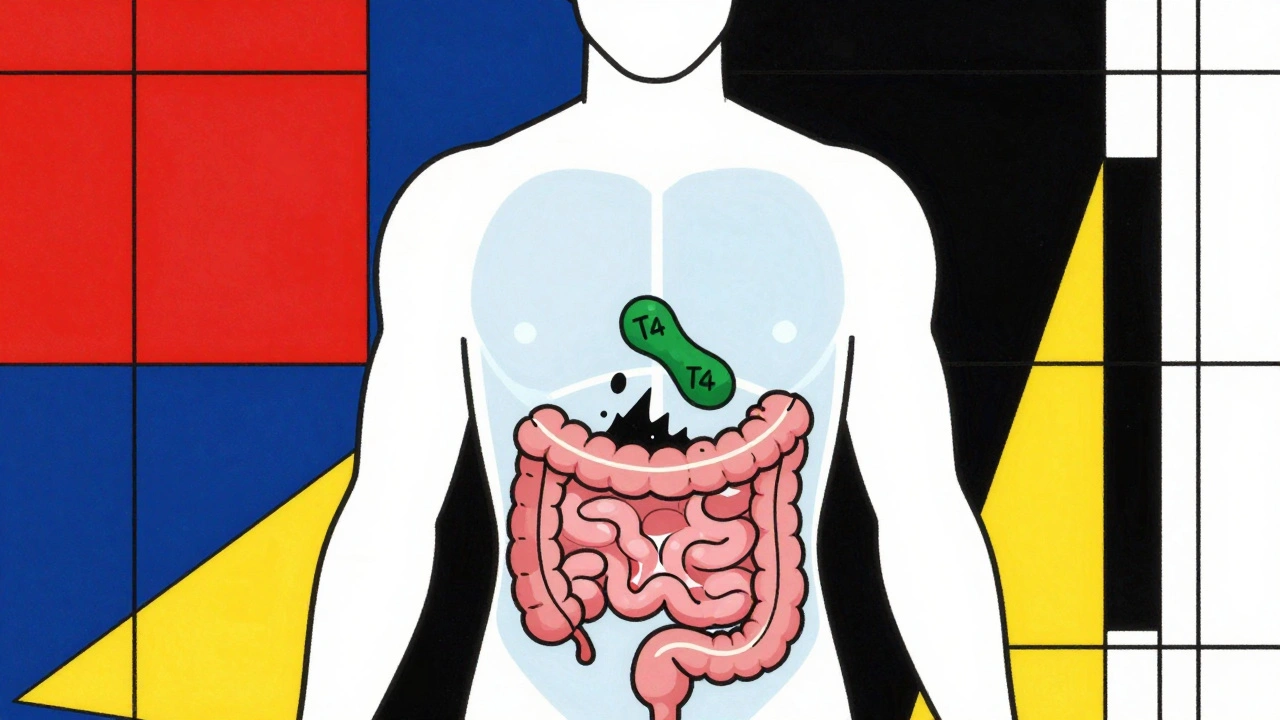
What the Experts Say
There’s some confusion out there. You might read online that “soy doesn’t affect thyroid meds” - and yes, some population studies show no major TSH changes in adults who eat moderate soy daily. But those studies often miss the point. They look at large groups over time. They don’t catch the individual cases where someone’s TSH jumps from 2.1 to 8.7 after switching to soy milk - a real story shared by a patient on Reddit in 2023. The American Thyroid Association, the Endocrine Society, and the Mayo Clinic all agree: soy interferes with levothyroxine absorption. The difference is in how they recommend handling it. - The American Thyroid Association says to separate soy from your medication by at least 3 hours. - The Mayo Clinic says you don’t need to quit soy - just avoid eating it within a few hours of taking your pill. - The Endocrine Society notes that some patients may need a 15% to 30% higher dose of levothyroxine if they regularly consume soy. The bottom line? Don’t ignore it. Even if you feel fine, your TSH might be climbing silently.What You Should Do
You don’t have to give up soy entirely. But you do need to manage the timing.- Take your levothyroxine on an empty stomach - ideally 30 to 60 minutes before breakfast.
- Avoid soy for at least 3 to 4 hours after taking your pill. That means no soy milk with breakfast, no tofu stir-fry at lunch, and no edamame snacks in the afternoon.
- If you eat soy at dinner, take your medication the next morning - not the night before. Levothyroxine works best when taken at the same time every day.
- Check your labels. Soy hides in protein powders, veggie burgers, meat alternatives, and even some granolas. Read the ingredients.
- Don’t assume your doctor knows. A 2022 Reddit poll found 63% of users with hypothyroidism weren’t warned about soy. If your doctor hasn’t mentioned it, bring it up.
What If You’ve Been Eating Soy With Your Meds?
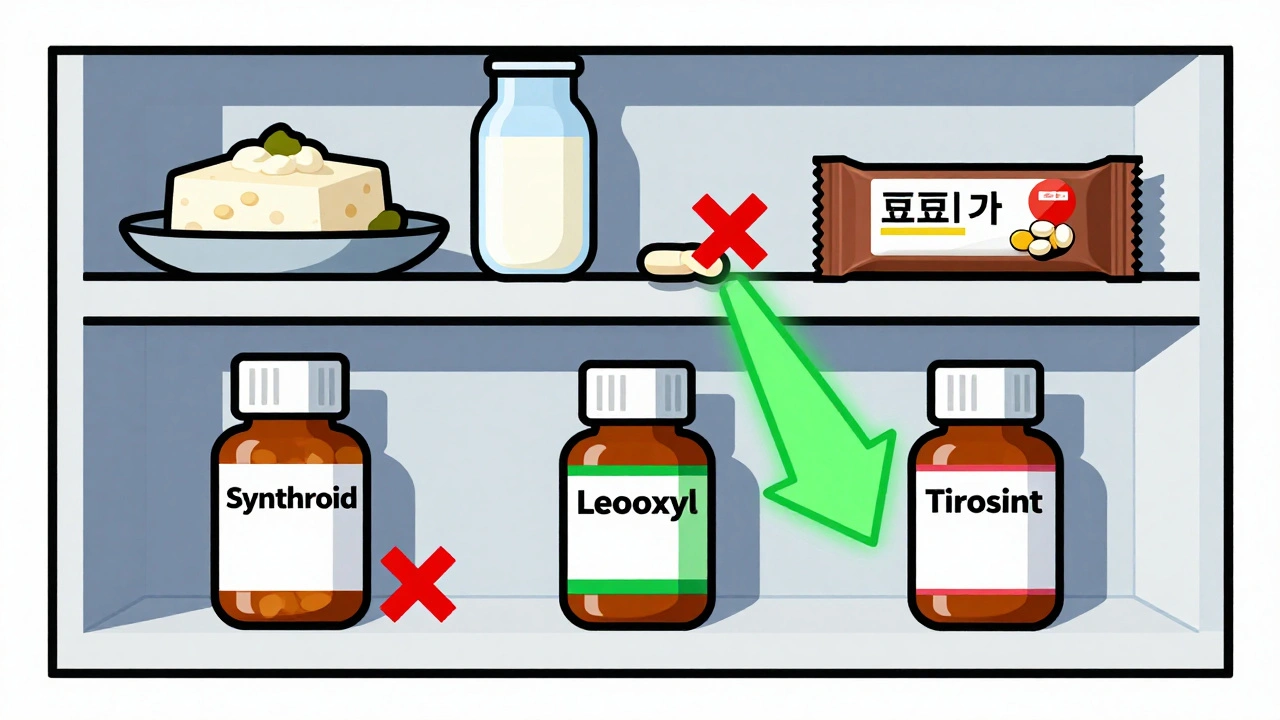
If you’ve been taking levothyroxine with soy for months or years - and you’ve noticed your energy hasn’t improved, or your TSH keeps creeping up - it’s time to act. First, stop consuming soy within 4 hours of your dose. Then, schedule a blood test for TSH and free T4. If your levels are still out of range after 6 to 8 weeks of clean timing, talk to your doctor about adjusting your dose. Some patients need a 20% increase just to compensate for long-term soy exposure. There’s also a newer option: Tirosint®, a softgel form of levothyroxine. In a 2020 trial, it showed 18.3% better absorption than tablets when taken with soy. It’s more expensive, but for people who rely heavily on soy and struggle with absorption, it’s worth considering.What About Other Foods?
Soy isn’t the only problem. Calcium supplements, iron pills, and even coffee can interfere. But soy ranks third in severity - behind calcium and iron, but ahead of coffee and fiber. - Calcium and iron need a 4-hour gap. - Coffee can be managed with a 60-minute wait. - Soy? Stick to the 3- to 4-hour rule. The good news? Once you get the timing right, most people see their TSH levels normalize within 6 to 8 weeks.Looking Ahead
Soy consumption in the U.S. has more than doubled since the 1980s. At the same time, levothyroxine prescriptions hit 123.7 million in 2023 - making it the most prescribed thyroid drug by far. That means millions of people are at risk of this interaction. New research is underway. A 2023 clinical trial tested a new version of levothyroxine called Levo-Sorb®, designed to block soy’s interference. In that study, 92% of patients taking it with soy maintained normal absorption - compared to just 59% with standard tablets. Future guidelines may include genetic testing. Some people have a gene variant (CYP1A2*1F) that makes them metabolize soy isoflavones slower - meaning they’re more likely to have absorption issues. By 2025, this could become part of routine care. For now, the message is simple: soy and levothyroxine don’t mix well - unless you keep them apart.If you’re on thyroid medication and eat soy, you’re not doing anything wrong. You just need to adjust your routine. A few extra hours between your pill and your tofu can mean the difference between feeling tired all the time - and feeling like yourself again.
Can I still eat tofu if I take levothyroxine?
Yes, you can eat tofu - but not within 3 to 4 hours of taking your levothyroxine. Take your pill first thing in the morning on an empty stomach, then wait until lunch or later to eat tofu, soy milk, or other soy products. Many people find it easiest to avoid soy at breakfast entirely.
Does soy lecithin interfere with levothyroxine?
Soy lecithin contains very little isoflavone - usually less than 1 mg per serving. Most experts agree it doesn’t significantly affect absorption. You don’t need to avoid foods with soy lecithin, like chocolate or salad dressings. But if a product lists soy protein isolate or soy flour, that’s a different story.
I take my levothyroxine at night. Can I eat soy at dinner?
If you take your pill at night, avoid soy for at least 3 hours before bedtime. Many people find it easier to take levothyroxine in the morning - it’s more consistent with fasting and avoids interference from evening meals. But if you prefer nighttime dosing, just make sure your last soy-containing meal is at least 3 hours before your pill.
Why does my TSH keep rising even though I take my pill correctly?
If you’re taking your pill correctly but your TSH is still high, soy could be the hidden culprit. Other possibilities include inconsistent dosing, switching brands, or taking it with calcium, iron, or coffee. But soy is one of the most common causes of unexplained TSH spikes - especially if you eat soy daily. Ask your doctor to test your free T4 and consider whether soy might be interfering.
Should I switch to a different thyroid medication?
No - levothyroxine is still the gold standard. Switching to a different medication won’t solve the soy interaction. The problem isn’t the drug - it’s the timing. Focus on separating soy from your dose. If absorption remains poor despite proper timing, talk to your doctor about Tirosint®, a softgel form that resists soy interference better than tablets.
Comments (12)
soorya Raju
December 2, 2025 AT 14:57
soy is just a big pharma plant to make you buy more pills lol. they dont want you to heal naturally. also tofu is ancient indian medicine bro. if your thyroid is broke maybe u need to stop eating processed crap and start meditating. also my grandma ate soy every day and lived to 102 so shut up with your science.
Dennis Jesuyon Balogun
December 2, 2025 AT 18:41
Let me be unequivocally clear: the biochemical antagonism between isoflavones and levothyroxine is not merely pharmacokinetic-it is ontological. The soy molecule, in its very essence, resists the hormonal integrity of synthetic T4, thereby imposing a structural dissonance upon endocrine homeostasis. This is not dietary advice-it is molecular warfare. And yet, the medical establishment continues to treat this as a footnote rather than a paradigm-shifting crisis in endocrinology.
Grant Hurley
December 4, 2025 AT 13:43
honestly i just take my pill at night and eat soy for breakfast. never had an issue. maybe im just lucky? my tsh is fine. also i love edamame so if this is true i might need to start crying. but hey if it works for me? 🤷♂️
Shannon Gabrielle
December 5, 2025 AT 23:11
Oh wow. So the solution to millions of Americans being tired is to stop eating tofu? Next you'll tell us coffee causes cancer and yoga is a cult. What's next? No more kale because it 'interferes with vitamin absorption'? This is why people don't trust doctors anymore. You're turning healthy food into a villain because it's easier than fixing the healthcare system.
ANN JACOBS
December 7, 2025 AT 12:51
It is with profound compassion and an unwavering commitment to holistic well-being that I extend this message: every individual navigating the labyrinth of thyroid health deserves not only scientific accuracy but also gentle guidance. The interference of soy-derived isoflavones with levothyroxine absorption is not a matter of dietary restriction-it is an opportunity for mindful reconfiguration of daily rituals. Consider this: if you align your medication with the quiet stillness of dawn, and reserve your soy-based nourishment for the warmth of afternoon, you are not merely managing a condition-you are cultivating harmony between body, time, and intention. This is not deprivation. This is reverence.
Nnaemeka Kingsley
December 8, 2025 AT 07:49
bro i just take my pill and eat soy later. never had a problem. maybe ur body is just slow? try drinking water first and see if that helps. also dont stress too much. thyroid stuff is weird but youll be fine.
Kshitij Shah
December 9, 2025 AT 00:57
So let me get this straight: in India we’ve been eating soy with our thyroid meds for generations and nobody’s dropping dead. Now some American study says it’s a problem? Funny how science always finds a new enemy when capitalism needs a new market. My aunt takes her pill with soy milk and runs marathons at 70. Maybe the real issue is overmedication?
Sean McCarthy
December 10, 2025 AT 06:41
According to the FDA, the maximum allowable isoflavone content in soy lecithin is 0.02% per serving. The half-life of levothyroxine is approximately 7 days. Therefore, the cumulative interference from trace soy lecithin in processed foods is statistically negligible. You are being manipulated by fear-based marketing. Stop reading Reddit. Talk to your endocrinologist. And for the love of God, stop obsessing over every ingredient label.
Jaswinder Singh
December 11, 2025 AT 23:22
you guys are overthinking this. i take my pill at 6am, eat tofu at 1pm, no problem. my tsh is perfect. if your levels are bad maybe you're not taking the pill right. maybe you're eating it with coffee or calcium. stop blaming soy. it's not the enemy.
Bee Floyd
December 12, 2025 AT 22:30
I appreciate the depth of this post. I’ve been on levothyroxine for 12 years and switched to Tirosint last year after years of erratic TSH. I eat soy daily-soy yogurt, tempeh, even the occasional tofu scramble. The softgel made all the difference. I didn’t have to give up my plant-based diet. I just had to find the right med. If you’re struggling, ask your doctor about it. It’s not a miracle, but it’s a real option.
Jeremy Butler
December 14, 2025 AT 06:02
One must interrogate the epistemological foundations upon which this dietary prescription rests. The assertion that soy interferes with levothyroxine absorption is predicated upon a reductionist model of pharmacokinetics that neglects the holistic, systemic nature of human physiology. Are we to believe that a single molecular interaction-however statistically significant-can override the adaptive resilience of the endocrine system? The answer, I submit, lies not in temporal separation, but in ontological reorientation: the body, when properly nourished and unburdened by industrialized food systems, requires neither rigid scheduling nor pharmacological supplementation.
Courtney Co
December 14, 2025 AT 12:24
Wait so if I eat soy with my pill I’m basically poisoning myself? I’ve been doing it for 5 years. I feel like crap all the time. Is it my fault? Am I a bad patient? I just wanted to be healthy. I thought soy was good for me. I’m crying now. I don’t know what to do. Can someone just tell me what to eat? I’m so confused. I hate my life.