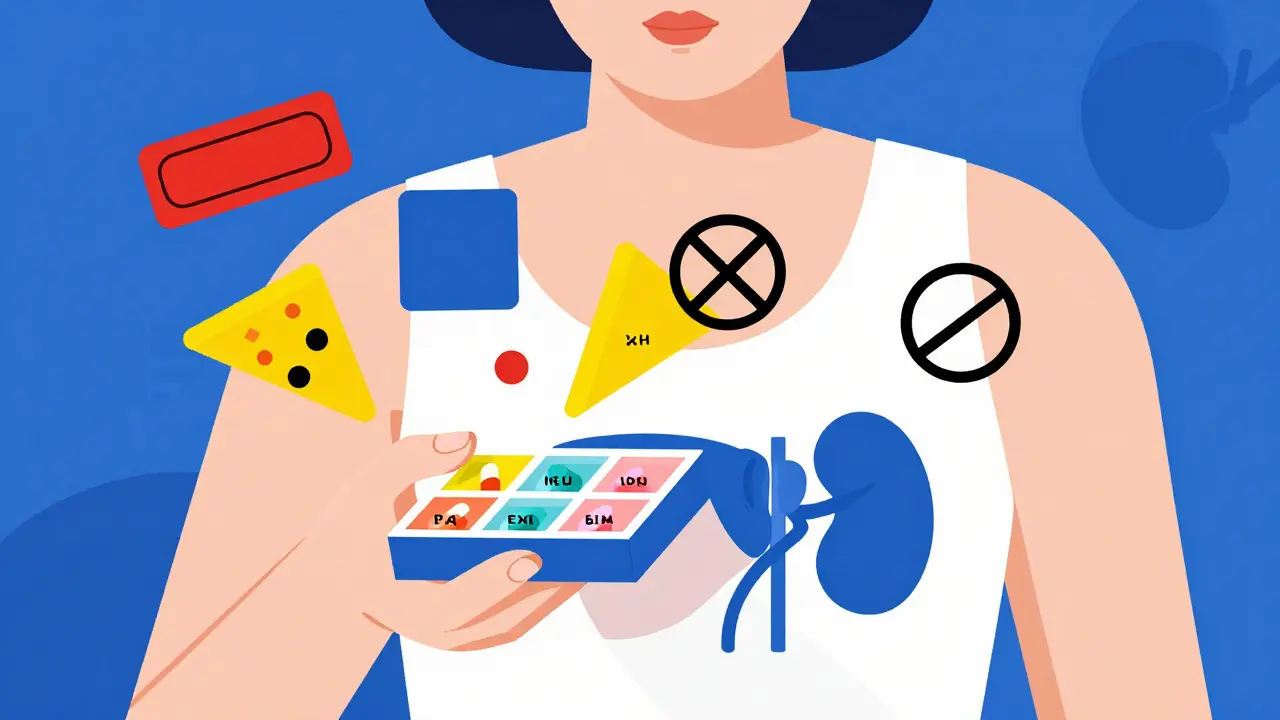
Medication Safety Checker for Post-Menopausal Women
Check Your Medication Safety
Enter your current medications to identify potential risks specific to post-menopausal women. This tool is based on the Beers Criteria and current medical guidelines.
Your Medications
Medication Risk Assessment
Your current medication regimen appears safe based on age-appropriate guidelines.
Action Plan
Keep taking your medications as prescribed. Consider discussing these points with your doctor.
After menopause, your body changes in ways that affect how medicines work. What was safe at 45 might not be safe at 65. Many women in this stage take four or five prescriptions daily, plus supplements and over-the-counter drugs. That’s a lot of chances for something to go wrong. Adverse drug events send 35% of women over 65 to the hospital each year. This isn’t about fear-it’s about smart, informed choices.
Why Medications Change After Menopause
Your liver and kidneys don’t process drugs the same way after menopause. Hormone shifts slow down how quickly your body breaks down medications. That means a dose that was perfect at 50 might build up to dangerous levels at 65. Weight gain, reduced muscle mass, and changes in body fat also affect how drugs are absorbed and distributed. These aren’t minor tweaks-they’re major shifts in how your body handles medicine.Take blood pressure pills. A woman who’s always taken 10 mg of a beta-blocker might suddenly feel dizzy or faint after menopause because her body can’t clear it as fast. Or consider statins-cholesterol drugs that are common after 50. Some women develop muscle pain or weakness, not because the drug is failing, but because their metabolism changed.
Hormone Therapy: Risks and Real Options
Hormone therapy (MHT) is often the first thing women think about for hot flashes or sleep trouble. But it’s not one-size-fits-all. The Endocrine Society and USPSTF agree: estrogen alone may be safe for women who’ve had a hysterectomy, especially if started before 60 or within 10 years of menopause. But combined estrogen-progestin therapy? It increases breast cancer risk by 24% after five years, according to the Women’s Health Initiative.Transdermal estrogen-patches or gels-is safer than pills. Why? Oral estrogen goes straight to the liver, raising clot risk. Transdermal bypasses that. Studies show it cuts venous thromboembolism risk by 2.3 times compared to pills. For women with a history of blood clots, migraines with aura, or high triglycerides, this isn’t just a preference-it’s a necessity.
And tibolone? It’s used in Europe for hot flashes and bone protection, but it’s not FDA-approved. Why? It raises stroke risk by 58%. That’s not worth the trade-off for most women.
Non-Hormonal Alternatives That Actually Work
You don’t need hormones to manage hot flashes. SSRIs like paroxetine (Paxil) and venlafaxine (Effexor) reduce hot flash frequency by 50-60%. They’re not approved for this use, but doctors prescribe them off-label all the time. The catch? Up to 40% of women report sexual side effects-low desire, trouble climaxing. That’s a tough pill to swallow for some.Other options? Gabapentin helps with night sweats. Clonidine, a blood pressure drug, can reduce hot flashes too. Even cognitive behavioral therapy (CBT) has been shown to cut symptom severity by half in clinical trials. These aren’t magic bullets, but they’re safer than hormones for women with breast cancer history, clotting disorders, or liver disease.
Polypharmacy: The Silent Danger
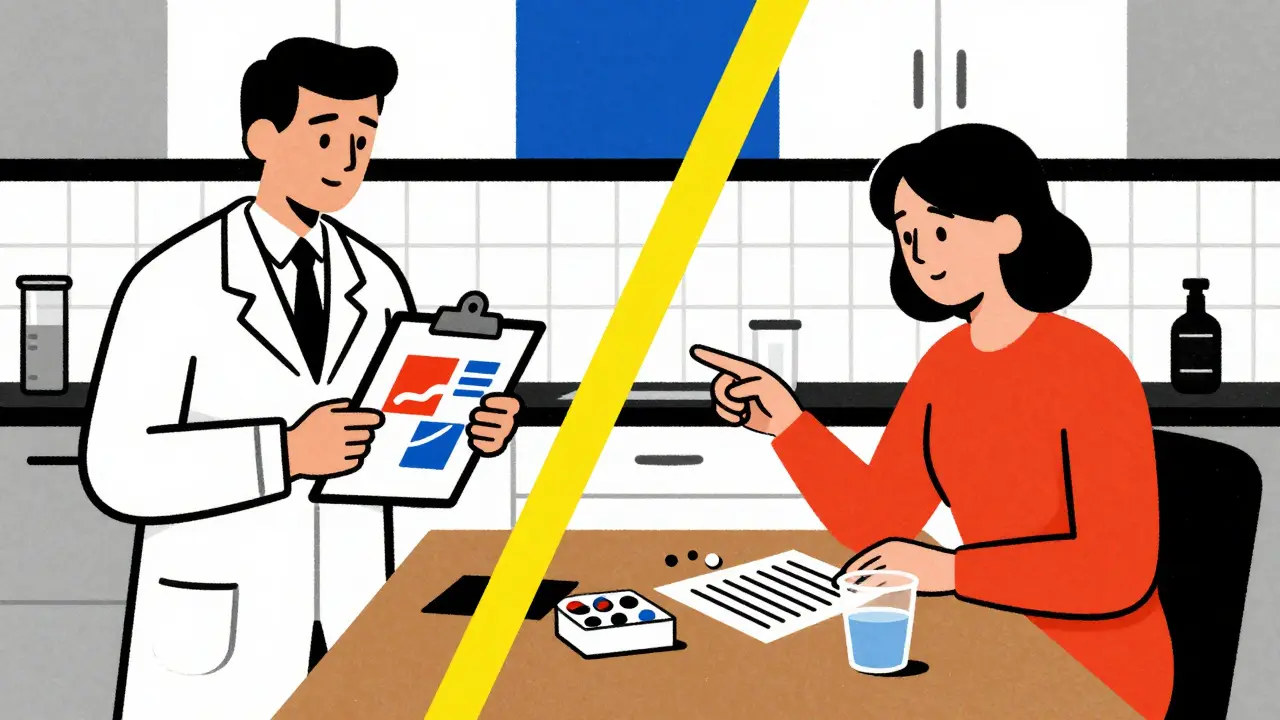
Taking five or more medications is common after 65. But here’s the problem: most doctors treat one condition at a time. Your cardiologist prescribes a blood thinner. Your rheumatologist adds an NSAID. Your PCP gives you a sleep aid. No one’s looking at the whole picture.That’s how you end up with a 72-year-old woman on diclofenac, simvastatin, enalapril, and atenolol-and then end up in the hospital with a bleeding ulcer. NSAIDs like diclofenac thin the stomach lining. Add a blood thinner? The risk of internal bleeding skyrockets. The WHO found that 40% of older adults get prescriptions from multiple providers. No one’s connecting the dots.
The Beers Criteria lists 30 drugs to avoid after 65. Long-acting benzodiazepines like diazepam? They increase hip fracture risk by 50%. Anticholinergics like diphenhydramine (Benadryl)? They raise dementia risk. Even some OTC sleep aids are on the list.
Deprescribing: Taking Medications Off the List
It’s not just about adding meds-it’s about removing them. Deprescribing means stopping drugs that aren’t helping-or are hurting. The WHO says structured deprescribing reduces adverse events by 33% and cuts the number of pills per person by 1.4.But you can’t just quit cold turkey. Stopping a beta-blocker suddenly can trigger a heart attack. Tapering off antidepressants too fast causes brain zaps and dizziness. Benzodiazepines need 8-12 weeks to come off safely. Antidepressants? 4-8 weeks. That takes planning. And patience.
Ask your doctor: "Is this drug still necessary?" "Could I try lowering the dose?" "What happens if I stop?" These questions save lives.
What You Can Do Today
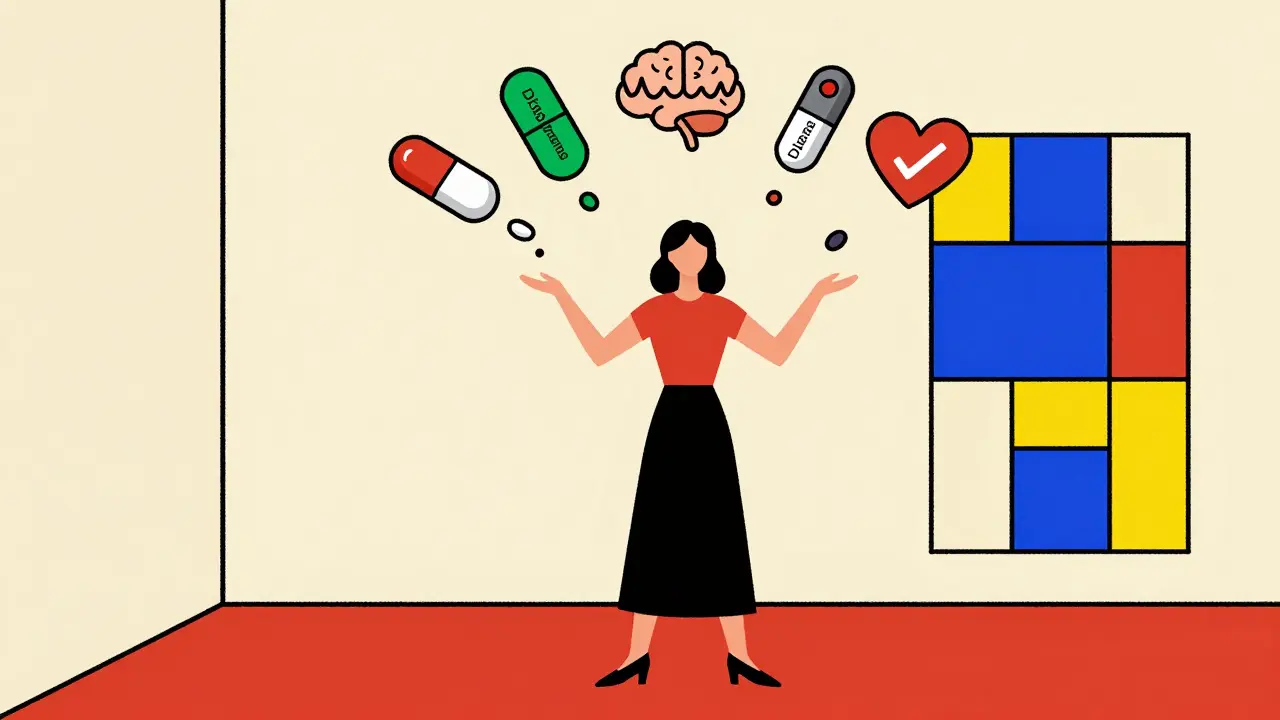
You don’t need to wait for a doctor’s appointment to take control. Start here:- Make a full list of everything you take: prescriptions, vitamins, supplements, herbal remedies, OTC painkillers. Include doses and why you take them.
- Bring that list to every appointment. Call it your "medication brown bag."
- Use a pill organizer with alarms. Studies show it cuts errors by 81%.
- Ask: "Is this drug still right for me?" Especially if you’ve been on it for years.
- Get a medication review after any hospital stay. That’s when risks spike.
And if you’re on hormone therapy? Ask if transdermal is an option. Ask if you still need the progestin. Ask if you’ve been on it longer than you need to.
When to Say No
There are clear red flags. Don’t take estrogen if you have:- Undiagnosed vaginal bleeding
- History of breast, uterine, or ovarian cancer
- Active blood clots, stroke, or heart attack
- Severe liver disease
- Known allergy to estrogen ingredients
And if you have migraine with aura, diabetes, or high triglycerides? Oral estrogen is risky. Transdermal might still work-but only with close monitoring.
The Bigger Picture
Women over 65 make up 56% of the U.S. population over 65. We’re not a footnote in medical research-we’re the majority. Yet, most drug trials still focus on younger men. That’s changing. The NIH is funding $25 million in new research on non-hormonal menopause treatments. The FDA now requires menopause-specific warnings on 87% of relevant drug labels.But real change happens at the bedside. When a doctor asks, "How are you really feeling?" instead of just checking blood pressure, that’s when safety improves. When a pharmacist notices a dangerous combo and speaks up-that’s when lives are saved.
You’re not just a patient. You’re the most important person in your care team. Ask questions. Keep records. Push back when something doesn’t feel right. Your body after menopause deserves more than a prescription-it deserves thoughtful, personalized care.
Is hormone therapy safe after menopause?
Hormone therapy can be safe for some women, but only under specific conditions. Estrogen alone may be appropriate for women who’ve had a hysterectomy and are under 60 or within 10 years of menopause. Transdermal estrogen (patch or gel) is safer than pills because it avoids liver metabolism and lowers clot risk. Combined estrogen-progestin therapy increases breast cancer and stroke risk and is not recommended for chronic disease prevention. Always discuss personal risks-like family history, blood clots, or migraines-with your doctor.
What medications should post-menopausal women avoid?
The Beers Criteria lists drugs to avoid after 65. These include long-acting benzodiazepines (like diazepam), which raise hip fracture risk by 50%, and anticholinergics like diphenhydramine (Benadryl), linked to dementia. NSAIDs such as diclofenac increase bleeding risk, especially when taken with blood thinners. Avoid oral estrogen if you have a history of blood clots, breast cancer, or liver disease. Even OTC sleep aids and muscle relaxants can be dangerous in older adults.
Can I stop my medications on my own?
Never stop medications suddenly. Stopping blood pressure pills, antidepressants, or anti-seizure drugs can cause dangerous rebound effects. Even supplements like melatonin or magnesium can interact. Always talk to your doctor first. Deprescribing-safely reducing or stopping meds-requires a gradual plan. For example, benzodiazepines need 8-12 weeks to taper safely. Antidepressants take 4-8 weeks. Your doctor can help you build a safe timeline.
Why do I keep making medication errors?
Medication errors are common in older adults. The National Poll on Healthy Aging found that 28% of women over 65 still make mistakes, like taking a pill twice (42%) or missing a dose (38%). Causes include multiple prescriptions, poor labeling, memory issues, or taking meds from different providers. Using a pill organizer with alarms, keeping a written list, and bringing all meds to appointments (a "brown bag" review) can cut errors by over 80%.
How often should I review my medications?
You should have a full medication review at least once a year. But you need one sooner if you’ve been hospitalized, started two or more new drugs, or noticed new side effects like dizziness, confusion, or stomach bleeding. Medicare Part D requires annual medication therapy management for people with multiple chronic conditions. Don’t wait-ask your pharmacist or doctor to review your list every time you refill prescriptions.
Are non-hormonal options effective for hot flashes?
Yes. SSRIs like paroxetine and venlafaxine reduce hot flash frequency by 50-60%. Gabapentin helps with night sweats. Clonidine, originally a blood pressure drug, also works for some women. Cognitive behavioral therapy (CBT) has been shown to cut symptom severity by half in clinical studies. These options avoid the risks of hormones and are especially good for women with breast cancer history, blood clots, or liver problems. They’re not instant fixes, but they’re safer and effective with consistent use.
Comments (8)
Thomas Anderson
December 15, 2025 AT 07:40
Just started using a pill organizer with alarms after my mom had a bad mix-up with her blood pressure meds. Game changer. Seriously, if you’re on more than three things, get one. It’s cheap and saves your life.
Rulich Pretorius
December 16, 2025 AT 10:28
It’s fascinating how medicine still treats post-menopausal women as an afterthought. We’re not just ‘older women’-we’re a demographic that’s growing faster than any other, yet clinical trials still default to middle-aged men. The fact that transdermal estrogen cuts clot risk 2.3x compared to pills? That’s not a nuance-it’s a paradigm shift. And yet, most GPs still push oral HRT because it’s easier to prescribe. We need systemic change, not just individual vigilance.
Deprescribing isn’t a luxury. It’s a medical necessity. The WHO data showing a 33% drop in adverse events? That’s not statistics-that’s lives. Why aren’t we mandating medication reviews after every hospital discharge? Why is it still up to the patient to ask, ‘Is this still necessary?’ Shouldn’t that be automatic?
I’ve seen friends on diazepam for ‘anxiety’ for 15 years. They can’t even walk without a cane. No one ever asked if they still needed it. That’s not care. That’s neglect dressed up as routine.
And let’s talk about the cultural silence around sexual side effects from SSRIs. Women are told to ‘just push through’ because hot flashes are the ‘real’ problem. But losing libido isn’t a side note-it’s a core part of quality of life. Why aren’t we talking about that with the same urgency?
We’re not just managing symptoms. We’re redefining aging. And that requires more than prescriptions. It requires respect.
Dwayne hiers
December 17, 2025 AT 14:16
The Beers Criteria is underutilized in primary care. Clinicians often don’t even know it exists, let alone reference it during med reconciliation. The 30 drugs listed aren’t suggestions-they’re red flags. Anticholinergics like diphenhydramine should be classified as Class III risk agents for patients over 65. Their association with cognitive decline is dose-dependent and cumulative. Yet, OTC labels still say ‘safe for seniors.’ That’s malpractice by omission.
Moreover, the pharmacokinetic shifts post-menopause aren’t trivial. Reduced hepatic CYP450 activity, decreased renal clearance, increased adipose distribution-all mean lower clearance, higher AUC, prolonged half-lives. A 10mg dose of atenolol at 55 might be fine, but at 68? You’re looking at plasma concentrations 40-60% higher. No adjustment? That’s iatrogenic harm waiting to happen.
Transdermal estrogen bypasses first-pass metabolism, reducing hepatic synthesis of clotting factors. That’s why VTE risk drops. Oral estrogen induces hepatic production of SHBG, angiotensinogen, and coagulation factors. That’s not ‘slight risk’-that’s a pharmacodynamic revolution. Why isn’t this standard of care?
Daniel Wevik
December 18, 2025 AT 10:56
If you’re on five meds, you’re not a patient-you’re a pharmacology experiment. I’ve seen it too many times. Cardiologist adds a blood thinner. Neurologist prescribes gabapentin. Primary care throws in a sleep aid. No one checks interactions. The system is broken. Deprescribing isn’t optional. It’s the only way forward. Ask your doctor: ‘What would happen if I stopped this?’ If they can’t answer, it’s time to rethink.
Rich Robertson
December 20, 2025 AT 00:15
My mom’s on paroxetine for hot flashes. She says it cuts them in half but kills her sex drive. She’s not mad about it-she just says, ‘Better than sweating through my nightgown.’ Sometimes, trade-offs aren’t tragedies. They’re compromises. And in our 70s, that’s okay. The goal isn’t perfection-it’s comfort. If a pill helps you sleep, stop feeling like you’re on fire, or keep your bones from crumbling? That’s not weakness. That’s wisdom.
Jonny Moran
December 20, 2025 AT 06:41
Hey, I get it-you’re tired. You’ve been taking that same pill for 12 years. You don’t want to ask questions. You don’t want to feel like you’re bothering your doctor. But here’s the truth: your doctor wants you to ask. They’re not mad you’re confused. They’re relieved you’re paying attention. Bring your brown bag. Write down your questions. Say, ‘I think this might be too much.’ That’s not being difficult. That’s being brave.
You’re not a burden. You’re the expert on your body. No one knows your fatigue, your dizziness, your weird side effects better than you. Trust that. Use it. Speak up. That’s how change starts.
Daniel Thompson
December 21, 2025 AT 12:17
I’m a pharmacist. I’ve seen 72-year-old women on 11 medications. Five of them are for symptoms caused by another. One is for a condition that resolved five years ago. Two are on the Beers list. And the worst part? No one ever asked if they still needed them. The system doesn’t reward deprescribing. It rewards adding. But you? You can break that cycle. Ask for a review. Demand a timeline. Say, ‘I want to try going off this.’ That’s not defiance. It’s self-advocacy. And it’s your right.
jeremy carroll
December 22, 2025 AT 18:07
just started taking gabapentin for night sweats and honestly? it’s a game changer. no more waking up soaked at 3am. also, my doc said to stop the benadryl for sleep-said it’s basically a dementia starter pack. wow. never knew that. gonna ask about my statin next.