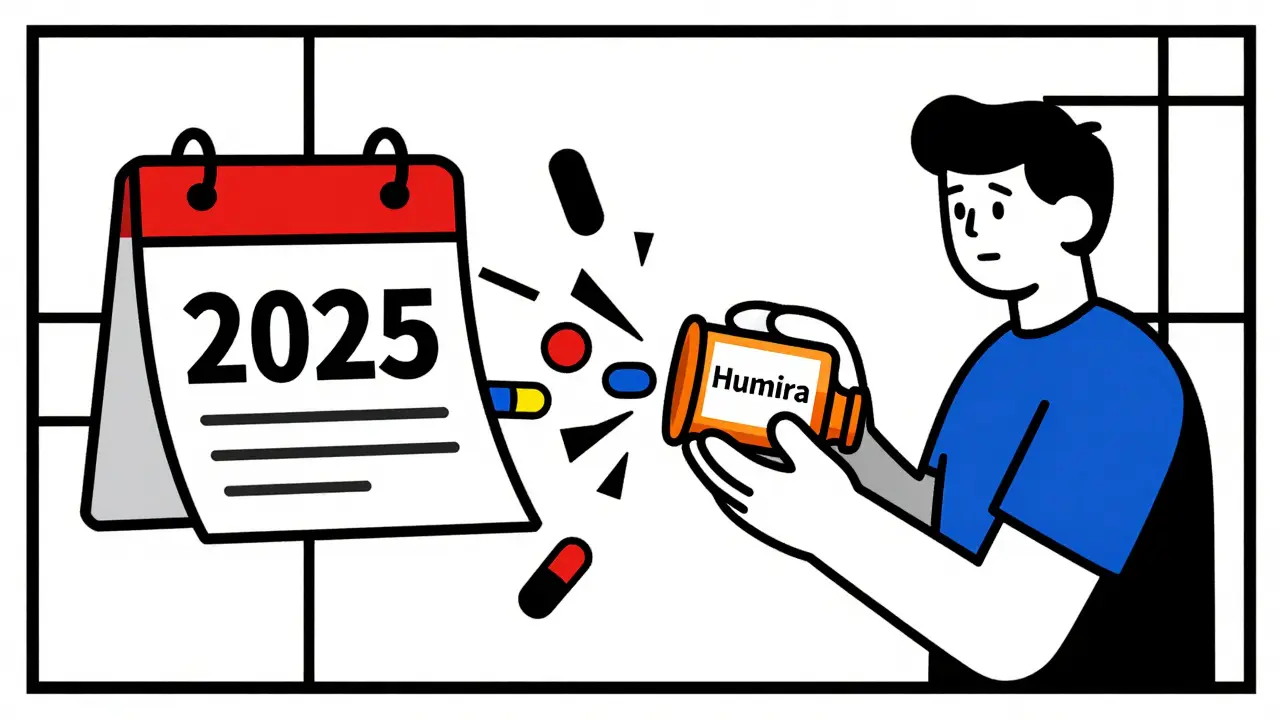
When a drug’s patent expires, it doesn’t just mean a cheaper version hits the shelf. It means your prescription could change, your insurance plan might switch medications, and your out-of-pocket costs could drop-or spike-overnight. For patients on long-term therapies, this isn’t a minor detail. It’s a life-altering event. And for hospitals, insurers, and pharmacies, it’s a financial earthquake that can either save millions or cost them dearly if they’re not ready.
What Actually Happens When a Patent Expires?
Most brand-name drugs come with 20 years of patent protection from the date they’re filed. But because it takes 7-10 years just to get FDA approval, most drugs only enjoy 7-10 years of real market exclusivity before generics can enter. When that clock runs out, manufacturers of generic versions can file an Abbreviated New Drug Application (ANDA) and start selling the same drug at a fraction of the cost. The numbers are staggering. Between 2025 and 2029, over $90 billion in branded drug sales will lose patent protection. In 2023 alone, $356 billion in global branded sales were at risk. The biggest hits? Drugs for immunology, neuroscience, and cancer. Think Humira, Enbrel, Keytruda-all of which have seen or will soon see generic or biosimilar competition. But here’s the catch: it’s not as simple as “brand drug stops, generic starts.” Many companies use what’s called patent thickets-filing dozens of secondary patents on minor changes like new formulations, dosing schedules, or inactive ingredients-to delay competition. A single drug like Humira had over 250 patents filed around it. Even after the core patent expires, these legal maneuvers can hold off generics for years.How Much Money Can You Save?
Generic drugs cost, on average, 80-85% less than their brand-name counterparts within a year of launch. For patients paying out of pocket, that’s a massive difference. A monthly insulin prescription that costs $300 as a brand might drop to $40 as a generic. A cholesterol pill that was $150 per month could fall to $15. But savings aren’t automatic. In the U.S., rebate systems and pharmacy benefit manager (PBM) deals often obscure true prices. A generic might be priced low on paper, but if the PBM gets a kickback from the brand-name maker to keep it off the formulary, you might not see the discount. That’s why some patients get stuck paying more even after generics are available. Biosimilars-generic versions of biologic drugs like cancer treatments or autoimmune therapies-are trickier. They’re not exact copies like small-molecule generics. They’re complex proteins made in living cells. Because of that, they cost more to produce, and their price drops are smaller: only 20-40% in the first year. Only 38% of biologic prescriptions switch to biosimilars within two years of launch, compared to over 90% for simple generics.What Patients Should Do
If you’re on a medication that’s about to lose its patent, here’s what you need to do:- Check your formulary-Ask your pharmacy or insurer if your drug will be replaced by a generic or biosimilar. Don’t assume your doctor will tell you.
- Ask about switching-Some patients experience side effects when switching to generics, even if they’re technically bioequivalent. If you’ve had issues before, speak up. Your doctor can request a prior authorization to keep the brand if needed.
- Compare prices-Not all generics are priced the same. One generic version might cost $10, another $35. Use GoodRx or your pharmacy’s price checker to find the cheapest option.
- Watch for supply shortages-When a new generic enters the market, production lines often struggle to keep up. The first 3-6 months after patent expiry are the most likely time for drug shortages. Have a backup plan with your prescriber.
- Understand biosimilar differences-For biologics, switching isn’t always seamless. Some biosimilars require different injection devices or storage conditions. Ask your provider if the switch changes how you take the drug.
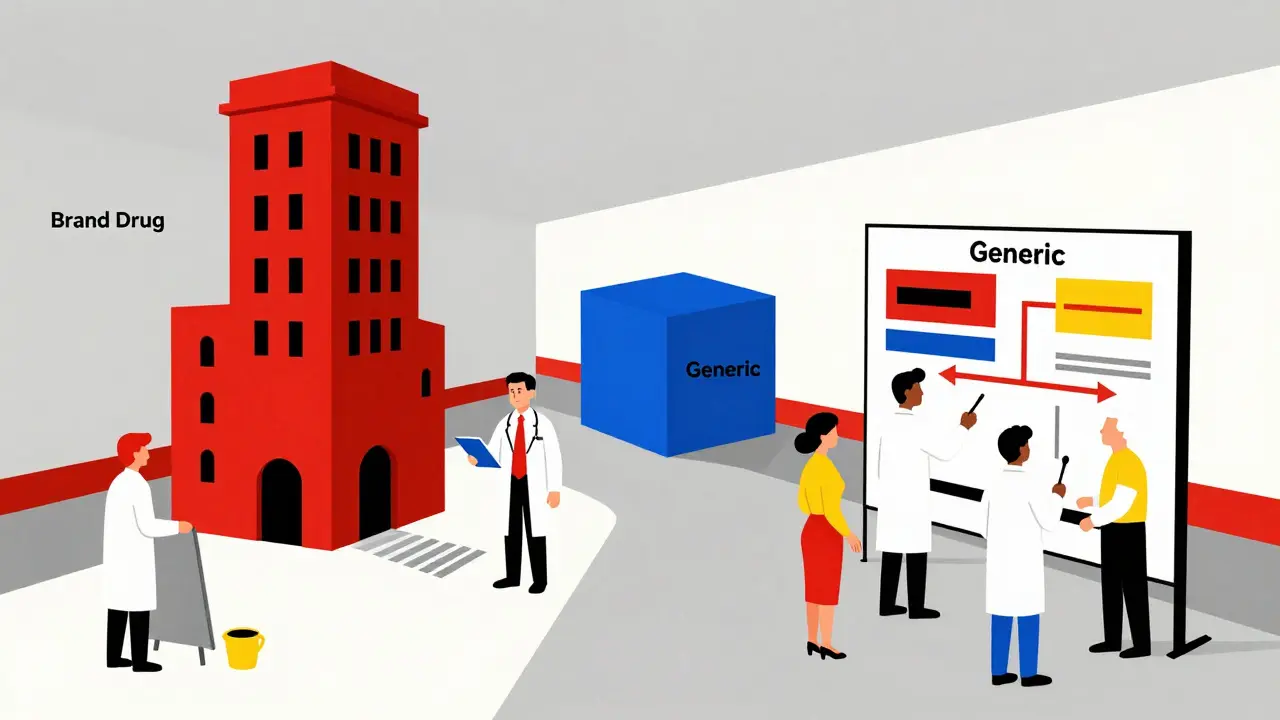
What Healthcare Systems Must Plan For
Hospitals, insurers, and pharmacy chains have a much bigger job. They manage thousands of drugs and millions of patients. A single patent expiry can shift hundreds of millions in spending. Successful systems start planning 24 months before the patent expires. Here’s how:- Track every expiration-There are over 1,400 patent expirations in the U.S. each year. Systems that use software like Symphony Health’s PatentSight track them automatically. Those that don’t rely on spreadsheets and guesswork-and they pay the price.
- Build a cross-functional team-Pharmacists, finance officers, clinicians, and contract negotiators must work together. One department can’t handle this alone.
- Negotiate contracts early-Don’t wait until the generic hits the market. Lock in pricing deals with manufacturers 12-18 months ahead. You’ll get better terms.
- Update clinical guidelines-Doctors need clear protocols on when to switch patients. A 2022 AMA survey found 62% of physicians were unsure if generics were as effective. Clear guidance reduces resistance.
- Prepare patients-Send out educational materials 6 months ahead. Explain why the switch is happening, how it affects cost, and what to watch for. Patients who understand the change are 35% less likely to stop their medication.
Why the U.S. Is Different
In Europe, drug prices drop to 30-40% of original levels immediately after patent expiry because governments set reference prices. In the U.S., prices fall more slowly-often to 60-70% over 18-24 months-because of complex rebate deals between manufacturers, PBMs, and insurers. This means U.S. patients don’t feel the full savings as quickly. Also, the U.S. has no national drug price negotiation system-until now. The Inflation Reduction Act, starting in 2026, will let Medicare negotiate prices for 10-20 high-cost drugs that have lost patent protection. This could accelerate price drops and force manufacturers to lower prices even faster.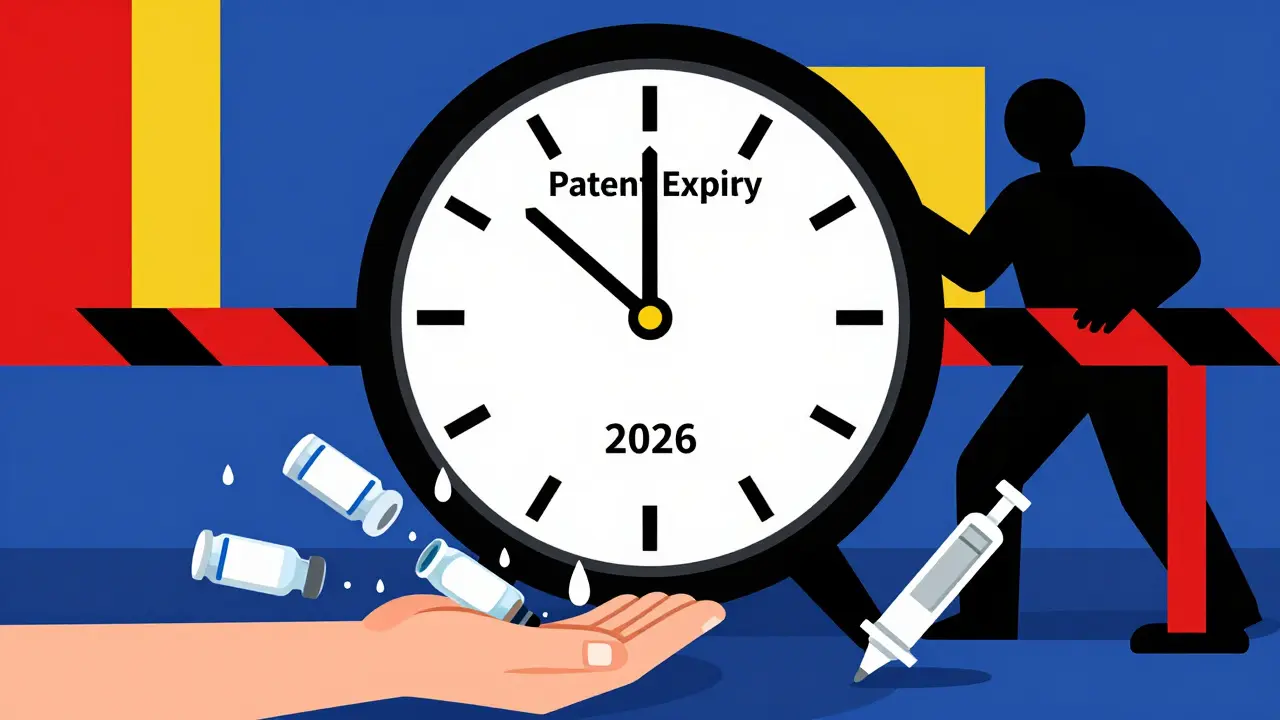
The Big Challenge: Biosimilars and the Coming Wave
The next wave of patent expirations isn’t just about pills. It’s about injectables and infusions for cancer, arthritis, and rare diseases. Over 45 biologic patents expire between now and 2028. But biosimilars are slow to catch on. Why? Because they’re expensive to make, hard to approve, and hard to replace. A biosimilar for a cancer drug might cost $10,000 instead of $12,000. That’s still a lot. And doctors are cautious. Many patients have been on the same biologic for years. Switching feels risky. The answer? Education. Better data. And time. Cytiva’s 2023 analysis shows oncology biosimilars are gaining faster-45% market share within a year-because doctors see clear survival data. Autoimmune biosimilars? Only 18% adoption. The gap is narrowing, but it’s not closing fast.What’s Changing in 2026 and Beyond
New laws are starting to break down barriers:- The CREATES Act is cracking down on “product hopping”-when companies tweak a drug just to restart the patent clock.
- The 2024 Pharmaceutical Patent Reform Act is being debated in Congress. If passed, it could shorten generic exclusivity periods by 6-9 months.
- AI forecasting tools are now used by 42% of top health systems. They predict patent expirations with 89% accuracy, up from 65% just two years ago.
- The FDA’s GDUFA III rules are speeding up approval of complex generics, cutting the transition time from 18 months to 12.
Comments (12)
jared baker
March 17, 2026 AT 05:23
Just want to say this is one of the clearest breakdowns I’ve seen on patent expiries. If you’re on insulin or Humira, start talking to your pharmacy now. I’ve seen people get stuck paying $300/month because they didn’t check if their PBM was still pushing the brand. It’s not about the generic being worse-it’s about who’s pulling the strings behind the counter.
Use GoodRx. Ask for the cash price. Sometimes it’s cheaper than your copay. No one’s gonna tell you this unless you ask.
Michelle Jackson
March 17, 2026 AT 18:20
yeah but like… why do we even have patents in the first place? it’s not like pharma companies invented medicine. they just took something that was basically science and turned it into a money printer. and now we’re all stuck playing whack-a-mole with their 250 stupid secondary patents. i swear if i have to read one more ‘novel formulation’ that’s just a different color pill i’m gonna scream.
Linda Olsson
March 19, 2026 AT 13:52
Oh honey. You think this is bad? Wait until you realize that the ‘biosimilars’ you’re being pushed are often manufactured in the same plants as the original-but under a different label. The FDA doesn’t require them to prove they’re *exactly* equivalent. Just ‘similar enough.’
And don’t get me started on how the same corporations that own the brand drugs also own the biosimilar companies. It’s the same playbook: same factory, same scientists, same CEO. They just slap a new name on it and call it competition. You’re not saving money-you’re paying for the same thing under a different name. Welcome to American healthcare.
MALYN RICABLANCA
March 20, 2026 AT 15:12
THEY’RE NOT TELLING YOU THE TRUTH!! THE PATENT THICKETS? THEY’RE NOT JUST LEGAL TRICKS-THEY’RE A SYSTEMATIC, CALCULATED, CORPORATE-WIDE CAMPAIGN TO EXTEND MONOPOLIES FOR 20+ YEARS BEYOND WHAT CONGRESS INTENDED!!
AND THE FDA? THEY’RE IN BED WITH BIG PHARMA-EVERY SINGLE APPROVAL IS A BACKROOM DEAL!! I KNOW A FORMER INSPECTOR WHO SAID THEY WERE TOLD TO ‘SLOW DOWN’ ON GENERIC APPROVALS FOR ‘MARKET STABILITY’-WHICH IS CODE FOR ‘KEEP PROFITS HIGH’!!
WE’RE BEING ROBBED. AND IF YOU THINK YOUR INSURANCE IS ON YOUR SIDE, YOU’RE THE ONE WHO’S BEEN SCAMMED. THEY GET REBATES FROM BRANDS TO KEEP GENERICS OFF FORMULARIES. IT’S ILLEGAL… BUT NO ONE’S BEING CHARGED. WHY? BECAUSE THEY OWN THE LAWYERS!!
Prathamesh Ghodke
March 20, 2026 AT 22:30
As someone from India, where generics are the backbone of access, I’ve seen how this plays out differently. Here, a drug like Humira’s generic is available for less than $5 a dose-because we don’t have the same patent trolling culture.
But I also know patients in the U.S. who can’t switch because their doctors fear liability. It’s not about science-it’s about fear, bureaucracy, and lack of trust. Maybe the real issue isn’t the patent-it’s the system that makes patients feel like guinea pigs.
becca roberts
March 22, 2026 AT 00:57
Oh wow, so we’re supposed to ‘ask our doctor’ about this? Like they have time to explain 17 different drug changes while they’re rushing between 12 patients? 😂
And ‘check your formulary’? Ha. Try logging into your insurer’s portal at 2 a.m. with a 12-step verification process, a captcha that says ‘click the cat,’ and then get told ‘this medication is no longer covered’-with no explanation.
Meanwhile, my pharmacist knows more about my meds than my doctor does. And she’s not even licensed to prescribe anything. But she’s the one telling me which generic actually works. Go figure.
Andrew Mamone
March 22, 2026 AT 08:53
Just want to add: the 2026 Medicare price negotiation is going to be huge. Not because it’ll fix everything-but because it breaks the precedent. If Medicare can negotiate, other payers will follow. It’s the first real crack in the wall.
And yes, biosimilars are slow to adopt-but that’s changing. In Germany, biosimilar uptake hit 70% in 3 years. We just need better education and less fear-mongering. Not every switch is risky. Some are life-changing.
Emily Hager
March 22, 2026 AT 16:24
It is imperative to note, with the utmost gravity, that the structural impediments to generic adoption are not merely logistical, but epistemologically and ethically bankrupt. The commodification of life-saving therapeutics under a neoliberal framework constitutes a systemic violation of the social contract. The very notion that a patient’s access to medication should be contingent upon the whims of private equity-backed pharmacy benefit managers is not merely unjust-it is an affront to human dignity.
gemeika hernandez
March 24, 2026 AT 10:36
my mom switched to a generic for her RA med and got sick for 3 months. they said it was 'bioequivalent' but she couldn't walk. now she's on the brand again and they won't cover it. so she's paying $1,200 a month out of pocket. and now they're telling her to 'try the biosimilar'? like no, i'm not a lab rat.
they don't care. they just want to save money. not me. not my body.
Lauren Volpi
March 26, 2026 AT 07:05
U.S. is the only country where you have to fight your own healthcare system just to get a cheaper pill. Europe? Government sets price. Canada? Same. Japan? Same. We got PBMs, rebates, and 250 patents. We got the best healthcare money can buy… if you’re rich. If you’re not? Congrats, you’re part of the experiment.
Stephen Habegger
March 28, 2026 AT 01:13
This is actually really helpful. I work in hospital admin and we started planning 2 years out last year. Saved $2.1M on one drug alone. The key? Talking to pharmacists early. They know the real price differences. Doctors? Not so much. Start now. It’s not scary-it’s just smart.
Ayan Khan
March 29, 2026 AT 18:51
In many cultures, medicine is not a commodity-it is a shared responsibility. The idea that a life-saving drug should be locked behind patents, rebates, and corporate negotiations feels alien to how we understand healing. Perhaps the real question is not how to navigate the system-but whether we should rebuild it entirely, so that health is not a privilege, but a right.