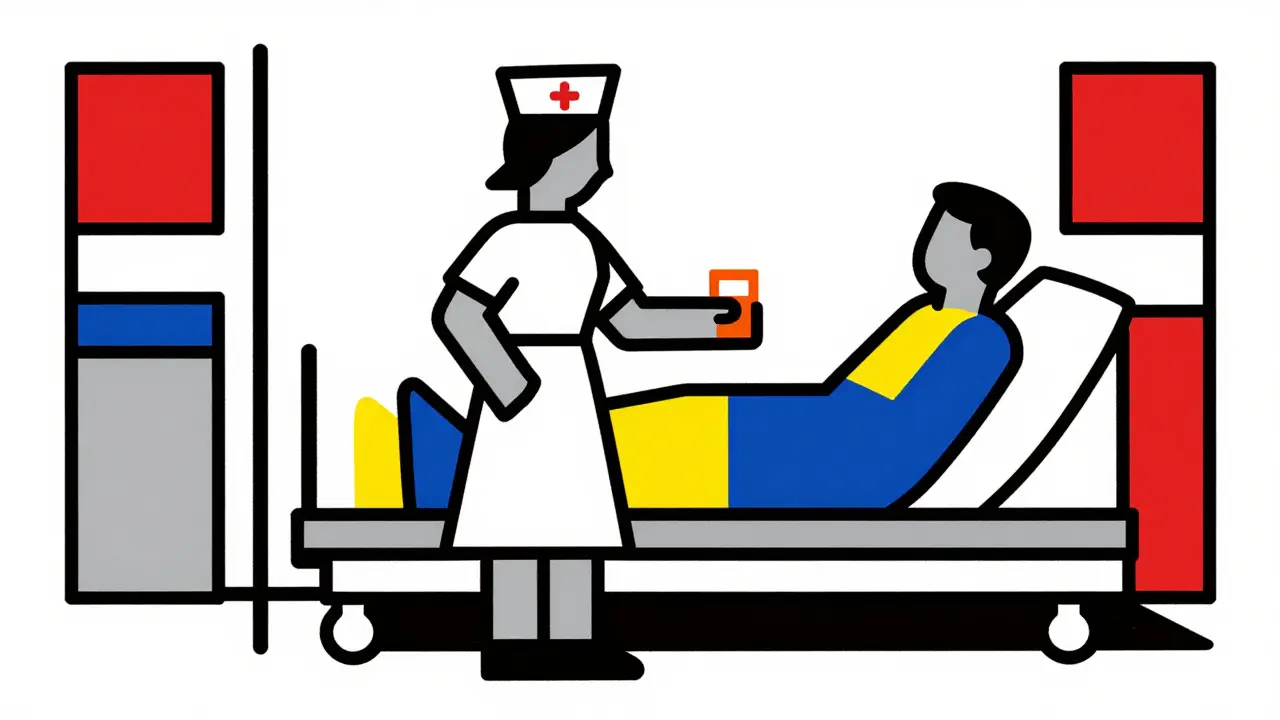
Patient hands shake when they see a pill that looks different than before. It’s not always the medicine causing the tremors-it’s often the fear that something has changed without their permission. You walk into a room, administer a dose, and suddenly you’re the one explaining why the blue tablet is now white. This happens daily. In fact, generics make up 90% of all prescriptions filled in the United States. Yet, many patients still hesitate when handed a substitute.
This hesitation creates a gap between medical safety and patient compliance. If someone stops taking their blood pressure meds because the color changed, their health takes a hit. That is where your role comes in. Generic Medication Counseling is the process where nurses explain therapeutic equivalence and address patient concerns about prescription substitutions. It isn’t just about reading labels. It is about trust.
We know the stats. About 68% of patients believe generics are less effective than brand-name drugs, even though the law says otherwise. Your conversation in that three-minute window can flip that mindset. Let’s break down exactly how to handle these moments so patients leave confident and safe.
The Foundation: What Makes a Drug "Generic"?
Before you explain anything to a patient, you need to own the facts yourself. Many nurses rely on assumptions, but specifics win trust. When we talk about a generic drug, we aren’t talking about a copycat. We are talking about a product that meets strict federal standards.
The Food and Drug Administration requires bioequivalence. This means the generic version must deliver the same active ingredient at the same strength and dosage as the brand name. It has to fall within an 80-125% range of the brand-name drug’s pharmacokinetic profile. That sounds technical, but for the patient, it simply means the medicine works the same way in their body.
FDA Bioequivalence Standards are regulations ensuring generic medications perform therapeutically the same as brand-name drugs. Manufacturers must prove this before approval. They also manufacture these drugs in facilities meeting the same quality standards as big pharma companies. This historical context matters because it started with the Hatch-Waxman Act of 1984, which created the pathway for these approvals. Knowing this history helps you answer follow-up questions about safety.
Patient anxiety often stems from visual differences. A brand-name levothyroxine might be round and green. The generic could be oval and yellow. Therapeutic Equivalence is a rating system indicating that two drug products have the same clinical effect. Appearance does not change efficacy. However, ignoring the visual difference only makes patients suspicious. You have to acknowledge the change while validating the quality.
Nurse Versus Pharmacist: Different Roles, Same Goal
You might wonder, "Can’t the pharmacist handle this?" Pharmacists absolutely play a huge role. They typically spend 8-12 minutes counseling at the point of dispensing. They focus heavily on interactions and insurance issues. But here is the difference: you are there during administration.
In acute care settings, you see the patient every day. You watch how they react to the medication. A 2022 comparative study found that nursing-led counseling achieved 89% patient comprehension of generic medication equivalence. Pharmacists reached 93%, but nurses showed superior effectiveness in addressing immediate administration concerns. You catch the side effects right when they start happening.
Nursing Medication Education is patient-specific teaching delivered during hospitalization or clinic visits to ensure safe drug use. This longitudinal relationship is your superpower. Patients interacting consistently with the same nurse had 44% fewer concerns about generic substitutions. Why? Because they know you have their back. If you are the one who usually gives their pain medication, and you switch it to a generic, they listen more if you explain why.
Outpatient settings pose more challenges. Time constraints reduce counseling effectiveness by about 31% in those environments. In busy clinics, you might get 90 seconds. In the hospital, you have 3 to 5 minutes. Adjust your script accordingly. Shorter times mean focusing on the core message: "Same active ingredient, safe, approved." Longer times allow for deeper conversations about cost savings and long-term benefits.
Five Steps to Effective Generic Counseling
Rushing through this process is where errors happen. Standardizing your approach ensures no critical information slips through. The Institute for Safe Medication Practices recommends a five-step framework that fits into most workflows.
- Pre-counseling assessment: Spend two minutes finding out what they already know. Ask, "Have you taken this type of medication before?" or "Do you remember the last time you picked this up?" This gauges their baseline understanding.
- Explain standards: Use plain language. Don't say "bioequivalence." Say, "This medicine has the same main ingredient working in your body." Keep it to three minutes max.
- Address appearance: Acknowledge the pill looks different. Explain inactive ingredients cause color or shape changes, not the active drug.
- Verification: Use the teach-back method. Ask the patient to tell you back what they learned. This confirms understanding better than asking, "Do you understand?" because patients often say yes even when confused.
- Documentation: Log the discussion in the chart. Magnet-status hospitals require recording this in 92% of cases.
Dr. Linda Cronenwett, former dean of UNC School of Nursing, notes that addressing visual discontinuity head-on is non-negotiable. If you skip the look-and-feel explanation, you risk losing credibility later. Patients notice small details. Ignoring them suggests you don’t care about the difference.

Handling Sensitive Situations: Narrow Therapeutic Index
Not all generics are simple swaps. Some medications have a very narrow safety margin. A slight change in absorption can lead to toxicity or treatment failure. These are called Narrow Therapeutic Index Drugs are medications where small concentration changes can cause serious harm or loss of effectiveness.
Warfarin, levothyroxine, and lithium sit on this list. If a patient has been stable on a specific brand for years, switching to a generic can genuinely be tricky. You cannot just dismiss their concern as fear. One ICU nurse shared a story about a patient anxious when their warfarin pill changed color. She spent 15 minutes explaining why they stuck with the same manufacturer despite insurance pushing for substitution. Sometimes, the answer is advocating to keep the brand.
There are 15 specific drugs on the FDA 2023 list requiring caution. You need to know which ones your facility uses. If a patient complains of feeling off after a switch, do not brush it off. Investigate immediately. Document any adverse events related to the substitution. This protects the patient and informs future policy.
Documentation and Legal Standards
Counseling doesn’t exist until you write it down. Regulatory bodies like CMS and The Joint Commission have strict rules. CMS Rule 1885-F exempts some institutional settings from certain counseling mandates when professionals administer meds, but that creates gaps you must fill voluntarily.
Element Details Medication Name List both generic and brand names used previously Intended Use Why the patient is taking it today Appearance Change Note color/size differences discussed Safety Info Mentioned bioequivalence and safety standards Teach-Back Result Did patient repeat instructions correctly?
Electronic Health Records like Epic and Cerner have templates for this now. 67% of healthcare systems implemented mandatory fields for these discussions by 2023. If your system lacks this, advocate for it. Proper documentation prevents liability if a patient claims they never knew about the change. It also creates a trail showing you fulfilled your duty of care.

Tools to Improve Patient Understanding
Talking alone sometimes falls flat. Visual aids help bridge the gap. The FDA maintains an online resource called the Orange Book. It lists therapeutic equivalence ratings. Showing a patient the data on a tablet screen can be powerful. On forums, nurses report that patients' anxiety drops dramatically when they see the official government backing.
FDA Orange Book is a publication providing information on approved drug products including therapeutic equivalence codes. You can bookmark this page on your handheld device. Additionally, standardized scripts approved by pharmacy committees save time. Instead of improvising, read from a vetted guide. Some hospitals piloted a "Generic Medication Passport" where nurses document each substitution with pictures. This helps patients track their regimen at home.
AI tools are emerging too. By 2024, nearly half of systems were using AI-powered tools giving real-time data at the point of care. These help you instantly recall equivalence ratings or storage requirements. Embrace technology that supports, rather than replaces, your conversation.
Common Challenges and Solutions
You will face obstacles. Language barriers affect 28% of attempts according to CDC data. If you cannot speak their language, bring a translator or use translation apps immediately. Never guess. Miscommunication here risks adherence.
Time is the second biggest hurdle. 67% of nurses cite lack of time. Plan your medication rounds. Group education opportunities with routine tasks. For example, while checking vitals, briefly ask, "How did the morning pills look today compared to yesterday?" Keep it informal. It opens the door for a deeper talk later if needed.
New graduates struggle most. 41% report insufficient training on this topic. If you are preceptoring new staff, include generic counseling in your checklist. Show them how to handle the tough questions. Experienced mentors make the difference between a terrified rookie and a confident clinician.
Is a generic medication the exact same as the brand name?
Generics must contain the same active ingredient, strength, and dosage form. They work the same way in the body. However, inactive ingredients like fillers or dyes might differ, changing the pill’s color or shape slightly.
How do I know if my patient understands the explanation?
Use the teach-back method. Ask the patient to explain the new medication plan in their own words. If they confuse the brand with the generic, clarify again until they demonstrate correct understanding.
Should I allow patients to refuse generic drugs?
Patients have the right to request a specific manufacturer, but insurance may not cover it. For narrow therapeutic index drugs, staying with the original manufacturer is safer. Discuss costs and safety trade-offs openly.
What if the patient feels worse after switching?
Report the symptoms immediately. Some individuals react differently to inactive ingredients in different brands. Document the reaction. The provider may need to adjust the prescription or stick to the previous supplier.
Are there laws about which drugs must be generic?
State laws vary on automatic substitution. Physicians can override this by writing "Dispense as Written." Nurses must know local regulations and verify doctor intent when handling high-cost brand-name requests.
Your voice carries weight in these rooms. When you take the time to validate a patient's worry and back it up with facts, you turn fear into adherence. It builds the foundation for their long-term recovery. Don't rush the conversation. A few extra minutes can prevent a hospital readmission months down the road.
Comments (9)
Cameron Redic
April 1, 2026 AT 00:35
Patient skepticism isn't just fear it's a rational response to seeing the system prioritize cost over consistency. The narrative suggests compliance issues stem from appearance alone yet insurance drives the substitution regardless of stability. We ignore the systemic pressure behind these switches while blaming individual hesitation for poor outcomes. Trust isn't built by citing regulations when the underlying motivation remains purely financial savings. It creates friction because nurses become messengers for policies they didn't write. This dynamic turns clinical interactions into administrative hurdles rather than healing moments.
William Rhodes
April 2, 2026 AT 08:23
Stop making excuses for how things work and focus on the fact that you save lives by sticking up for them. You are the front line and your attitude determines whether they stay healthy or spiral back into the hospital bed. If you give them the pill and tell them it works then they believe it because they see you care. Worrying about the color is useless when the chemistry does its job exactly as designed for their health. Fight the good fight and keep pushing through the resistance because their survival depends on getting that medicine in.
Dan Stoof
April 3, 2026 AT 02:20
This is absolutely brilliant information!!! It shines light on the hidden struggles!!! The way you break down the visual differences makes so much sense!!! Trust is such a powerful tool in medicine!! And the bioequivalence stats are mind-blowing!!! Keep spreading this knowledge!! Everyone needs to hear this message!!
Christopher Curcio
April 3, 2026 AT 22:23
Pharmacokinetic variance in inactive matrices often triggers subjective adverse events even when active concentration remains stable. Bioavailability monitoring requires careful attention to absorption curves during initial substitution phases to mitigate risks. Clinical adherence drops significantly when the placebo effect associated with familiar packaging is disrupted by new formulations. Documentation of these psychosomatic responses is critical for maintaining legal protection against malpractice claims regarding therapeutic failure.
Marwood Construction
April 5, 2026 AT 07:40
The regulatory framework outlined supports current institutional mandates for comprehensive patient education protocols. Compliance with Joint Commission standards necessitates detailed recording of therapeutic equivalence discussions during medication administration rounds. Systematic tracking ensures accountability and reduces liability exposure for healthcare providers managing high volume substitution cases. Professional documentation serves as the primary evidence of due diligence in these scenarios.
Calvin H
April 6, 2026 AT 11:49
Sure let us document everything until the charts are thicker than the patients themselves. They spend more time typing in the computer than actually holding the IV bag. Bureaucracy wins again while the sick wait in pain wondering why nobody has time for them. Safety manuals are great until the floor burns down.
Katie Riston
April 7, 2026 AT 04:47
When we look at the philosophy of nursing it becomes clear that trust is the actual medication sometimes. We forget that human connection transcends the chemical composition inside the pill bottle completely. Fear stems from feeling unheard and powerless during medical transitions which happens constantly now. A nurse standing beside the bed offers a presence that paper forms never could deliver effectively. We must recognize the emotional labor involved in explaining these changes repeatedly over time. The visual shift triggers memories of past losses or medical trauma for many individuals quietly. Ignoring that psychological layer ignores half of the treatment plan entirely. We cannot simply treat bodies without acknowledging the minds experiencing the change actively. Every conversation becomes a chance to rebuild dignity in a sterile environment filled with stress. Patience allows the nervous system to reset and accept the new reality presented. It takes courage to admit uncertainty but also shows strength in guiding someone through confusion. We act as bridges between complex regulatory language and the lived experience of vulnerability daily. This balance is hard work and deserves respect beyond just counting tasks completed efficiently. Understanding the patient history provides context for why a blue pill matters so much emotionally to them personally. True care involves listening more than speaking during those critical three minute windows available. We grow stronger as professionals when we honor these fears instead of dismissing them lightly away.
Kendell Callaway Mooney
April 7, 2026 AT 20:28
Your point about honoring fears really highlights the core issue of patient comfort.
Angel Ahumada
April 9, 2026 AT 10:43
intellectual discourse suffers when reduced to simple platitudes about comfort or feelings without structural analysis you seem to miss the deeper socio-political implications of pharmaceutical monopolies dictating hospital supply chains entirely the elite understand that cost containment strategies prioritize shareholder returns over individualized care metrics consistently genuine insight comes from questioning the power structures rather than accepting surface level explanations most practitioners lack the vocabulary to discuss this nuance properly outside of basic training manuals true understanding requires reading beyond what is written on the official policy documents publicly available