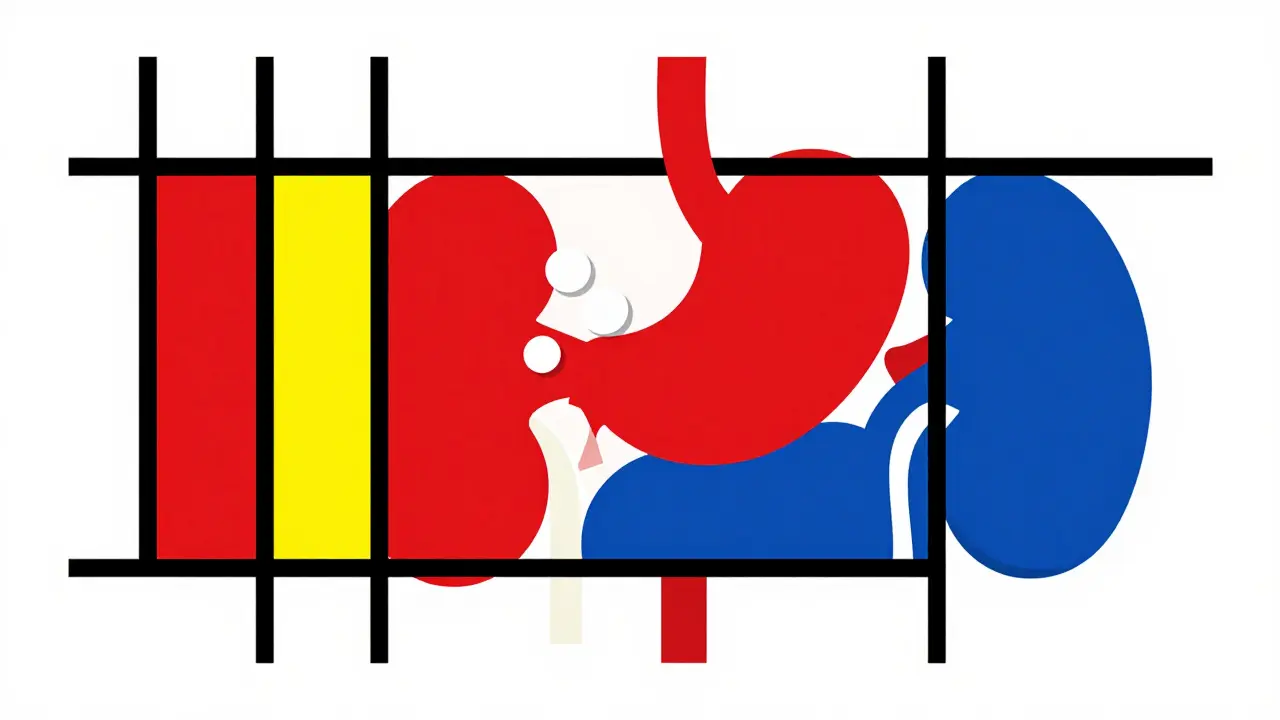
Taking a quick over-the-counter pain reliever seems harmless, but for millions, it's a gamble with their internal organs. Every year in the U.S., NSAID-related complications lead to over 100,000 hospitalizations. Whether it's a chronic struggle with arthritis or a stubborn injury, the medications we reach for most often-like ibuprofen or naproxen-can quietly damage the stomach lining and put a strain on the kidneys without a single warning symptom.
Understanding the Risks of NSAIDs
To understand why these drugs cause trouble, we first need to look at what they actually do. NSAIDs is a class of medications called nonsteroidal anti-inflammatory drugs that reduce pain and inflammation by blocking cyclooxygenase (COX) enzymes. These enzymes are responsible for creating prostaglandins, which are chemicals that cause pain but also protect your stomach lining and keep blood flowing to your kidneys.
The problem is that most common NSAIDs are non-selective. This means they block both COX-1 (the "protector" enzyme) and COX-2 (the "inflammatory" enzyme). When you shut down COX-1, you strip away the mucus layer that protects your stomach from its own acid. This is why some people feel fine for a while and then suddenly face a severe ulcer. In fact, data shows that 10% to 50% of users experience some form of gastropathy, and about 15% of long-term users develop peptic ulcers.
The Impact on Your Gastrointestinal Tract
GI damage happens in two ways: the pill physically irritates the stomach lining as it dissolves, and the systemic blockade of prostaglandins weakens the gut's natural defenses. This can lead to a range of issues, from simple indigestion (dyspepsia) to life-threatening bleeding.
While most people worry about the stomach, the lower GI tract is also at risk. NSAID-induced enteropathy is damage to the small intestine caused by chronic use of nonsteroidal anti-inflammatory drugs. Unlike the stomach, where we have a few reliable ways to protect the lining, there is currently no evidence-based strategy to completely prevent or treat injury to the lower intestines.
Bleeding isn't always obvious. You might not see blood in your stool, but you could be suffering from occult bleeding, which leads to iron deficiency anemia. This is why regular screening is vital for those on long-term therapy.

How NSAIDs Affect Your Kidneys
Your kidneys rely on prostaglandins to keep blood vessels open. When ibuprofen or naproxen block these, the blood vessels in the kidney constrict. This reduces the glomerular filtration rate, which is essentially how fast your kidneys clean your blood.
For a healthy person, this might be a minor dip. But if you are dehydrated, elderly, or already have kidney disease, it can trigger Acute Kidney Injury is a sudden episode of kidney failure or kidney damage that happens within a few hours or a few days. This occurs in 1% to 5% of users and can be dangerous if not caught early. Warning signs are often subtle, such as swelling in the legs or a decrease in urine output.
| Feature | Non-Selective (e.g., Naproxen, Ibuprofen) | COX-2 Selective (e.g., Celecoxib) |
|---|---|---|
| Upper GI Bleed Risk | High (up to 4.2x increase) | Lower (approx 1.9x increase) |
| Kidney Stress | Significant | Significant |
| Cardiovascular Risk | Moderate | Potentially Higher |
| Stomach Protection | Low (inhibits COX-1) | Higher (spares COX-1) |
Monitoring and Safety Protocols
If you must use these medications, you can't just "set it and forget it." Proper monitoring is the only way to catch damage before it becomes permanent. For high-risk patients, this means a baseline check and periodic updates.
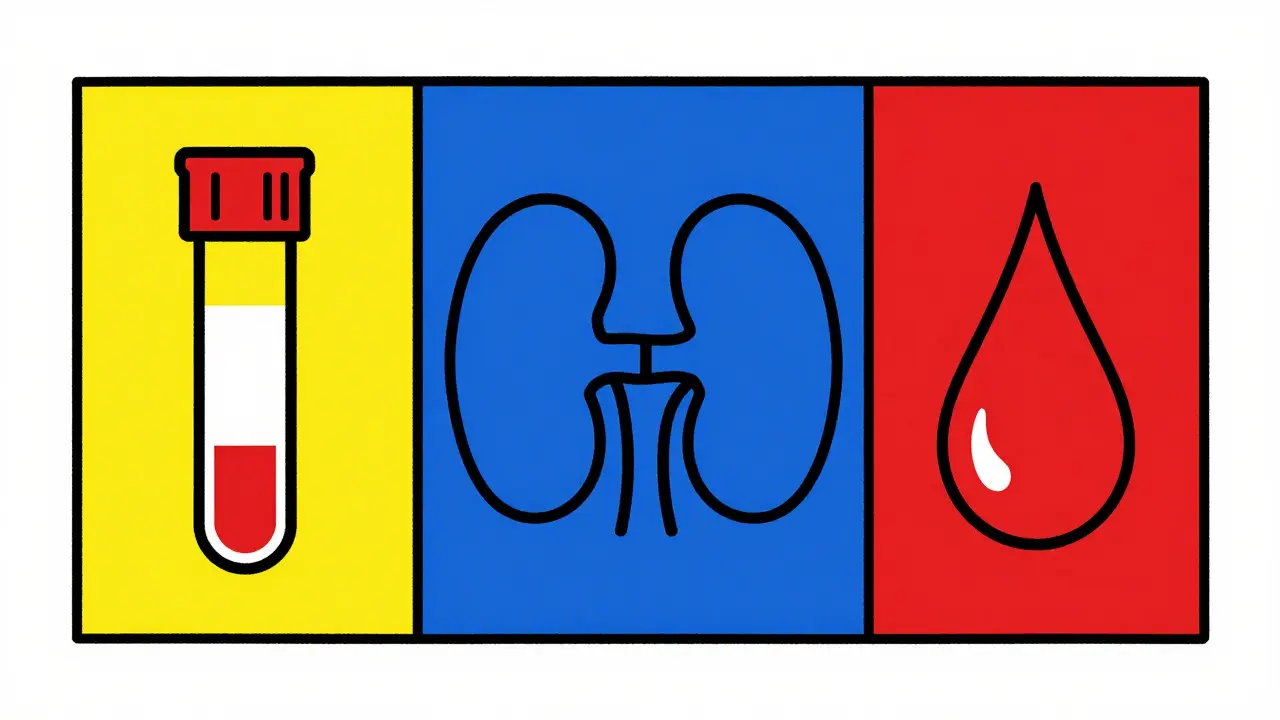
Key monitoring parameters include:
- Serum Creatinine: This should be checked within 30 days of starting the medication and then periodically to monitor kidney function.
- Blood Urea Nitrogen (BUN): Another critical marker for renal health.
- Complete Blood Count (CBC): Used to check for anemia, which often signals slow, hidden GI bleeding.
- Fecal Occult Blood Testing: For high-risk patients, this should be done every 6 months to find blood that isn't visible to the naked eye.
To determine if you are "high risk," doctors often use a point system. You gain points if you are over 65, have a history of ulcers, use anticoagulants (blood thinners), or take corticosteroids. If you hit a certain threshold-usually 4 points or more-you need a proactive prevention plan.
Strategies for Risk Mitigation
The most effective way to stay safe is simple: use the lowest dose for the shortest amount of time. Every extra week of use increases your risk of complications by 3% to 5%.
Many doctors prescribe Proton Pump Inhibitors is a class of medications that significantly reduce stomach acid production, such as omeprazole, to protect the stomach. While PPIs can reduce ulcer complications by 70% to 90%, they aren't a perfect shield. They don't protect the lower intestine, and long-term combined use of PPIs and NSAIDs has been linked to an increased risk of microscopic colitis.
Another danger is the "drug cocktail" effect. Avoid taking NSAIDs if you are also on SSRIs (certain antidepressants), as this combination can increase your bleeding risk by more than three times. Similarly, people with stage 3 chronic kidney disease (eGFR below 60) should avoid these drugs entirely.
The Future of Pain Management
We are seeing a shift toward safer alternatives. New options like naproxcinod, which donates nitric oxide, have shown a 58% lower rate of ulcers in trials. Additionally, AI-powered endoscopy is being developed to spot early signs of intestinal damage that humans might miss.
The key takeaway is that pain management is a balance. You shouldn't have to choose between chronic pain and organ failure. By using the right tool for the job-perhaps a selective COX-2 inhibitor for those with sensitive stomachs-and keeping up with lab tests, you can manage the pain without sacrificing your long-term health.
Can I take ibuprofen every day?
Daily use of ibuprofen increases the risk of stomach ulcers and kidney damage. Long-term users should be monitored via serum creatinine and blood counts. If daily pain relief is needed, a doctor might suggest a COX-2 selective inhibitor or a different class of medication to protect the GI tract.
What are the warning signs of kidney trouble from NSAIDs?
Watch for swelling in your ankles or legs (edema), a sudden decrease in how often you urinate, or unexplained fatigue. Because kidney damage can be silent, blood tests for creatinine and BUN are the only reliable ways to detect issues early.
Do PPIs completely protect my stomach from NSAIDs?
No. While Proton Pump Inhibitors (PPIs) drastically reduce the risk of stomach ulcers by lowering acid, they do not prevent the direct topical irritation caused by the drug or protect the lower GI tract (small intestine) from enteropathy.
Why is Celecoxib considered safer for the stomach?
Celecoxib is a selective COX-2 inhibitor. Unlike ibuprofen or naproxen, it primarily targets the enzymes that cause inflammation while leaving the COX-1 enzymes-which produce the protective mucus lining of the stomach-mostly alone.
Who should absolutely avoid NSAIDs?
People with stage 3 or higher chronic kidney disease (eGFR < 60 mL/min), those with active peptic ulcers, and patients on dual antiplatelet therapy after a heart attack should generally avoid NSAIDs due to the high risk of kidney failure and severe bleeding.