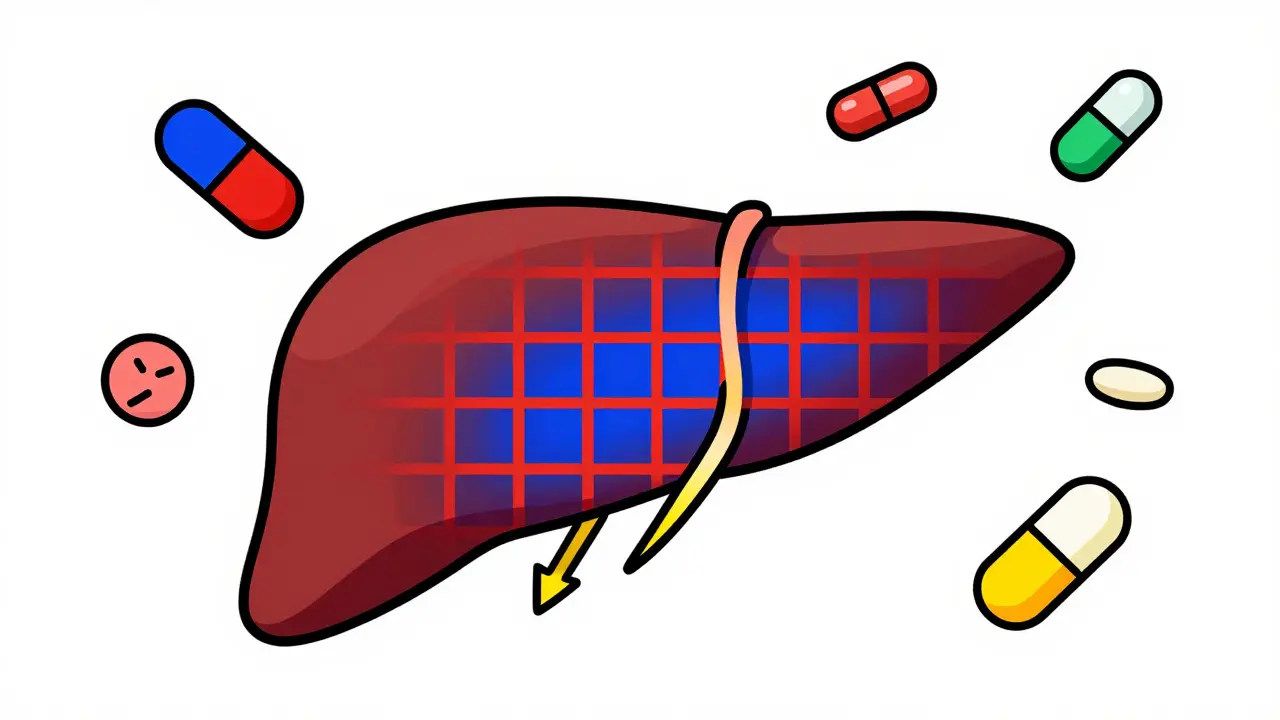
Liver Enzyme Elevation Calculator
Calculate Your Enzyme Elevation Risk
Enter your liver enzyme test results to determine if your elevation is likely harmless or requires medical attention.
Results
Many people get their annual blood work and see a note: ALT elevated. Or maybe it’s AST, or both. The numbers are just a little above normal - not way off, not alarming. But suddenly, their mind races: Is my liver damaged? Should I stop my pills? You’re not alone. This happens all the time. And here’s the truth most doctors don’t have time to explain: mild elevation of liver enzymes from medications is usually harmless.
What Even Are Liver Enzymes?
Your liver is busy 24/7. It filters toxins, makes proteins, stores energy, and breaks down drugs. Inside liver cells are enzymes - proteins that help these jobs run smoothly. Two of the most common ones doctors check are ALT (alanine aminotransferase) and AST (aspartate aminotransferase). When liver cells get irritated or stressed, these enzymes leak into the bloodstream. That’s what shows up on a blood test.Normal ALT levels? Around 7 to 55 units per liter. Normal AST? About 10 to 40. But here’s the catch: normal doesn’t mean zero. Even healthy people can have numbers that creep up a bit. And when they do - especially if they’re under 3 times the upper limit - it’s rarely a sign of serious damage.
Which Medications Cause This?
Lots of common pills can nudge these numbers up. You might be surprised.- Acetaminophen (Tylenol): Even at the full daily dose of 4,000 mg, up to 58% of healthy people show a mild rise in ALT. That’s not because it’s dangerous - it’s because your liver is processing it. Cut back to 2,000 mg a day if you have liver issues, and it usually goes back to normal in a week or two.
- Statins (like atorvastatin, simvastatin): These cholesterol drugs cause mild enzyme elevations in about 0.5% to 2% of users. The FDA stopped requiring routine liver tests for statin users back in 2012 because studies showed these elevations weren’t linked to liver failure. In fact, patients on statins with mild elevations had the same long-term liver health as those with normal numbers.
- Amiodarone: Used for heart rhythm problems. Up to 20% of people on it see enzyme changes. But again, most don’t get sick.
- Methotrexate: Often used for rheumatoid arthritis or psoriasis. About 10-15% of users get mild elevations. Monitoring is still done, but stopping isn’t automatic.
- Isoniazid: For tuberculosis. Around 10-20% of people on it have elevated enzymes in the first two months. Most don’t need to stop.
Notice a pattern? These are all common, well-studied medications. The elevations aren’t a bug - they’re often just a side effect of how your body handles them.
Why Doctors Used to Panic - and Why They Don’t Anymore
Twenty years ago, any rise in liver enzymes meant stop the drug. Now? Not so much. In 2012, the FDA reviewed data from 86,000 patients across 31 clinical trials. They found that people on statins with elevated liver enzymes had no higher risk of liver failure than those on placebo. Same with other drugs.The American College of Gastroenterology, the American Association for the Study of Liver Diseases, and the European Association for the Study of the Liver all agree now: mild elevations (under 3x the upper limit) are not a reason to stop medication. In fact, continuing the drug often leads to the enzymes returning to normal on their own - about 73% of the time with statins, according to a 2021 study in the Journal of Hepatology.
Doctors used to think liver enzymes were a direct warning sign. Now we know they’re more like a smoke alarm. Sometimes it goes off because you burned toast. Not because the house is on fire.

When Should You Actually Worry?
Not every elevation is harmless. Here’s when to pay attention:- Levels above 5x the upper limit - that’s a red flag. Needs investigation.
- Jaundice (yellow skin or eyes)
- Dark urine, pale stools, belly pain, nausea, vomiting
- ALT/AST levels rising over time - not just one high number, but climbing week after week
- Signs of liver failure - confusion, swelling in legs, easy bruising
If you have none of these, and your numbers are just a little high? You’re probably fine. Your liver is just doing its job under a little extra load.
What Do You Do If Your Numbers Are High?
Don’t panic. Don’t stop your meds. Do this:- Wait 2-4 weeks. Repeat the blood test. Many elevations go away on their own.
- Don’t change your dose without talking to your doctor. Stopping a statin, for example, could raise your risk of heart attack.
- Ask about alternatives - if your enzyme levels keep creeping up, your doctor might switch you to a different statin or a non-statin cholesterol drug like bempedoic acid, which has a lower chance of affecting the liver.
- Check for other causes. Are you drinking alcohol? Do you have fatty liver? Are you taking herbal supplements? These can also raise enzymes.
One patient I know - a 58-year-old woman on atorvastatin - had ALT levels between 65 and 85 for five years straight. Her doctor didn’t change anything. Her ultrasound showed no liver damage. Her heart stayed healthy. Her enzymes? Still slightly high. But she’s alive and active. That’s the point.
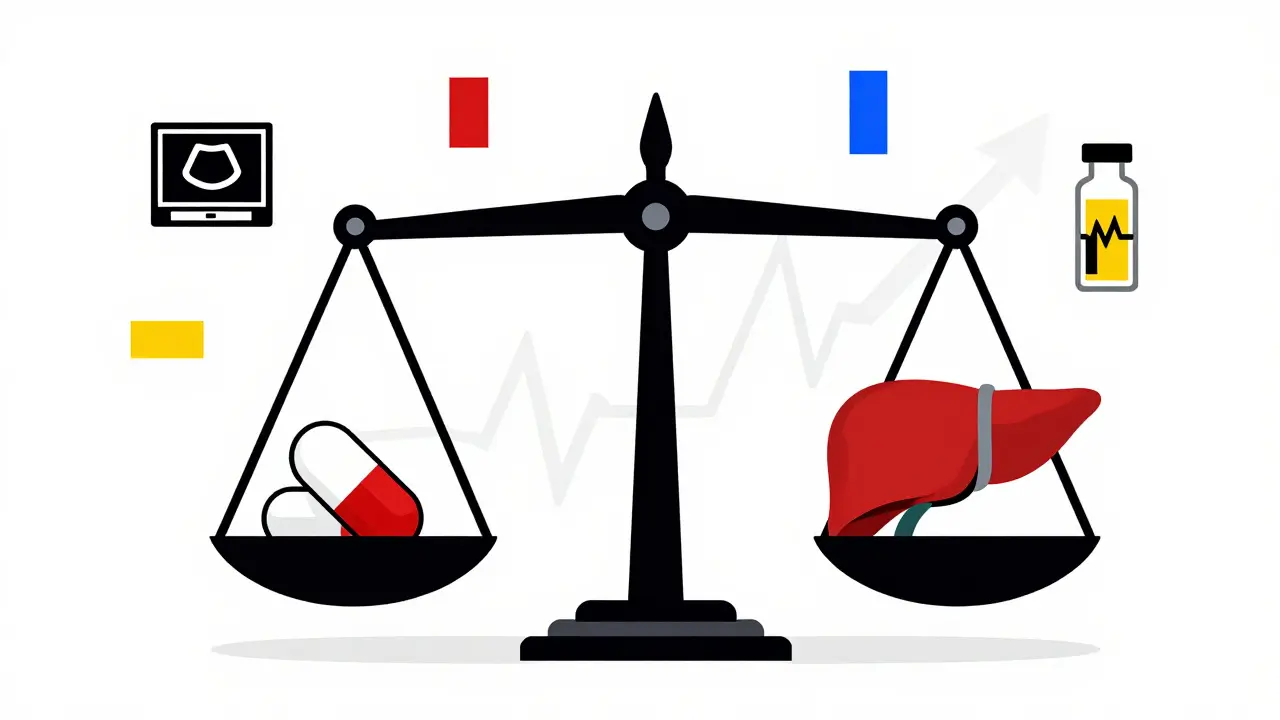
Why So Many People Stop Their Meds - And Why That’s Risky
A 2022 survey of 3,500 people found that 58% stopped their prescribed medication because of mild liver enzyme elevations - without telling their doctor. That’s dangerous.Stopping a statin because of a lab number? You’re trading a tiny, likely harmless lab change for a real risk: heart attack, stroke, or death. A 2022 analysis in JAMA Internal Medicine estimated that this kind of unnecessary discontinuation costs the U.S. healthcare system over $1.2 billion a year in preventable heart events.
And here’s the irony: patients who were educated about what mild elevations mean? They were 37% less likely to quit their meds, according to pilot programs at 15 major medical centers. Knowledge reduces fear.
What’s New in 2026?
Science is getting smarter. Researchers now talk about “liver adaptations” - not damage. Your liver cells might release more enzymes because they’re adjusting to the drug, not because they’re dying. A 2023 study in Hepatology Communications found a new blood test using microRNA markers that can tell the difference between harmless enzyme rises and true liver injury - with 92% accuracy. This test isn’t widely available yet, but it’s coming.Electronic health records like Epic now have smart alerts built in. If your doctor tries to automatically stop your statin because of a mild ALT rise, the system pops up: “Continue medication. No action needed below 3x ULN.” That’s helped cut unnecessary discontinuations by 29% at Mayo Clinic.
Bottom Line
Mild elevation of liver enzymes from medications? It’s common. It’s usually not dangerous. It’s not a reason to stop your pills. Your liver is resilient. Most of the time, it’s just doing its job - and the numbers reflect that, not damage.Do this: Get the test repeated. Talk to your doctor. Don’t self-discontinue. If your numbers stay low or go down, keep going. If they climb, or you feel sick, then dig deeper. But don’t let a number on a lab report scare you into risking your heart, your joints, or your health.
You’re not broken. Your liver isn’t failing. You just need to understand what the numbers really mean.
Are mild liver enzyme elevations dangerous?
No, mild elevations - defined as ALT or AST under 3 times the upper limit of normal - are rarely dangerous. They’re often just a sign your liver is processing a medication, not being damaged. Most patients who continue their meds see levels return to normal on their own.
Should I stop my statin if my liver enzymes are high?
No, unless your levels are above 3 times the upper limit or you have symptoms like jaundice or severe fatigue. Major guidelines from the FDA, AASLD, and American Heart Association all recommend continuing statins for mild elevations. Stopping increases your risk of heart attack more than the enzyme rise does.
How long does it take for liver enzymes to go back to normal?
It varies. With statins, about 73% of patients see normalization within 2-4 weeks of retesting, even while staying on the drug. With acetaminophen, levels often drop within 1-2 weeks after reducing the dose. If enzymes keep rising after 4-6 weeks, your doctor may consider switching medications.
Can supplements or herbs cause liver enzyme elevations?
Yes. Green tea extract, kava, black cohosh, and some weight-loss supplements are known to cause liver stress. Even “natural” doesn’t mean safe. Always tell your doctor what you’re taking - including vitamins, herbs, and CBD - because they can interact with your meds and raise enzymes.
Is fatty liver disease related to medication-induced enzyme elevations?
Yes. Nonalcoholic fatty liver disease (NAFLD) affects up to 30% of adults and is one of the most common causes of mild enzyme elevations - even more common than medications. If you’re overweight, have diabetes, or high triglycerides, fatty liver may be the real culprit, not your pill. A simple ultrasound can tell the difference.
Do I need a liver ultrasound if my enzymes are mildly high?
Not always. If you have no symptoms, no other risk factors, and your enzymes are only slightly elevated, an ultrasound isn’t needed right away. But if levels stay high after 4-6 weeks, or if you have other signs like obesity or diabetes, your doctor may order one to check for fatty liver or other conditions.
Comments (15)
Jodi Harding
January 18, 2026 AT 01:42
My ALT was 68 for 3 years on statins. No symptoms, no damage. Just my liver doing its job. Stop freaking out over numbers.
Jake Moore
January 19, 2026 AT 04:43
As a pharmacist, I see this every week. People panic over a 10-point ALT bump and quit their meds. Then they show up in the ER with a clot. You’re not broken. Your liver isn’t failing. Your fear is just loud.
That statin? It’s saving your life. That number? Just noise. Listen to your doctor, not your anxiety.
Praseetha Pn
January 19, 2026 AT 08:49
They don’t want you to know this but Big Pharma loves it when you keep taking statins even when your liver screams. That ‘mild elevation’? It’s a slow burn. They’ve been hiding the real data for decades. I’ve seen people go from ‘slightly high’ to cirrhosis in 18 months. They’ll say ‘it’s common’ - yeah, like cancer is common. Don’t be the next statistic.
And don’t even get me started on how they bury the microRNA test. They don’t want you to know you can tell the difference between real damage and fake alarms. The system is rigged.
Nishant Sonuley
January 19, 2026 AT 23:19
Look, I get it - you’re trying to be reassuring. But let’s be real: if your liver enzymes are up, your liver is stressed. Period. Whether it’s ‘harmless’ or not, your body is sending a signal. Ignoring it because ‘73% of people bounce back’ is like saying ‘my car’s check engine light is fine because 73% of cars with it on don’t explode.’
Maybe it’s not a heart attack waiting to happen - but maybe it’s a slow leak in your engine. You don’t wait for the engine to seize before you check the oil. You check it. You adjust. You listen. That’s what real health care looks like - not just ‘keep taking it.’
Emma #########
January 20, 2026 AT 07:07
I had this happen last year. I was terrified. My doctor just smiled and said, ‘Let’s wait a month.’ I did. It went down. I cried because I didn’t realize how much I’d been stressing over a number that meant nothing. Thank you for saying this. I needed to hear it.
Andrew Short
January 21, 2026 AT 23:35
Oh please. You’re just another doctor selling the pharmaceutical script. Statins kill more people than they save. The liver enzyme thing is just the tip of the iceberg. You think people don’t know about the muscle atrophy, the diabetes risk, the cognitive fog? You’re not helping. You’re enabling.
And don’t even get me started on ‘natural’ supplements being the real culprit. You think Big Pharma doesn’t profit from you blaming turmeric instead of their pills? Wake up.
Andrew Qu
January 23, 2026 AT 13:41
Hey - if you’re reading this and you’re scared about your liver numbers? You’re not alone. But you’re also not broken.
Here’s what you do: write down your meds. Write down your supplements. Write down your alcohol intake. Then go back to your doctor with that list. Don’t guess. Don’t panic. Just show up with facts.
Most of the time, it’s not the statin. It’s the herbal tea you’ve been drinking for ‘detox.’ Or the weekend binge. Or the undiagnosed fatty liver.
You got this. One step at a time.
Robert Cassidy
January 24, 2026 AT 13:46
They told us the same thing about cigarettes. ‘Just a little cough.’ ‘Minor lung irritation.’ ‘It’s not that bad.’ Now we know. They always downplay the danger until it’s too late.
They say ‘mild’ like it’s a comfort word. But mild damage accumulates. Mild stress kills slowly. Mild doesn’t mean safe. It just means they don’t care enough to fix it yet.
I’m not stopping my meds. I’m quitting the system. I’m going full keto, zero pharmaceuticals, no more blood tests. Let them label me ‘non-compliant.’ I’d rather live 70 years with a slightly elevated enzyme than 50 with a dead liver and a heart full of plaques.
Zoe Brooks
January 26, 2026 AT 03:35
My mom had this exact thing. She stopped her blood pressure med because her ALT was 60. Two months later, she had a stroke. She’s fine now, but it scared the hell out of us. Please, if you’re reading this - don’t be like my mom. Talk to your doctor. Don’t Google it at 2 a.m.
Also - if you’re taking CBD or ‘natural’ liver cleanses? Stop. They’re worse than statins. I swear.
Kristin Dailey
January 26, 2026 AT 12:19
US healthcare is a scam. They want you dependent on pills. Don’t trust them. Go to a naturopath. Get real answers.
Joni O
January 27, 2026 AT 23:41
so i had this happen last year and i was so scared but my doc said wait 4 weeks so i did and it went down!! and i kept my statin and my heart is good and my liver is fine!! i just wanted to say… you’re not alone and it’s gonna be okay!! 💛
Max Sinclair
January 28, 2026 AT 09:56
Thank you for this. Clear, factual, and calm. Too many people are terrified by lab values they don’t understand. This is the kind of education we need more of - not fear, not hype, just facts.
Also, if you’re taking fish oil, vitamin E, or garlic supplements? Those can also nudge enzymes up. Don’t assume it’s the prescription. Check everything.
Dayanara Villafuerte
January 30, 2026 AT 05:37
My liver enzymes went up after I started turmeric capsules. 🤯 I thought it was ‘anti-inflammatory’ so it was safe. Nope. My doctor said, ‘You’re not in India, honey. Your liver doesn’t know what turmeric is.’ 😅
Point is: ‘natural’ ≠ harmless. Always tell your doc what you’re putting in your body. Even if it’s ‘just a tea.’
kenneth pillet
January 31, 2026 AT 03:01
my doc said same thing. waited 4 weeks. numbers dropped. kept my med. still alive. still healthy. still not dead from a lab value. 🤷♂️
Jay Clarke
February 1, 2026 AT 10:39
You think this is about liver enzymes? Nah. This is about control. They want you dependent. They want you scared. They want you to think your body is broken so you keep buying their pills.
Real healing? Fasting. Cold exposure. Sleep. Movement. Not more chemicals.
They call it ‘mild elevation.’ I call it a warning sign you’re living like a machine. Wake up.