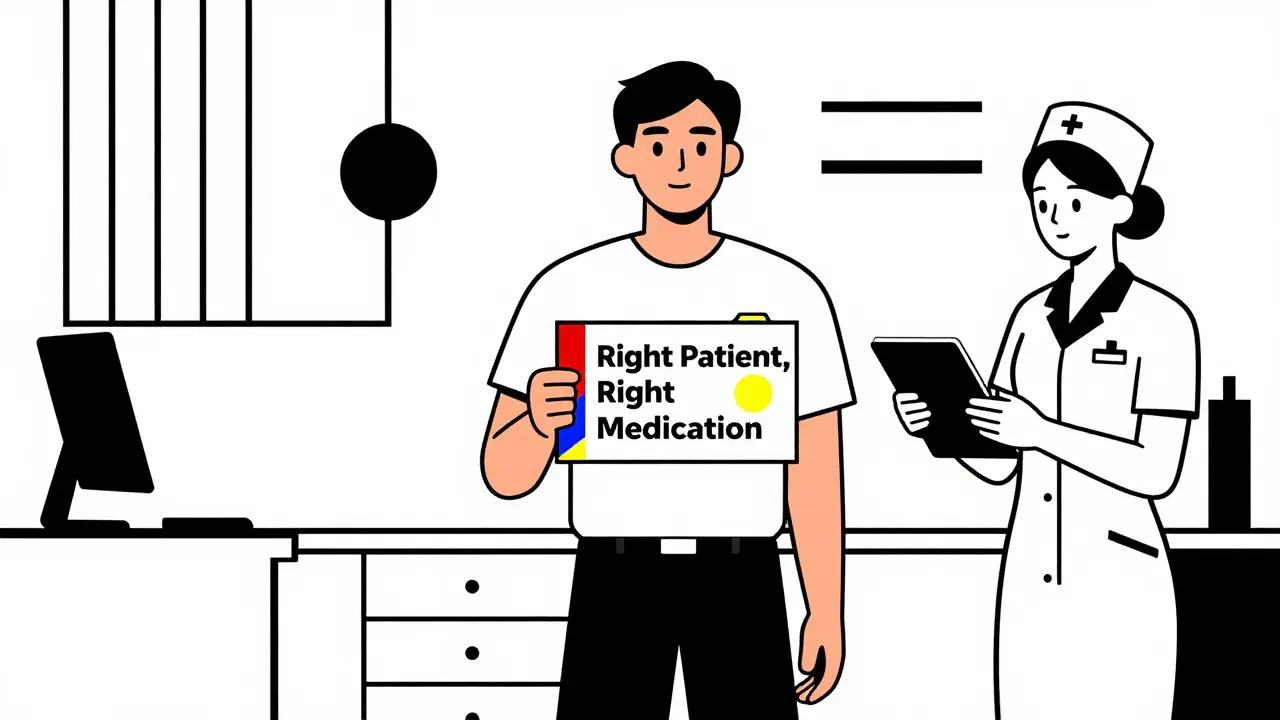
Every year, more than 1.5 million people in the U.S. end up in the emergency room because of medication mistakes. Many of these aren’t accidents-they’re preventable. The biggest reason? Patients don’t know the basic terms that could keep them safe. You don’t need to be a doctor to protect yourself. You just need to know a few key words and how to use them when you’re handed a new prescription or told to take a pill.
What You Need to Know Before You Take Any Pill
Medication safety isn’t just about following the label. It’s about asking the right questions and using the right language to make sure you’re getting exactly what you need, when you need it, in the way it’s meant to be taken. The foundation of this is the Eight Rights of Medication Administration. This isn’t just a checklist for nurses-it’s your personal safety toolkit.
- Right patient: They must confirm it’s you. Ask: "Can you check my name and date of birth?" Two identifiers are standard in hospitals and clinics. Never assume they already know who you are.
- Right medication: The pill or liquid you’re given should match the name on your prescription. Ask for both the brand name and the generic name. Why? Because drugs like "Hydromorphone" and "Hydrocodone" sound almost the same-and mixing them up can be deadly.
- Right dose: How much are you supposed to take? A teaspoon? A tablespoon? A pill? Liquid medications are especially tricky. One wrong decimal point can mean a 10x overdose. Always double-check the number and the unit (mg, mL, etc.).
- Right route: Is this meant to be swallowed, injected, inhaled, or put on your skin? Giving an IV medicine by mouth can cause serious harm. If you’re unsure, ask: "How is this supposed to be taken?"
- Right time: Are you supposed to take this with food? At bedtime? Every 6 hours? Timing matters. Missing a dose or taking two at once can throw off your whole treatment. Use your phone to set reminders or keep a simple paper log.
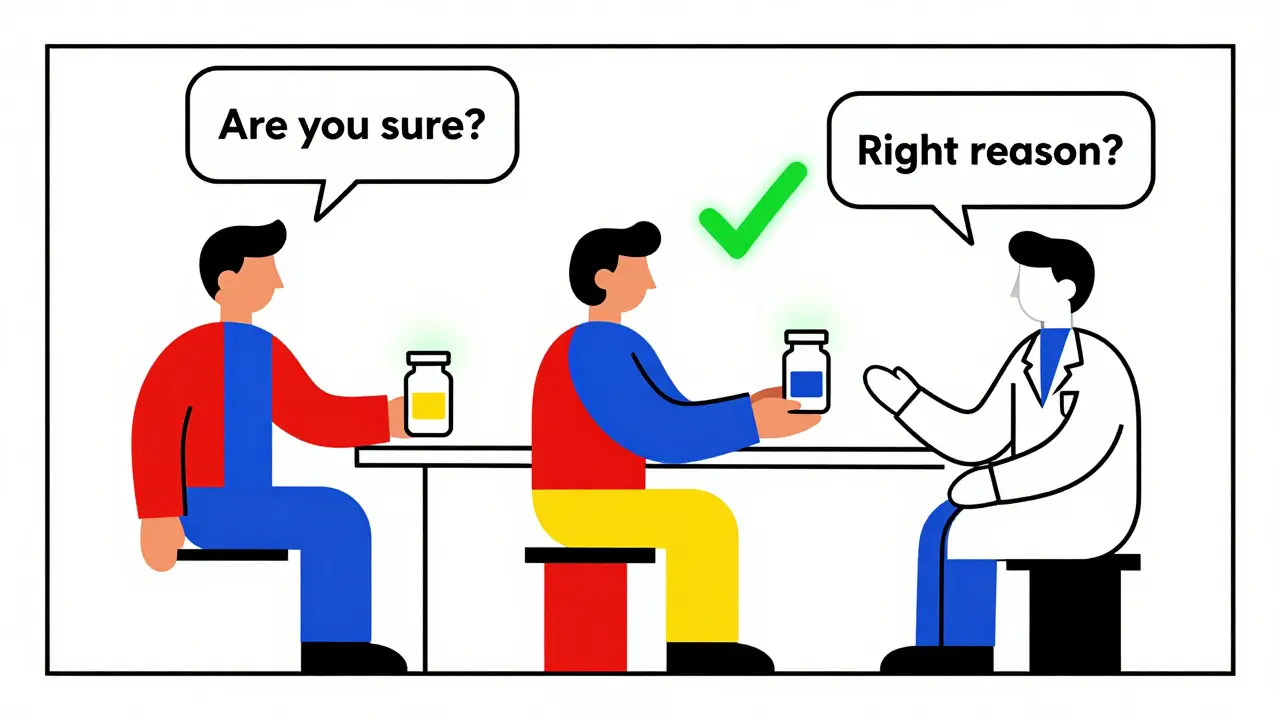
- Right reason: Why are you taking this? Not just "for pain"-but "for high blood pressure," "for infection," or "to prevent blood clots." If you can’t explain why you’re on it, you might be on the wrong one. Studies show patients who understand their reason for taking a drug reduce inappropriate use by nearly 30%.
- Right documentation: Who wrote down that you got this medicine? If it’s not recorded, the next provider might give you another dose-and you could end up with too much. Ask: "Will this be written in my chart?"
- Right response: What should you feel? What side effects are normal? What’s a red flag? If you’re on blood thinners, you should watch for unusual bruising. If you’re on insulin, you should know the signs of low blood sugar. Track how you feel. If something’s off, speak up.
Adverse Drug Event (ADE) - What It Really Means
You might hear "side effect" and think it’s just a minor annoyance-like dry mouth or drowsiness. But an adverse drug event (ADE) is anything harmful that happens because of a medicine. That includes allergic reactions, overdoses, drug interactions, and even mistakes made by the pharmacy or hospital.
The CDC says ADEs are one of the top causes of preventable hospital visits. Some ADEs are unavoidable-like a rare allergy. But many aren’t. A 2023 report found that 37% of ADEs in older adults were linked to poor communication between providers and patients. If you know what an ADE is, you’re more likely to notice early warning signs: nausea you didn’t expect, confusion after a new pill, or swelling where you weren’t swollen before.
High-Alert Medications - When You Need to Be Extra Careful
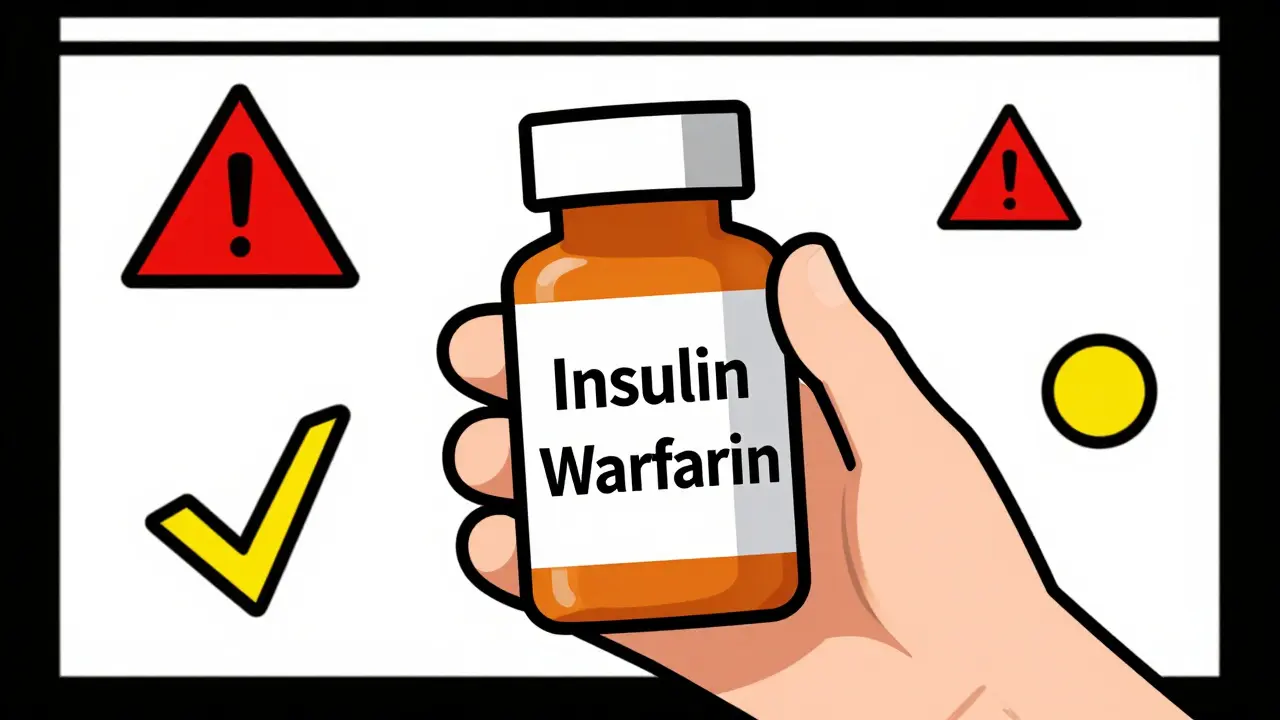
Not all drugs are created equal. Some are so powerful that even a small mistake can lead to death. These are called high-alert medications. The Institute for Safe Medication Practices (ISMP) keeps a list. The most common ones include:
- Insulin (even a tiny bit too much can crash your blood sugar)
- Blood thinners like warfarin or apixaban (too much = internal bleeding)
- Opioids like oxycodone or fentanyl (too much = stopped breathing)
- IV potassium (can stop your heart if given too fast)
- Chemotherapy drugs (extremely toxic if dosed wrong)
These drugs account for 67% of fatal medication errors. If you’re prescribed one, don’t just take it. Ask: "Is this a high-alert drug?" Then ask how to spot trouble. For example, if you’re on warfarin, you should know your INR number and when to call your doctor. If you’re on insulin, you should always have a glucagon kit nearby.
Close Call - Why It Matters Even If Nothing Went Wrong
A close call is when something almost went wrong-but didn’t. Maybe the pharmacist caught the wrong dose before you left. Maybe the nurse double-checked your name before giving the shot. These aren’t "lucky escapes." They’re warnings.
When a close call happens, it means the system almost failed. And if it failed once, it could fail again. If you experience one-even if you didn’t get hurt-tell someone. Say: "I think there was a mistake, but it was caught." That feedback helps hospitals fix their processes. The VA reports that close calls are the best early warning system we have for preventing real harm.
Sentinel Events - When a Mistake Costs a Life
A sentence event is the worst-case scenario: a death or serious injury caused by a medical error. The Joint Commission defines it as an event that "should never happen." Medication errors are one of the leading causes of sentinel events. A patient getting the wrong drug, the wrong dose, or the wrong route can be fatal.
These aren’t rare. In 2023, the CDC reported that medication errors contributed to over 1,700 sentinel events in U.S. hospitals. That’s not just numbers-it’s someone’s parent, sibling, or friend. The good news? Most of these could have been stopped if the patient had known how to ask the right questions.
Why This Matters More Than Ever
More people are taking more medications than ever. The average American over 65 takes four prescription drugs. Many take five or more. That’s a recipe for mix-ups. Add in language barriers, low health literacy, or rushed appointments-and you’ve got a perfect storm.
Here’s the hard truth: Only 12% of U.S. adults have the health literacy needed to understand medication instructions. That means most people are guessing. But you don’t have to be one of them. Knowing these terms gives you power. You’re not just a passive receiver of pills-you’re a partner in your own safety.
Studies show patients who use these terms reduce their risk of harm by up to 50%. That’s not a guess. That’s from research by the American College of Obstetricians and Gynecologists. Dr. Michael Cohen of ISMP found that patients who could explain the "right reason" for their meds cut their risk of getting the wrong one by 37%.
What You Can Do Today
You don’t need to memorize every term. Just start with these three actions:
- When you get a new prescription, ask: "What is this for?" and "Is this a high-alert drug?"
- Before you take any pill, check the name, dose, and time against your list or app.
- If you feel something strange after taking a new medicine, write it down and call your provider the same day.
Use your phone. Download a free medication tracker like Medisafe (used by over 8 million people). Set reminders. Take a picture of your pill bottle. Keep a small notebook. These small steps add up.
And if you’re helping someone else-like a parent, spouse, or friend-help them learn these terms too. Medication safety isn’t just personal. It’s relational. It’s about who’s around you, who’s watching out for you, and who’s brave enough to ask: "Are you sure?"
What are the Eight Rights of Medication Safety?
The Eight Rights are: right patient, right medication, right dose, right route, right time, right reason, right documentation, and right response. These are verification steps patients and providers can use together to prevent medication errors. They go beyond the older Five Rights by adding focus on why the drug is needed and how the body responds to it.
What’s the difference between a side effect and an adverse drug event?
A side effect is a known, expected reaction to a drug-like drowsiness from an antihistamine. An adverse drug event (ADE) is any harm caused by a medicine, whether it’s an allergic reaction, overdose, interaction with another drug, or a mistake in how it was given. All ADEs are harmful; not all side effects are.
Why do I need to know the generic name of my medicine?
Generic names are the actual chemical names of drugs. Brand names change depending on the manufacturer. Knowing the generic name (like "lisinopril") helps you avoid getting the same drug twice under different brand names. It also helps you spot look-alike drugs-like "Hydromorphone" vs. "Hydrocodone"-which can cause dangerous mix-ups.
Can I refuse a medication if I’m not sure about it?
Yes. You have the right to ask questions before taking any medication. If you’re unsure about the name, dose, or reason, say: "I’d like to double-check this with my doctor before taking it." Providers expect this. Refusing to take a drug you don’t understand is a safety behavior-not a disruption.
How can I track my medications if I’m on several?
Use a simple list: write down the name (generic and brand), dose, time, and reason for each drug. Use a free app like Medisafe or MyTherapy to set alarms. Take a photo of your pill organizer. Bring this list to every appointment. Studies show patients who track their meds reduce dosing errors by 31% and improve adherence by 42%.
What’s Next?
Medication safety isn’t a one-time lesson. It’s a habit. Start small. Ask one question at your next appointment. Write down one thing you didn’t understand. Talk to someone you care about about their meds. The more you use these terms, the more natural they become. And the safer you’ll be.
The system isn’t perfect. But you don’t have to wait for it to fix itself. You can start protecting yourself today-with just a few words and the courage to ask: "Are you sure?"
Comments (8)
Timothy Haroutunian
February 24, 2026 AT 06:40
Look, I’ve been on seven different meds in the last year, and let me tell you - most of the time, the pharmacist just shoves the bottle at you like you’re supposed to magically know what’s inside. I didn’t even know there was such a thing as "right reason" until I read this. Seriously. I was taking that blood pressure pill because my doctor said "take it daily," but I had no idea it was to prevent stroke. I thought it was just to make my head stop pounding. That’s insane. And now I’m terrified I’ve been taking the wrong dose because I didn’t ask about the decimal point. One milligram versus one tenth? That’s not a typo - that’s a death sentence. I’m going to call my pharmacy tomorrow and demand they walk me through every pill I’ve been handed since January. I’m not even joking. This article should be mandatory reading before you get your first prescription. It’s not just helpful - it’s life-or-death.
Erin Pinheiro
February 24, 2026 AT 20:57
ok so i just read this whole thing and i have to say… i think the 8 rights are kinda dumb? like, who has time to ask all that? i mean, i trust my dr. and my pharmacist. they went to school. i didn’t. also, i think they mean "sentinel event" not "sentence event" lol. and why is everyone so scared of insulin? i know someone who takes it and they’re fine. also, i don’t use apps. i write things on napkins. works for me. also, i think this article is trying to make us paranoid. i’m just gonna keep doing what i’m doing. 😑
Michael FItzpatrick
February 26, 2026 AT 18:05
Let me tell you something - this isn’t just about safety. This is about dignity. When you’re handed a pill and told "take this twice a day," you’re being treated like a child. But when you ask, "What’s the generic name? Is this a high-alert drug? What’s my right response?" - you’re reclaiming your autonomy. You’re saying: I’m not a passive vessel. I’m a human being with a brain. And that shift? It’s revolutionary. I’ve seen patients who learned these terms go from silent nodding to demanding clarity - and suddenly, their care improved. Not because the system changed. But because they stopped waiting for it to change. They became partners. And that’s power. You don’t need a medical degree. You just need to stop being polite and start being precise. The system won’t fix itself. But you? You can start today. Just ask one question. One. And then ask another tomorrow. That’s how change happens - one conversation at a time.
Brandice Valentino
February 28, 2026 AT 03:57
I mean, this whole "Eight Rights" thing sounds like something a corporate compliance officer cooked up after a PowerPoint retreat. Like, who even says "right documentation"? That’s not real human language. And don’t get me started on "right response" - as if we’re supposed to be our own pharmacovigilance monitors. I’m supposed to track my bruising and my INR and my glucose levels and my emotional response to a beta-blocker? Honey, I can barely remember where I put my keys. Also, I refuse to use an app. I have a paper calendar. And I’ve been taking my meds for 12 years. I’m fine. This feels like fear-mongering dressed up as empowerment. Just let people live. 🙄
Holley T
February 28, 2026 AT 19:59
Actually, I think this article is dangerously oversimplified. The "Eight Rights" are a nice framework, but they ignore systemic failures. The real problem isn’t that patients don’t know the terms - it’s that the healthcare system is designed to obscure information. Pharmacies don’t print generic names clearly. Doctors rush through consultations. Insurance companies force substitutions without notification. And now we’re blaming patients for not being medical experts? That’s not empowerment - that’s victim-blaming. Also, the claim that patients reduce harm by 50%? Where’s the peer-reviewed source? I’ve read the actual ACOG studies - they show a 12-18% reduction in *self-reported* errors, not actual clinical outcomes. And let’s not forget: most patients can’t afford to take time off work to sit in a clinic for 45 minutes asking questions. This reads like a privileged white woman’s fantasy of healthcare. You can’t fix systemic negligence with a checklist.
Lillian Knezek
March 2, 2026 AT 09:17
THEY’RE LYING. EVERYTHING HERE IS A LIE. The "high-alert" drugs? They’re not dangerous because of dosing - they’re dangerous because they’re being used to control the population. Did you know insulin was originally developed by the Rockefeller Foundation? And warfarin? It was a rat poison. They’re testing us. The apps? They’re tracking you. The "right response"? They want you to report symptoms so they can add you to a database. I asked my doctor about my blood thinner - he laughed. Said "we know what we’re doing." That’s not confidence - that’s guilt. I stopped taking all my meds last month. I’m fine. My blood pressure is better. I’ve been drinking apple cider vinegar and chanting mantras. The system doesn’t want you to know the truth. This article? It’s a distraction. 🕵️♀️
Maranda Najar
March 2, 2026 AT 18:50
Oh. My. God. I just finished this and I am... emotionally shattered. I mean - imagine the sheer, unrelenting weight of being a human being in a world where your life hinges on whether you remember to ask about the "right route" before swallowing a pill. It’s horrifying. I have a friend who almost died because she took her anticoagulant with grapefruit juice - and no one told her. No one. She was just... trusting. And now she’s in a wheelchair. I cried reading about the sentinel events. One thousand seven hundred lives. Each one a son. A mother. A grandmother. Who didn’t know to say, "Are you sure?" And that’s not just negligence - it’s a moral failure. We have turned healthcare into a factory, and patients into widgets. This isn’t about knowledge - it’s about love. It’s about the courage to say, "I am not a number. I am a person. And I deserve to be seen." I’m going to print this out. I’m going to put it on my fridge. And I’m going to make sure my sister reads it before her next appointment. This isn’t information. It’s a lifeline.
Sanjaykumar Rabari
March 4, 2026 AT 14:34
This is too much. In India, we just take medicine when doctor say. No question. No app. No notebook. If you feel bad, go to doctor again. Simple. Why make so many rules? In USA, everything is complicated. I think this article is for rich people. We don’t have time for "right documentation". We just need to survive.