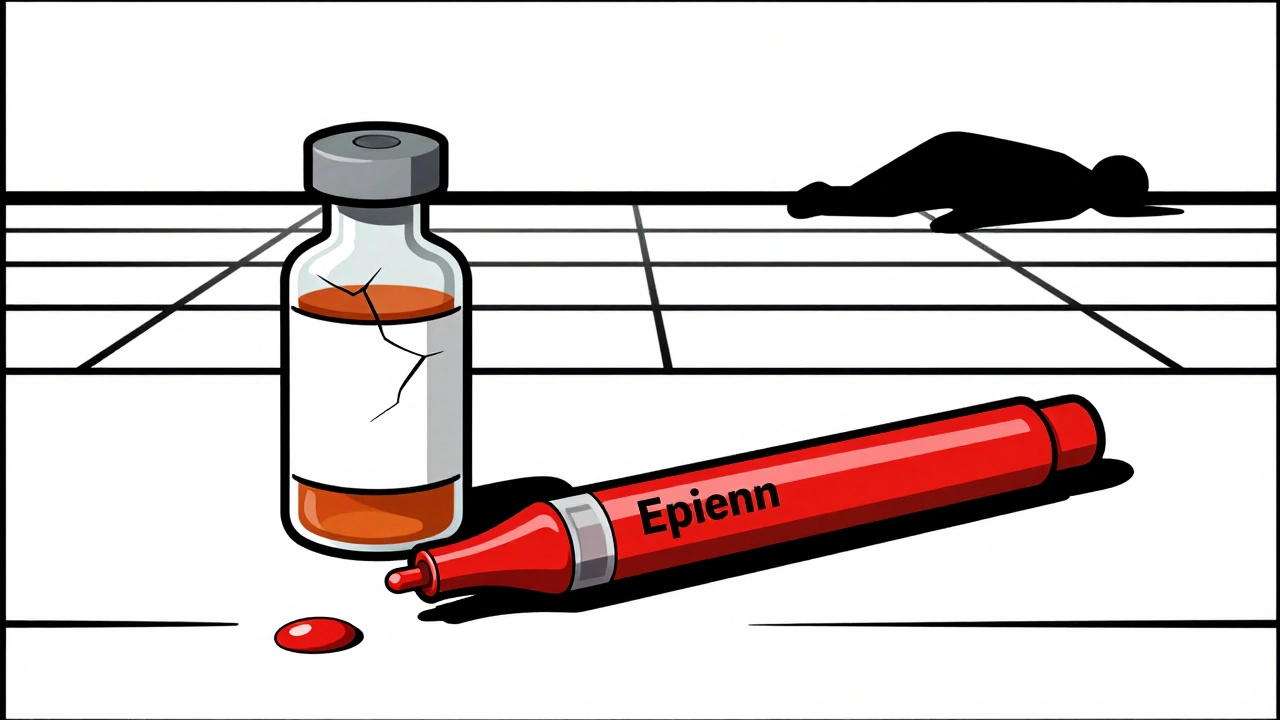
When your life depends on a medication, expiration dates aren’t suggestions-they’re lifelines. Insulin, EpiPens, and nitroglycerin aren’t like multivitamins or painkillers you might stretch past their printed date. These are critical medications that can fail when you need them most. A single dose that’s too weak could mean the difference between life and death.
Why These Three Medications Are Different
Not all expired drugs are created equal. The FDA says most medications retain potency for years beyond their expiration date. But insulin, epinephrine, and nitroglycerin? They break the rules. These aren’t stable chemicals. They’re fragile, living proteins or volatile compounds that degrade fast-especially when exposed to heat, light, or air.Insulin is a protein. Once it’s opened, it starts breaking down. Even if it looks clear and hasn’t passed its printed date, if it’s been sitting on your counter for 45 days, it’s no longer reliable. Nitroglycerin? It evaporates. One study showed it loses 20% of its strength within 30 days of opening the bottle-even before the expiration date. And EpiPens? The epinephrine inside doesn’t just slowly fade. It can drop to half its labeled dose just six months after expiration.
There’s a reason doctors don’t say, “It’s probably still okay.” With these drugs, “probably” isn’t good enough. A diabetic using expired insulin might not realize their blood sugar is spiking because the dose isn’t working. Someone with a severe allergic reaction might press their EpiPen and feel nothing. A person with chest pain might swallow a nitroglycerin tablet and wait… and wait… for relief that never comes.
How Fast Do They Really Lose Potency?
Let’s get specific. This isn’t guesswork. Real studies show what happens when these medications age.Insulin: Unopened vials last until the printed date if kept refrigerated (36-46°F). Once you start using it, most types expire in 28 to 42 days-no exceptions. A 2022 American Diabetes Association study found that after six months past expiration, insulin stored at room temperature lost up to 50% of its effectiveness. That means a 10-unit dose might only deliver 5. That’s not a small error. That’s a hospital trip.
Nitroglycerin: The bottle you bought six months ago? Even if you only used it twice, it’s already losing power. A 2018 study in the Journal of Pharmaceutical Sciences showed that after 30 days of opening, potency drops by 20%. By six months past expiration, it’s often useless. One Baptist Health study found that 78% of patients who used expired nitroglycerin during chest pain ended up in the ER. The ones with fresh tablets? Only 22% did.
EpiPens: Manufacturers say EpiPens are good for 18 months. But that’s under perfect lab conditions. Real life? Heat in your car, sweat in your gym bag, sun on your bedside table-all of it speeds up degradation. A 2021 study in the Annals of Allergy, Asthma & Immunology found that 12 months past expiration, EpiPens delivered only 52-68% of the labeled dose. At 18 months? Often below 50%. That’s not a backup. That’s a gamble.
Real People, Real Consequences
Numbers tell part of the story. Real stories tell the rest.On Reddit, a user named u/InsulinWarrior shared how using insulin two months past expiration led to wild blood sugar swings-from 50 to 450 mg/dL. He ended up hospitalized for two days. Another user in r/Allergy described a bee sting that turned deadly when their expired EpiPen didn’t work. They needed three doses from paramedics to stabilize.
At San Antonio Regional Hospital, cardiac patients reported nitroglycerin “failing” during chest pain. 83% of those cases involved tablets older than six months after opening. One case study published in Healthline told of a 42-year-old Type 1 diabetic who developed a severe skin reaction after using expired insulin. It wasn’t just high blood sugar-it was a full-body inflammatory crisis.
These aren’t rare outliers. They’re predictable outcomes of ignoring expiration rules. And they’re preventable.
Storage Matters More Than You Think
Expiration dates assume perfect storage. Reality? Most people don’t store these drugs right.Insulin should never be left in a hot car or a sunny window. Even a few hours above 86°F can ruin it. The American Diabetes Association says unopened insulin must be kept at 36-46°F. Once opened, keep it at room temperature-but don’t let it sit for more than 42 days.
Nitroglycerin comes in a small glass bottle with a tight cap. That’s not packaging. That’s protection. Once you transfer it to a pill organizer or plastic container, you’re accelerating its death. The original bottle blocks light and limits air exposure. If you’ve been keeping it in your medicine cabinet for a year, it’s probably useless.
EpiPens should be kept at room temperature, but never in direct sunlight. Don’t store them in your glove compartment. Don’t leave them in your purse on a summer day. The solution inside must stay clear and colorless. If it looks cloudy or has particles, toss it-even if the date hasn’t passed.
What Should You Do?
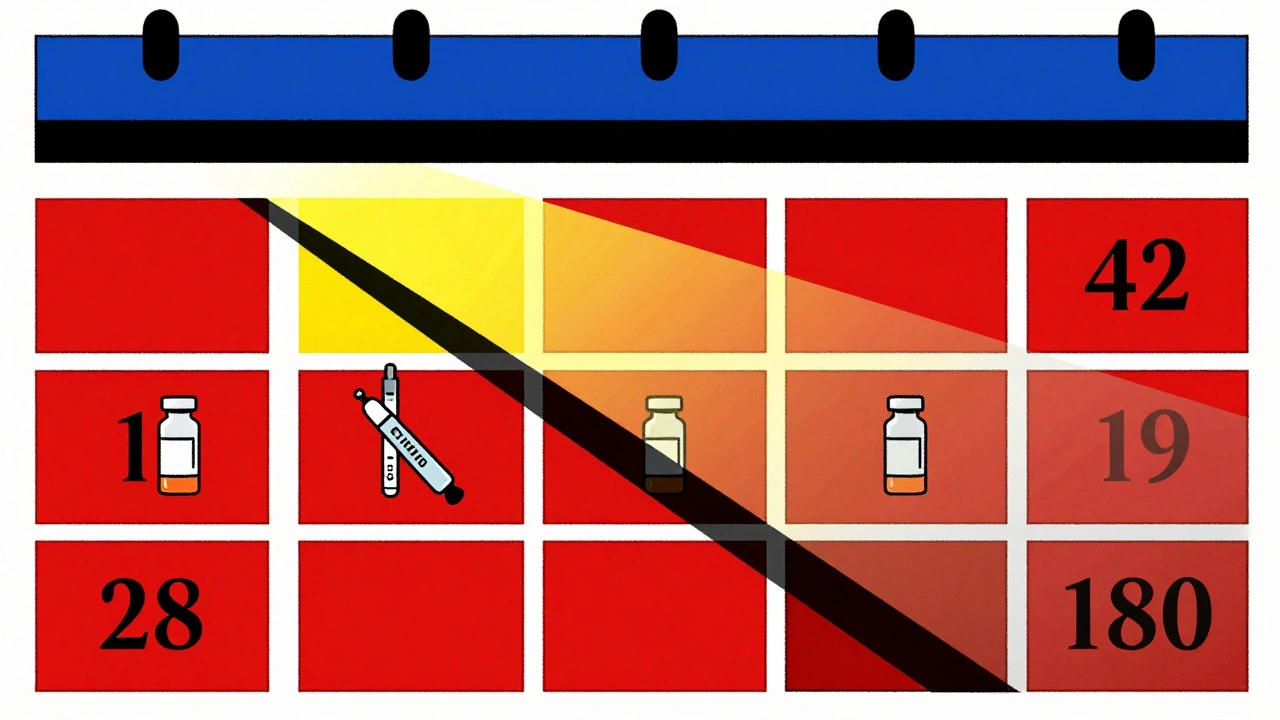
Here’s the action plan. No fluff. Just what works.- Insulin: Mark the opening date on the vial with a Sharpie. Set a calendar reminder for day 28 or 42, depending on the type. Never use insulin past its printed expiration if unopened, and never use it past 42 days if opened.
- Nitroglycerin: Replace the bottle every 3-6 months after opening-even if you haven’t used it. Keep it in the original glass bottle. Don’t transfer it. Don’t open it unless you need it.
- EpiPens: Check the expiration date every three months. Look at the solution through the viewing window. If it’s discolored or cloudy, replace it. Even if it’s not expired, if it’s been exposed to extreme heat, replace it. Keep a spare in your car, bag, and workplace.
And here’s the hard truth: if you’re using expired insulin, EpiPen, or nitroglycerin, you’re not saving money-you’re risking your life. The cost of a new EpiPen is less than one ER visit. A new bottle of nitroglycerin costs less than a coffee. Expired insulin? It can cost you your kidneys, your nerves, your life.
What About Using an Expired One in an Emergency?
This comes up a lot. “What if I have no choice?”The American College of Allergy, Asthma, and Immunology says this: if you’re having a life-threatening allergic reaction and your EpiPen is expired, use it anyway. Better a weak dose than no dose. But call 911 immediately after. Tell responders the EpiPen was expired.
But with insulin and nitroglycerin? There’s no safe “maybe.” If your insulin is expired and your blood sugar is high, don’t guess. Don’t inject more. Go to the ER. If your nitroglycerin isn’t working during chest pain, call 911. Don’t wait for a second tablet. Don’t hope it’ll kick in.
These aren’t medications you can improvise with. They’re precision tools for emergencies. If they’re not working as designed, they’re not tools anymore. They’re traps.
What’s Changing? What’s Next?
The good news? Things are getting better.In 2023, Sanofi’s Toujeo Max got FDA approval for 56 days of room temperature stability-double the usual 28. Adamis Pharmaceuticals launched Symjepi, an epinephrine autoinjector with 24-month stability instead of 18. Vericel is testing “smart nitroglycerin” with color-changing indicators that show when potency drops below 90%.
The FDA is also pushing for shorter expiration dates on EpiPens-down from 18 to 12 months-to reflect real-world storage. The European Medicines Agency already did it. The U.S. is catching up.
But technology won’t fix human behavior. The biggest problem isn’t the science. It’s the silence. People don’t check. They forget. They think, “It’s just a little past the date.”
That’s how people end up in the hospital. That’s how lives are lost.
Final Rule: When in Doubt, Replace It
You wouldn’t drive a car with worn brakes. You wouldn’t wear a helmet that’s cracked. Why risk your life with a medication that might not work?If you’re unsure about the age of your insulin, EpiPen, or nitroglycerin-replace it. If you haven’t checked the expiration date in six months-do it now. If you’ve been using the same bottle of nitroglycerin since last winter-throw it out.
These aren’t optional precautions. They’re non-negotiable. Your life depends on it.
Can I still use insulin after its expiration date if it looks fine?
No. Even if insulin looks clear and colorless, its effectiveness drops significantly after expiration. A 2022 study showed up to 50% loss in potency six months past expiration when stored at room temperature. Using it can lead to dangerous blood sugar spikes or drops, potentially causing diabetic ketoacidosis or coma. Always replace insulin after its printed expiration date or 28-42 days after opening, whichever comes first.
Is it safe to use an expired EpiPen in an emergency?
If you’re having a life-threatening allergic reaction and have no other option, using an expired EpiPen is better than nothing. But it’s not reliable. Studies show potency can drop below 50% after six months past expiration. Always call 911 immediately after using an expired EpiPen, and tell responders the device was expired. Never rely on an expired EpiPen for routine use-replace it before it expires.
Why does nitroglycerin expire so quickly after opening?
Nitroglycerin is highly volatile and breaks down when exposed to air, light, and heat. Even in its original glass bottle, it loses about 20% of its potency within 30 days of opening. By six months past expiration, it’s often ineffective. That’s why the American Heart Association recommends replacing nitroglycerin every 3-6 months after opening, regardless of how often it’s used.
Can I store insulin in the fridge after opening?
Yes, you can store opened insulin in the fridge, but it’s not required. Most insulin types are stable at room temperature (59-86°F) for 28-42 days after opening. Refrigerating it won’t extend that window. In fact, cold insulin can be painful to inject. The key is to track the 28-42 day window from the day you first use it-not from the date you opened the vial.
What should I do with expired insulin, EpiPens, or nitroglycerin?
Never flush them down the toilet or throw them in the trash. The FDA recommends returning expired medications to a pharmacy that offers a take-back program. Many pharmacies, including CVS and Walgreens, have medication disposal bins. This prevents environmental contamination and ensures safe disposal of these potentially hazardous drugs.
Are there cheaper alternatives to buying new EpiPens or insulin every few months?
Yes. Many insulin manufacturers offer patient assistance programs for low-income users. EpiPens have generic versions (like Adrenaclick) that cost significantly less. Some pharmacies offer $25 insulin programs. Check with your doctor or pharmacist-many people qualify for free or low-cost options. Never skip replacing these medications due to cost. The risk of using expired drugs far outweighs the price of a new one.
If you’re managing one of these medications, mark your calendar. Set reminders. Talk to your pharmacist. Keep a spare. These aren’t just pills or pens-they’re your safety net. Don’t wait for a crisis to realize it’s frayed.
Comments (9)
Ada Maklagina
December 5, 2025 AT 23:32
I keep my insulin in the fridge even after opening. Doesn't hurt, and I sleep better knowing it's not baking on the counter. Just mark the date and stick to it.
Harry Nguyen
December 7, 2025 AT 18:26
Of course the FDA says most meds are fine past expiration. They’re not the ones lying in a hospital bed because their EpiPen didn’t work. Big Pharma loves expiration dates. Keeps you buying.
Kylee Gregory
December 8, 2025 AT 14:19
It’s funny how we treat these meds like fragile artifacts when they’re literally saving lives. Maybe we need better education, not just more warnings. People aren’t lazy-they’re overwhelmed.
Chris Brown
December 10, 2025 AT 05:38
The notion that one can simply replace these medications without financial burden is a luxury argument. Many of us choose between insulin and groceries. This is not a matter of negligence-it is systemic failure.
Stephanie Bodde
December 11, 2025 AT 15:05
You got this 💪 Set phone reminders. Keep spares. Talk to your pharmacist-they’ll help you find cheaper options. Your life matters more than the cost.
Philip Kristy Wijaya
December 11, 2025 AT 16:33
The fact that nitroglycerin evaporates like alcohol in a glass is absurd and the FDA should be embarrassed they let this continue for decades
Jennifer Patrician
December 13, 2025 AT 14:02
They’re lying about the expiration dates. The real reason is to keep you hooked on the system. Big Pharma and the FDA are in bed together. Your EpiPen is fine for years if stored right. They just want you to panic and buy more.
Mellissa Landrum
December 14, 2025 AT 07:07
i dont trust no expiration dates anymore. i got a 3 year old epipen and it still looks clear. why would they make us throw away perfectly good stuff? its a scam.
Mark Curry
December 15, 2025 AT 12:19
I replaced my nitroglycerin last month. Took me three weeks to work up the courage. I’m glad I did. Simple rule: if you’re not sure, replace it. Better safe than sorry.