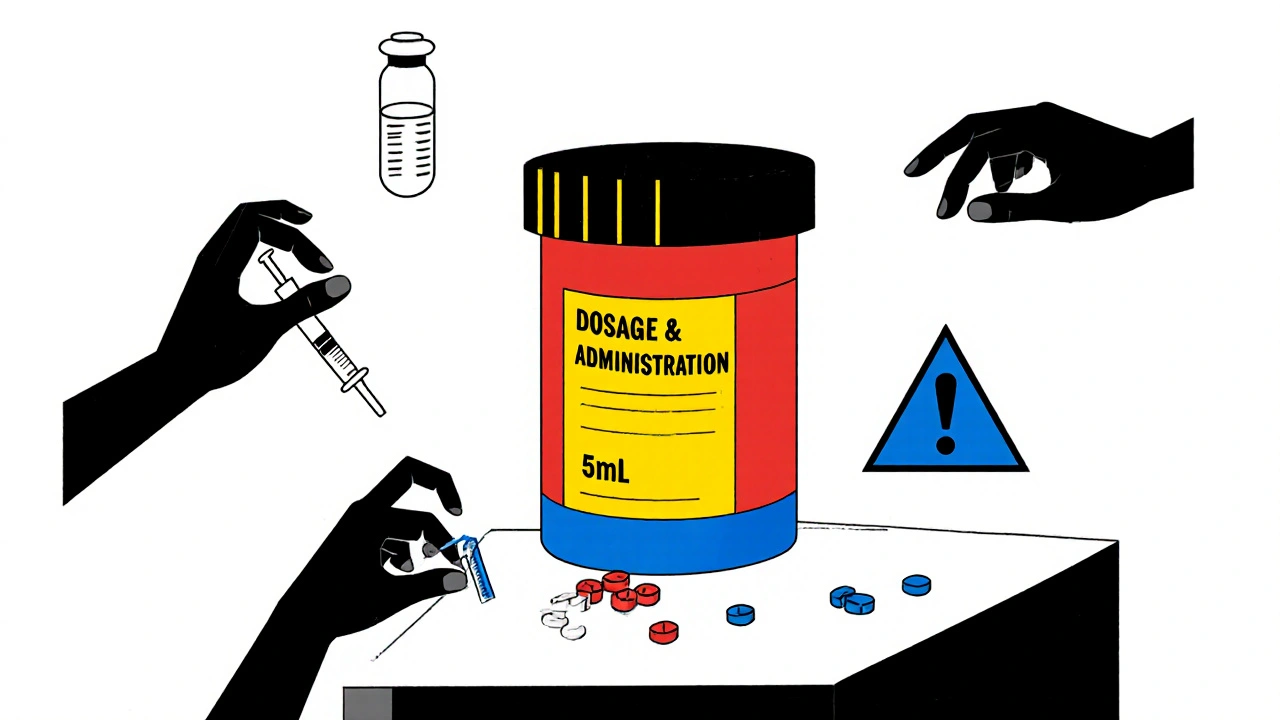
Every time you pick up a bottle of medicine-whether it’s from a pharmacy or the shelf at the grocery store-you’re holding a safety manual. But most people don’t treat it that way. They glance at the name, check the expiration date, and pop a pill. That’s where things go wrong.
According to the Institute of Medicine, about 1.5 million preventable drug-related injuries happen in the U.S. every year. Half of those come from people misunderstanding the label. Not because they’re careless. But because the information is confusing, poorly organized, or just too easy to skip.
What’s on the Label? Prescription vs. OTC
There are two main types of medication labels: prescription and over-the-counter (OTC). They look different, but both are designed to keep you safe.
Prescription labels follow strict FDA rules under the Highlights of Prescribing Information. These labels include 16 sections. The most important one is Section 2: Dosage and Administration. This tells you exactly how much to take, how often, and whether your kidney or liver health changes the dose. It also warns about drug interactions. For example, if you’re on blood thinners, the label might say to avoid certain painkillers.
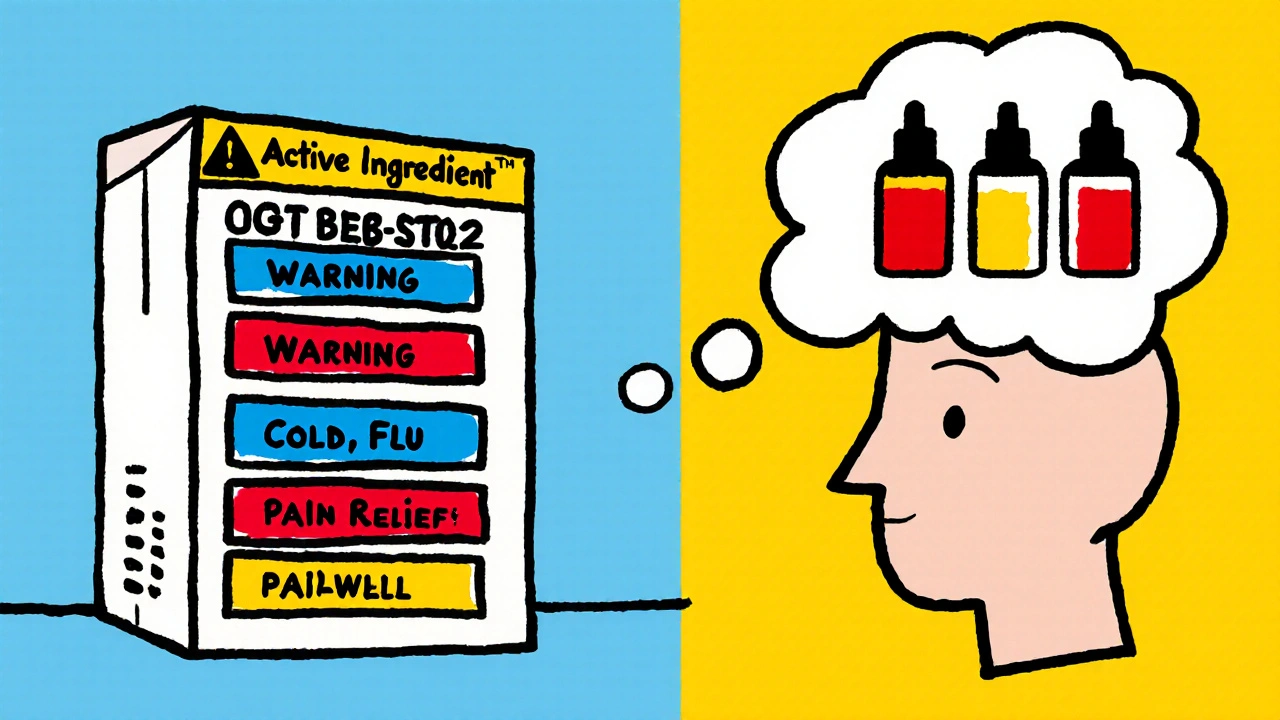
OTC labels use the Drug Facts format, required by the FDA since 1999. It’s simpler, but just as critical. You’ll find seven key parts:
- Active Ingredient(s): The medicine’s chemical name and how much is in each dose. This is the most important part for avoiding double-dosing.
- Purpose: What the medicine does-like “pain reliever” or “antihistamine.”
- Uses: The symptoms it treats.
- Warnings: When not to use it, possible side effects, and interactions.
- Directions: How much to take and how often.
- Other Information: Storage tips, like “keep refrigerated.”
- Inactive Ingredients: Fillers, dyes, or flavorings that might trigger allergies.
Don’t skip the warnings. A 2021 Express Scripts report found that 47% of people never read them. That’s how people end up mixing acetaminophen from three different cold meds-and accidentally overdose.
Understanding Dosage: More Than Just “Take Two”
When a label says “take two tablets every 6 hours,” it seems simple. But here’s where things get dangerous.
First, check the strength. Is it 500mg per tablet? 325mg? If you’re used to taking 325mg and grab a bottle of 500mg by mistake, you’re taking over 50% more than intended. That’s a big risk with painkillers like acetaminophen, which can cause liver damage at high doses.
For liquid medicines, concentration matters. A label might say “350mg per 5mL.” That means each milliliter has 70mg. If your doctor orders 700mg, you need 10mL-not the whole bottle. A 2022 study found that 68% of parents misread liquid doses, especially when switching between teaspoons and milliliters.
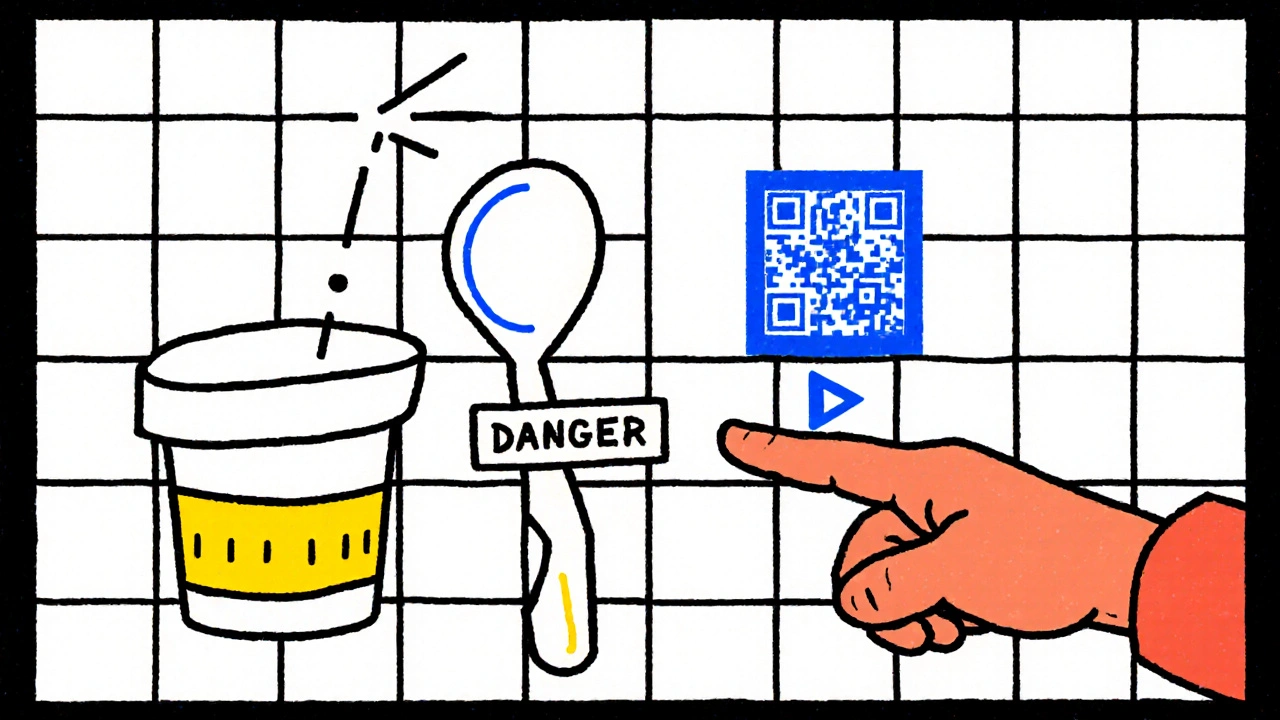
Never use kitchen spoons. A teaspoon can hold anywhere from 2.5 to 7.3 mL. That’s a huge difference. Use the syringe or cup that came with the medicine. If it didn’t come with one, ask your pharmacist for one. They’re free.
For children, weight matters more than age. A 20-pound toddler needs less than a 40-pound child-even if they’re the same age. Always check the weight-based dosing chart on the label. If it’s not there, ask your doctor or pharmacist.
Directions: Timing and Duration Matter
“Take every 6 hours” doesn’t mean “take four times a day.” It means every 6 hours, even if you’re sleeping. So if you take it at 8 a.m., next dose is 2 p.m., then 8 p.m., then 2 a.m. Most people skip the middle-of-the-night dose and think they’re fine. But for antibiotics, that gap lets bacteria survive and come back stronger.
“Take with food” isn’t just advice-it’s science. Some drugs irritate your stomach if taken empty. Others need fat to be absorbed properly. If the label says “take on an empty stomach,” wait at least an hour before eating.
And don’t stop early just because you feel better. Antibiotics need to run their full course. Stopping after three days of a seven-day prescription is one of the top reasons antibiotic resistance grows.
Warnings: The Section You Can’t Ignore
Warnings aren’t there to scare you. They’re there to save your life.
Look for these red flags:
- “Do not use if you have liver disease” - this applies to acetaminophen and many other drugs.
- “May cause drowsiness” - don’t drive or operate heavy machinery.
- “Avoid alcohol” - mixing alcohol with painkillers, antidepressants, or sleep aids can be deadly.
- “May interact with blood pressure meds” - this is common with decongestants and NSAIDs.
One of the most dangerous mistakes is taking multiple OTC meds with the same active ingredient. Cold, flu, and allergy products often contain acetaminophen, ibuprofen, or diphenhydramine. Taking two of them together can lead to overdose. Always check the active ingredient list before combining anything.
Expiration Dates and Storage
Expiration dates aren’t arbitrary. They’re tested by manufacturers to guarantee potency and safety. After that date, the medicine might not work-or could break down into harmful substances.
Prescription meds usually expire one year after being filled, even if the bottle says 2027. Pharmacies set that date based on stability. OTC meds last longer-often 2 to 3 years from manufacture.
Store medicines properly. Heat, moisture, and light ruin them. Don’t keep pills in the bathroom. The steam from showers degrades them. Keep them in a cool, dry place-like a bedroom drawer. Some, like insulin or certain antibiotics, must be refrigerated. Check the label.
Special Cases: Children, Seniors, and Complex Regimens
For kids, always use the dosing tool that comes with the medicine. If you’re unsure, call your pediatrician. Don’t guess. A 2017 study from Nationwide Children’s Hospital found that 1 in 3 parents gave the wrong dose because they used a kitchen spoon or misread the concentration.
Seniors often take 5 to 10 medications a day. That’s a recipe for mix-ups. Use a pill organizer with alarms. Ask your pharmacist to color-code bottles or use large-print labels. Many pharmacies offer free labeling services for seniors.
If you’re on multiple prescriptions, ask for a medication review. Pharmacists can spot dangerous interactions you might miss. For example, mixing blood thinners with certain herbal supplements like garlic or ginkgo can cause dangerous bleeding.
What to Do If You’re Confused
You’re not alone. A 2023 survey found that 31% of adults don’t read labels carefully. But confusion isn’t your fault-labels are often written in dense medical language.
Here’s what to do:
- Ask your pharmacist to explain the label in plain language. They’re trained to do this.
- Use the Five Rights every time you take medicine: Right patient, right drug, right dose, right route, right time.
- If you’re still unsure, call your doctor or pharmacist. Don’t guess.
- For high-risk drugs like insulin, opioids, or blood thinners, ask for a Medication Guide. The FDA requires these for 153 drugs, and they’re written in plain English.
Some pharmacies now offer QR codes on labels that link to video instructions. In a 2021 pilot, patients who used them made 37% fewer dosing errors.
Future Changes: Simpler Labels Are Coming
The FDA is pushing for clearer labeling. By 2027, most prescription drugs in the U.S. will have standardized color-coding and icons to warn of high-risk drugs. Think red for opioids, yellow for blood thinners.
Plain language is becoming mandatory for high-alert medications. Instead of “administer orally every 12 hours,” you’ll see “take one pill every 12 hours.”
And soon, you might scan a code on your pill bottle and watch a 30-second video showing exactly how to take it. That’s already happening in pilot programs-and it works.
Medication labels aren’t just paperwork. They’re your first line of defense. Take five extra seconds to read them. Your body will thank you.
What should I do if I can’t read the label?
Ask your pharmacist for a large-print version or an audio explanation. Many pharmacies offer free label reading services. You can also request a Medication Guide, which is written in plain language and required by the FDA for high-risk drugs like insulin, opioids, and blood thinners.
Can I split pills or crush them if they’re hard to swallow?
Only if the label says it’s okay. Some pills are designed to release medicine slowly. Crushing them can cause a dangerous overdose. Others have coatings to protect your stomach. Always check with your pharmacist before splitting or crushing any pill.
Why do some medicines say “take with food” and others “take on an empty stomach”?
Some drugs need food to be absorbed properly. Others irritate your stomach if taken empty. For example, antibiotics like doxycycline can cause severe nausea if taken without food. But others, like thyroid medication, must be taken on an empty stomach because food blocks absorption.
Is it safe to use leftover antibiotics for a new infection?
No. Antibiotics are prescribed for specific bacteria. Using the wrong one can make infections worse and contribute to antibiotic resistance. Even if symptoms seem similar, the cause may be different. Always get a new prescription.
How do I know if a medicine has expired?
Check the expiration date printed on the bottle or box. For prescriptions, the pharmacy usually sets the expiration at one year from when you picked it up, even if the manufacturer’s date is later. Discard any medicine that’s discolored, smells strange, or has changed texture.
What should I do if I accidentally take too much?
Call Poison Control at 1-800-222-1222 immediately. Don’t wait for symptoms. Keep the medicine bottle handy-they’ll need the active ingredients and dosage. If you’re dizzy, vomiting, or having trouble breathing, call 911.
Comments (10)
Pallab Dasgupta
November 26, 2025 AT 10:07
Man, I used to just grab whatever looked like it'd fix my headache until my cousin ended up in the ER from mixing Tylenol and cold meds. Now I read every tiny line like it's a survival manual. Seriously, if you don't check the active ingredients, you're playing Russian roulette with your liver.
katia dagenais
November 27, 2025 AT 05:21
It’s not just about reading labels-it’s about challenging the entire pharmaceutical-industrial complex that designs them to be confusing. The FDA doesn’t care if you live or die, they care about liability. That’s why they use 12-point font and Latin terms. They want you to trust the doctor, not the bottle. And don’t even get me started on how pharmacies profit from your ignorance.
Valérie Siébert
November 28, 2025 AT 17:02
YESSSS!! I used to wing it with my kid’s fever meds until I read the concentration thing and realized I’d been giving him 3x the dose because I used a kitchen tsp. I cried. Then I bought 5 syringes. Now I label them with masking tape. Mom life is just one typo away from tragedy.
fiona collins
November 29, 2025 AT 20:50
Always use the dosing tool. Always. Even if it’s messy. Even if it’s inconvenient. Your child’s safety is not a suggestion.
Josh Gonzales
November 30, 2025 AT 00:04
People don’t realize that ‘take every 6 hours’ means 4 times a day including 2am. I’ve seen so many patients stop antibiotics early because they think they’re fine. Then the infection comes back worse. It’s not just about feeling better-it’s about killing every last bacterium
Jacqueline Aslet
November 30, 2025 AT 20:22
The notion that a layperson can adequately interpret pharmacological nomenclature without formal training is, frankly, an absurdity. The burden of comprehension has been inappropriately externalized onto the consumer, who is neither equipped nor incentivized to engage in such a high-stakes cognitive labor. The system is not broken-it was designed this way.
Caroline Marchetta
December 2, 2025 AT 13:53
Oh, so now we’re supposed to be pharmacists too? Great. Just great. I work 60 hours a week, have three kids, and you want me to memorize the difference between 325mg and 500mg of acetaminophen? Meanwhile, my insurance won’t cover a pharmacist consultation but somehow expects me to be a medical detective. Thanks, capitalism.
Leisha Haynes
December 2, 2025 AT 15:49
My grandma used to keep all her meds in the bathroom and wonder why they turned to mush. I made her a little drawer in her bedroom with a label that says ‘NOT THE BATHROOM’ in giant letters. She still laughs about it. But she hasn’t had a bad reaction since.
giselle kate
December 4, 2025 AT 02:29
Why are we even talking about this? In America, we don’t need to read labels. We just take what the doctor says. If you can’t handle it, maybe you shouldn’t be on meds. Other countries have this problem. Not here. We’re better than this.
Jack Riley
December 5, 2025 AT 08:15
Labels are just the tip of the iceberg. The real problem? The entire medical system treats patients like disposable containers. You’re not a person-you’re a code, a dosage, a risk profile. They don’t want you to understand. They want you to comply. The QR codes? The plain language? Cute. But it’s all theater. The real fix? Decentralize power. Let patients audit their own prescriptions. Let them see the clinical trial data. Let them talk to each other. Until then, reading the label is just a bandage on a severed artery.