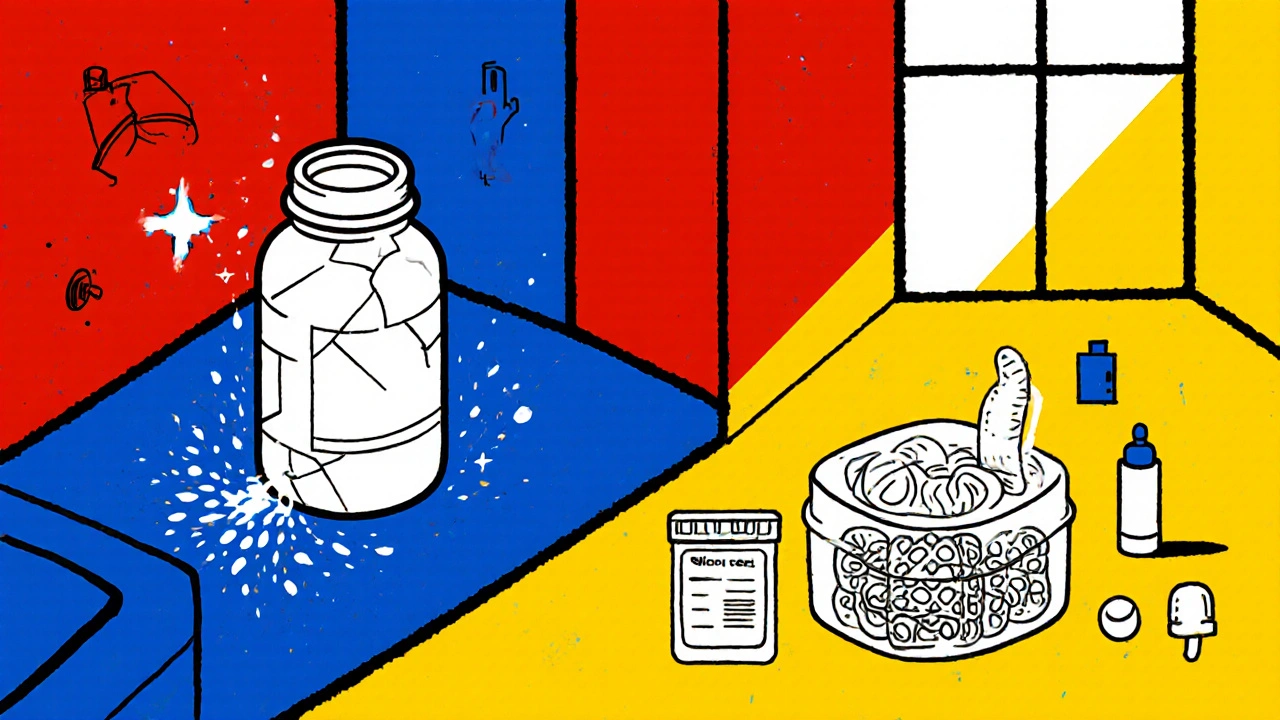
When you’re traveling to a tropical destination-whether it’s Bali, Lagos, or the Amazon basin-your medicine might be in more danger than you think. High heat and thick, wet air don’t just make you sweat. They can quietly destroy the pills, patches, and inhalers you rely on. By the time you need them, your antibiotics might be half as strong. Your asthma inhaler could stop working. Your malaria pills might not work at all. This isn’t speculation. It’s science-and it’s happening every day in places where humidity stays above 70% for months on end.
Why Tropical Humidity Kills Medicine
Medications aren’t designed to survive in steamy, sticky air. Most are made with chemicals that break down when they touch water. In tropical climates, the air is full of invisible water vapor. Even if your medicine bottle is sealed, moisture sneaks in through tiny gaps, packaging fibers, or even the cap threads. Once inside, water starts eating away at the active ingredients. The biggest culprit is hydrolysis. That’s just a fancy word for water breaking chemical bonds. About 70% of all humidity-related drug failures happen this way. Take amoxicillin, a common antibiotic. If it’s stored at 75% humidity, it can absorb up to 10% of its own weight in water. In 30 days, that means half the medicine is gone. No more infection fighting. No more healing. Other problems show up too. Tablets start to stick together. Capsules get soft and leak. Powders clump like wet sand. Inhalers clog. Orally disintegrating tablets-those fast-dissolving pills-can take five times longer to break down in humid air, meaning they won’t get into your bloodstream when you need them. And then there’s mold. At humidity levels above 70%, fungi like Aspergillus and Penicillium start growing on pills and capsules within three days. You can’t always see it. But it’s there. And it’s dangerous.Which Medications Are Most at Risk?
Not all medicines are equally fragile. Some are built to handle moisture. Others? They’re like paper in a rainstorm.- Antibiotics like tetracycline and amoxicillin are extremely sensitive. Tetracycline changes color and loses potency fast in humidity.
- Antifungals and antivirals often contain hygroscopic ingredients that soak up water like a sponge.
- Insulin and other biologics can denature if exposed to heat and moisture together.
- Dry powder inhalers (like Advair or Symbicort) lose effectiveness when moisture causes particles to stick together.
- Orally disintegrating tablets (ODTs) for epilepsy, anxiety, or nausea can turn into a mushy mess.
- Freeze-dried vaccines need humidity below 20% to stay stable-something almost impossible to find naturally in tropical zones.
What’s the Safe Storage Range?
You don’t need a lab to keep your meds safe. You just need to know the numbers. The sweet spot for most medications in hot, humid places is:- 30-45% relative humidity (RH)
- 15-25°C (59-77°F)
How to Protect Your Medications in Practice
You can’t control the weather. But you can control your storage. Here’s how.1. Use Airtight Containers with Desiccants
Transfer your pills from the original bottle into a small, hard plastic container with a tight seal. Add a silica gel packet. These little packets absorb moisture like a sponge. Buy them online or save them from new shoe boxes or electronics packaging. Use one packet per 100 mL of container space. Replace them every 30 days-or sooner if they feel warm or look swollen. Some come with color-changing indicators. Blue = dry. Pink = wet. Replace immediately if it turns pink.2. Avoid the Bathroom
This is the #1 mistake travelers make. Showers, sinks, and hot water flood the air with moisture. Even if your bathroom feels dry, humidity levels can spike above 80% after a shower. That’s worse than a rainforest. Don’t store medicine there. Ever.3. Use a Dry Cabinet (If You Can)
For long-term stays or if you’re carrying expensive or life-saving meds (like insulin, epinephrine, or antiretrovirals), consider a small dry cabinet. These are like mini dehumidifiers for medicine. Brands like SMT DryBox can hold 5-10 bottles and maintain humidity between 5-15% RH. They cost $200-$1,500, but for critical meds, they’re worth it.4. Pack Smart for Travel
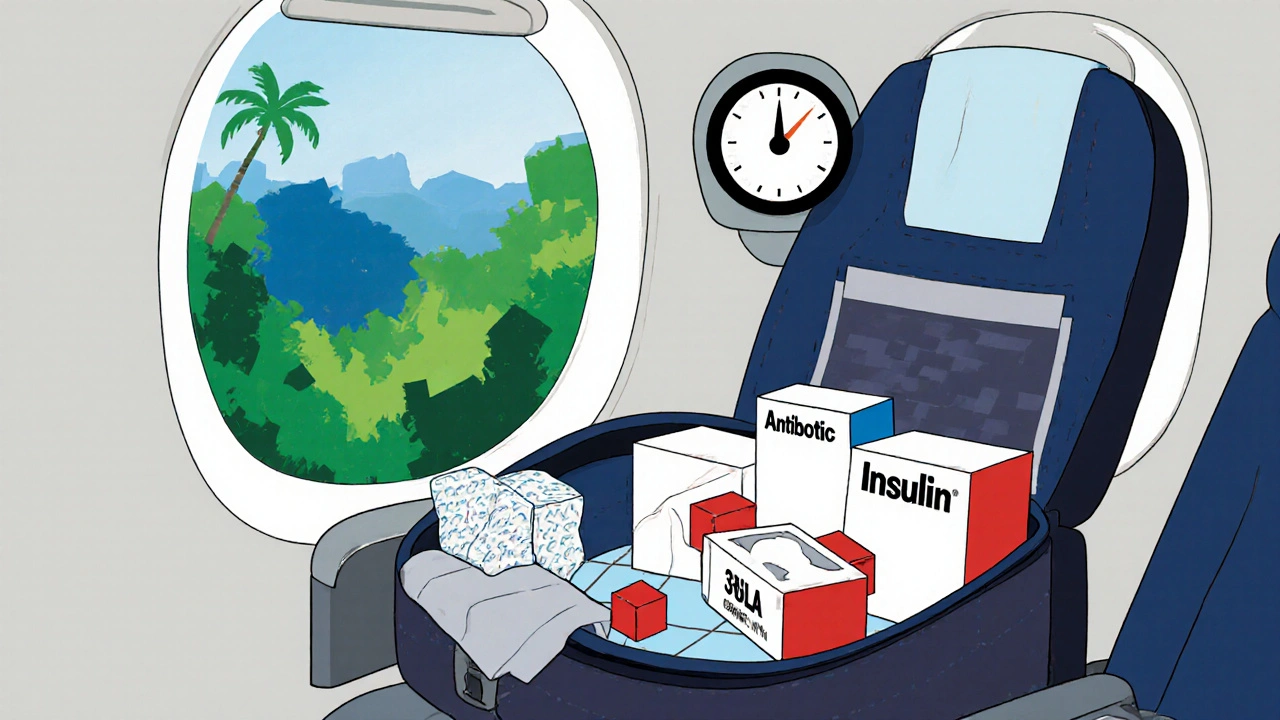
Carry your meds in your carry-on. Checked luggage can sit in hot, humid cargo holds for hours. Keep them in a sealed container with desiccants. If you’re flying into a tropical country, ask your pharmacist for blister packs with aluminum backing. These are 99.9% moisture-proof.5. Use the WHO’s PharmaSeal System
If you’re staying in a tropical region for months, look for the WHO’s PharmaSeal system. It’s a reusable desiccant canister that fits inside a plastic storage box. It keeps humidity below 35% RH for six months. Costs less than $1 per unit. Used in 32 countries. Proven to cut spoilage by over 50%.6. Check for Visual Signs of Damage
If your pills look different, don’t use them.- Discoloration (yellow, brown, or green spots)
- Soft, sticky, or crumbly texture
- Unusual odor
- Tablets stuck together
- Inhaler doesn’t spray properly
What’s New in Medication Packaging?
The pharmaceutical industry is finally catching up. Since 2019, companies like Aptar have been making blister packs with built-in moisture-scavenging polymers. These aren’t just packets you add-they’re woven into the packaging itself. They can keep humidity below 30% RH for up to 18 months. The Gates Foundation has distributed over 500 million of these moisture-proof blister packs across Africa and Southeast Asia since 2021. In field tests, they cut medication degradation by 58%. Even more exciting? MIT researchers are testing graphene oxide coatings that block 99.7% of moisture. Imagine a pill bottle so sealed, humidity can’t even breathe through it. That’s the future-and it’s coming fast.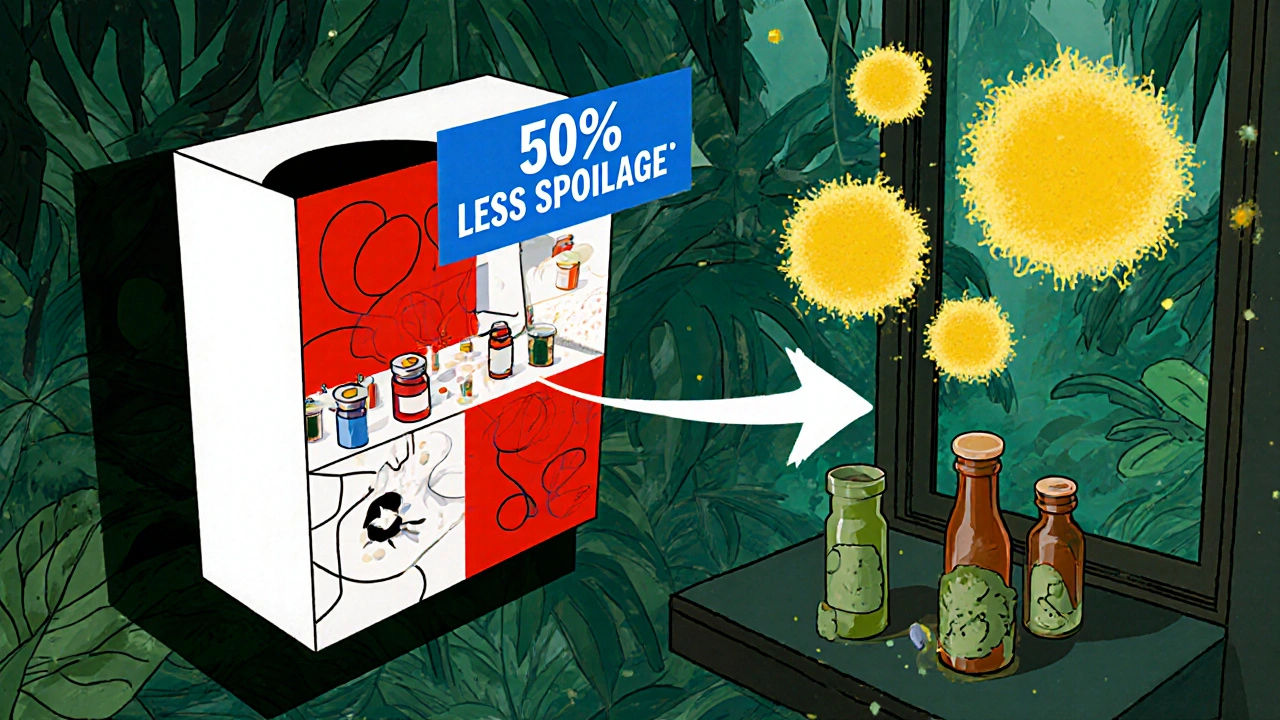
Comments (11)
Allison Reed
November 29, 2025 AT 05:16
Wow, this is such an important topic that no one talks about. I just got back from Bali and realized my asthma inhaler felt weird-turns out it had been sitting in the bathroom for a week. I’m replacing it today and carrying silica gel packets from now on. Thanks for the wake-up call!
Also, did you know some pharmacies in Southeast Asia now sell pre-packed desiccant boxes for meds? I found one in a pharmacy in Ubud and it saved my antimalarials. Life-changing.
Protect your meds like you protect your phone charger-because this stuff is just as essential.
Rosy Wilkens
November 29, 2025 AT 09:01
This is all propaganda. The pharmaceutical industry wants you to buy expensive dry cabinets and ‘PharmaSeal’ systems so they can profit off your fear. Moisture doesn’t degrade pills-government labs do. They’re hiding the truth. Look at the FDA’s 2018 internal memo on ‘controlled environment manipulation.’ They admit most degradation is manufactured. Don’t fall for it.
Andrea Jones
December 1, 2025 AT 01:09
Okay, but let’s be real-how many of us actually do this? I mean, I’ve stored my insulin in a Ziploc with a silica packet in my backpack while hiking in Costa Rica. Is that ‘safe’ or just ‘better than the bathroom’? Also, anyone else use those little pill organizer boxes with the built-in desiccants? They’re like $5 on Amazon and fit in your pocket. Game changer.
Also, why is no one talking about how tropical hotels don’t even have AC that lowers humidity? I slept in a room that felt like a sauna. My pills were sweating inside the bottle. Yikes.
Justina Maynard
December 3, 2025 AT 00:56
I’ve been using the WHO’s PharmaSeal system for six months now in Thailand, and honestly? It’s the only thing keeping my antiretrovirals viable. I bought three units-two for home, one for travel. The color indicators are genius. Blue = good. Pink = panic. I once left a bottle on the windowsill for three days and it turned pink. I threw it out. No regrets.
Also, if you’re using blister packs with aluminum backing, don’t peel them all at once. Peel one pill at a time. Exposure = degradation. I learned this the hard way after my seizure meds turned gummy. Don’t be me.
Evelyn Salazar Garcia
December 4, 2025 AT 19:34
Stop overcomplicating it. Just keep them in your suitcase. Done.
Clay Johnson
December 5, 2025 AT 05:05
Humidity is just water vapor. Water is H₂O. H₂O breaks bonds. Bonds break. Molecules change. Medicine fails. It’s thermodynamics. Not magic. Not conspiracy. Just chemistry.
But we treat pills like sacred objects. They’re not. They’re molecules with expiration dates written in entropy.
Jermaine Jordan
December 5, 2025 AT 22:00
THIS IS A PUBLIC HEALTH EMERGENCY. 30% of medicines in the tropics degrade before use? That’s not a statistic-that’s a genocide of the vulnerable. Imagine your child needs insulin. You buy it. You store it in a hot bathroom. And then… nothing. No pulse. No breath. Because the system failed them.
We need global standards. We need funding. We need pharmaceutical companies to stop treating tropical regions as afterthoughts. This isn’t just about travelers-it’s about justice.
Chetan Chauhan
December 7, 2025 AT 17:53
lol silica gel? you think that's enough? i lived in kerala for 2 years and my amoxicillin turned into a brown paste even with packets. the real problem is the indian pharma companies use cheap binders that dissolve in humidity. you need to buy only from german or swiss brands. and forget the who-they're all corrupted by big pharma. i saw a guy in goa sell fake malaria pills in a plastic bag. he smiled. he knew.
Phil Thornton
December 8, 2025 AT 21:58
Just replaced my entire meds stash after a trip to Puerto Rico. The inhaler didn’t spray. The ODTs were sticky. I didn’t know until I had a panic attack and nothing worked. Don’t wait until you’re desperate. Pack smart. Always.
Barbara McClelland
December 9, 2025 AT 21:49
Love this guide so much! I’m a nurse who works in the Philippines and I’ve seen firsthand what happens when people use degraded meds. I always carry a small digital hygrometer with me now-$15 on Amazon. If it’s above 60%, I move my meds. Simple. Also, I tell my patients: if it looks weird, smells weird, or feels weird-don’t take it.
And yes, the PharmaSeal system? I’ve recommended it to 20 families. One mom told me her daughter’s epilepsy meds finally worked after six months of failure. That’s not just science. That’s hope.
Alexander Levin
December 10, 2025 AT 01:19
Big Pharma + humidity = perfect scam. 🤫💊 They want you to buy new meds every month. Silica gel? It’s a placebo. The real solution? Don’t take pills at all. Eat turmeric. Breathe the air. Trust nature. #NoMorePills #PharmaIsTheVirus