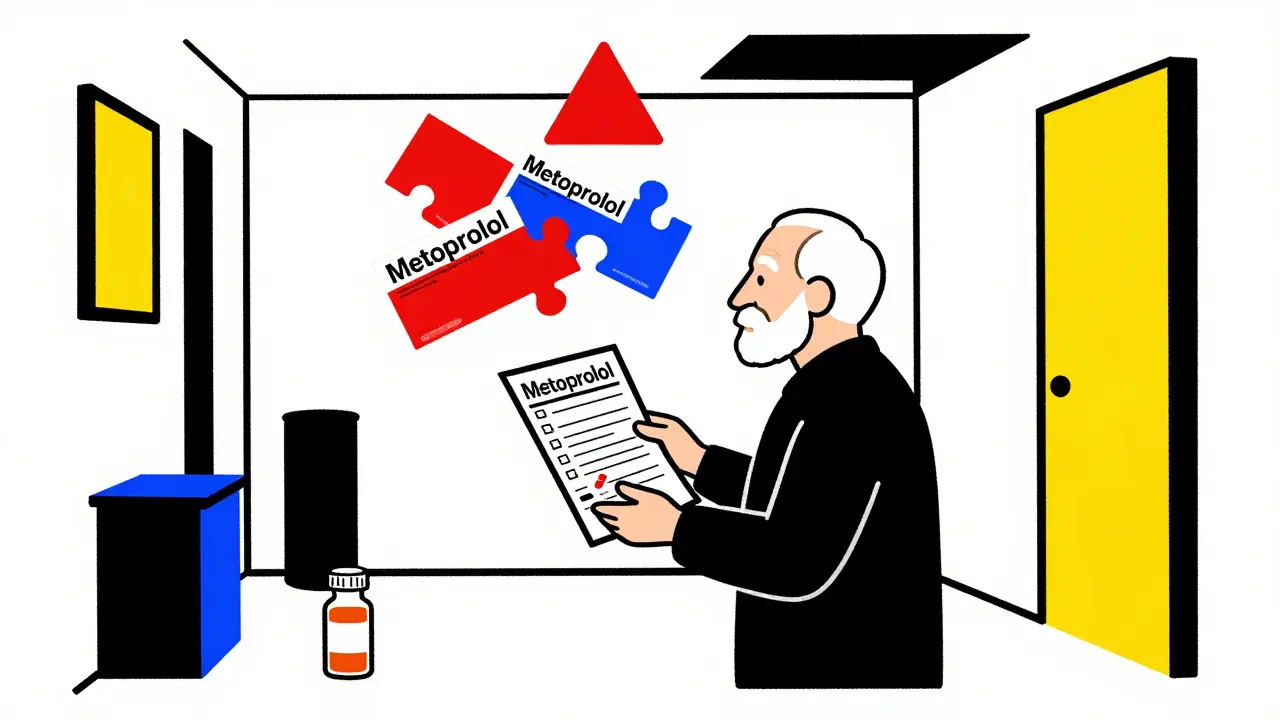
Every year, thousands of older adults end up in the emergency room because they took two pills that did the same thing-without knowing it. It’s not a mistake they made on purpose. It’s a system failure. You see a cardiologist for your high blood pressure. A month later, you visit a neurologist for migraines. Then your primary care doctor adds a new pill for sleep. Before long, you’re taking eight, ten, even twelve medications. And somewhere in that pile, two of them are doing the exact same job. That’s therapeutic duplication. And it’s more common than you think.
Why Duplicate Medications Happen
Specialists are trained to fix one problem at a time. A cardiologist looks at your heart. An endocrinologist looks at your thyroid. They don’t always know what your primary care doctor prescribed last week. And they rarely have time to dig through your full medication list during a 15-minute visit. That’s when duplication happens.Take metoprolol, for example. It’s a beta-blocker used for high blood pressure, heart rhythm issues, and sometimes anxiety. If your primary care doctor prescribed it for hypertension, and your cardiologist later prescribes it again for arrhythmia-without knowing the first prescription exists-you’re now taking double the dose. That can drop your blood pressure too low, make you dizzy, or even cause your heart to slow dangerously.
It’s not just prescription drugs. Over-the-counter painkillers like ibuprofen and naproxen can overlap with prescription NSAIDs. Antihistamines in allergy meds can hide in sleep aids. Even supplements like St. John’s Wort or magnesium can interfere with other pills. One 2023 study found that 68% of pharmacists saw at least one case of duplicate therapy every week. And in 42% of those cases, the root cause was simple: no one was talking to each other.
How to Spot Duplicate Medications Yourself
You don’t have to wait for a pharmacist to catch it. You can do it yourself-with the right tools.Start with a real, updated list. Not a mental note. Not a scrap of paper. A printed or digital list that includes:
- Every prescription drug, with dosage and frequency
- Every over-the-counter medicine-pain relievers, antacids, cold meds
- All vitamins, minerals, and herbal supplements
- The reason you’re taking each one (e.g., “for arthritis pain,” “for sleep”)
Bring this list to every appointment. Even if you’ve been to the doctor before. Even if they “already know” your meds. People forget. Systems glitch. Paper records get lost. Your list is your safety net.
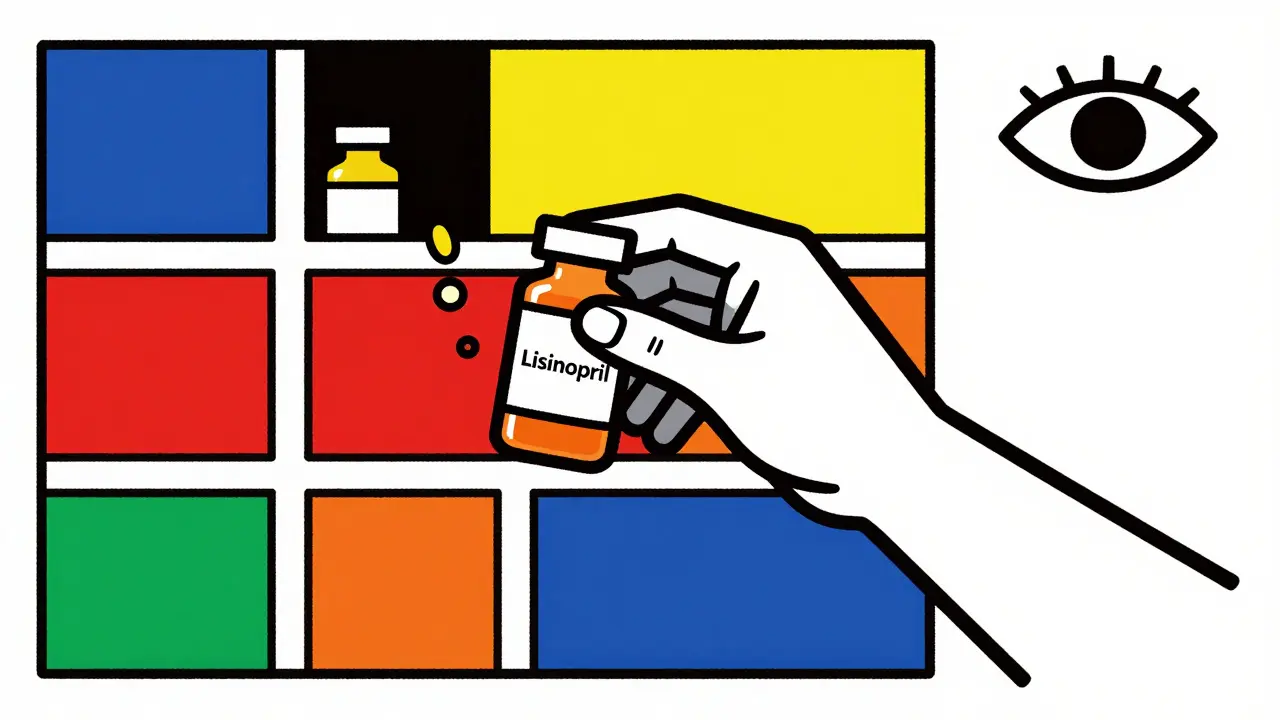
Here’s a trick that works: bring your pill bottles. Not just the list. The actual bottles. Pharmacists and doctors can read the labels, check expiration dates, and spot discrepancies instantly. One patient told us she caught a duplicate when her doctor saw two bottles of lisinopril-same dose, same pharmacy, different prescriptions. She hadn’t realized she’d been given two copies of the same drug.
Use One Pharmacy-Always
This one simple step cuts your risk of duplication in half.When you use the same pharmacy for all your prescriptions, the pharmacy’s computer system flags duplicates before you even leave the counter. Most systems compare every new prescription against your full history. If you get a new blood thinner while already taking warfarin, the system will alert the pharmacist. They’ll call your doctor. They’ll ask: “Is this intentional?”
But if you use three different pharmacies-one for your heart meds, one for your diabetes, one for your pain pills-you’re blindfolding the system. No single pharmacy has your full picture. No one can see the overlap. That’s why experts say: stick with one. Even if it’s a bit farther away. Even if you have to wait five extra minutes. It’s worth it.
Ask the Right Questions
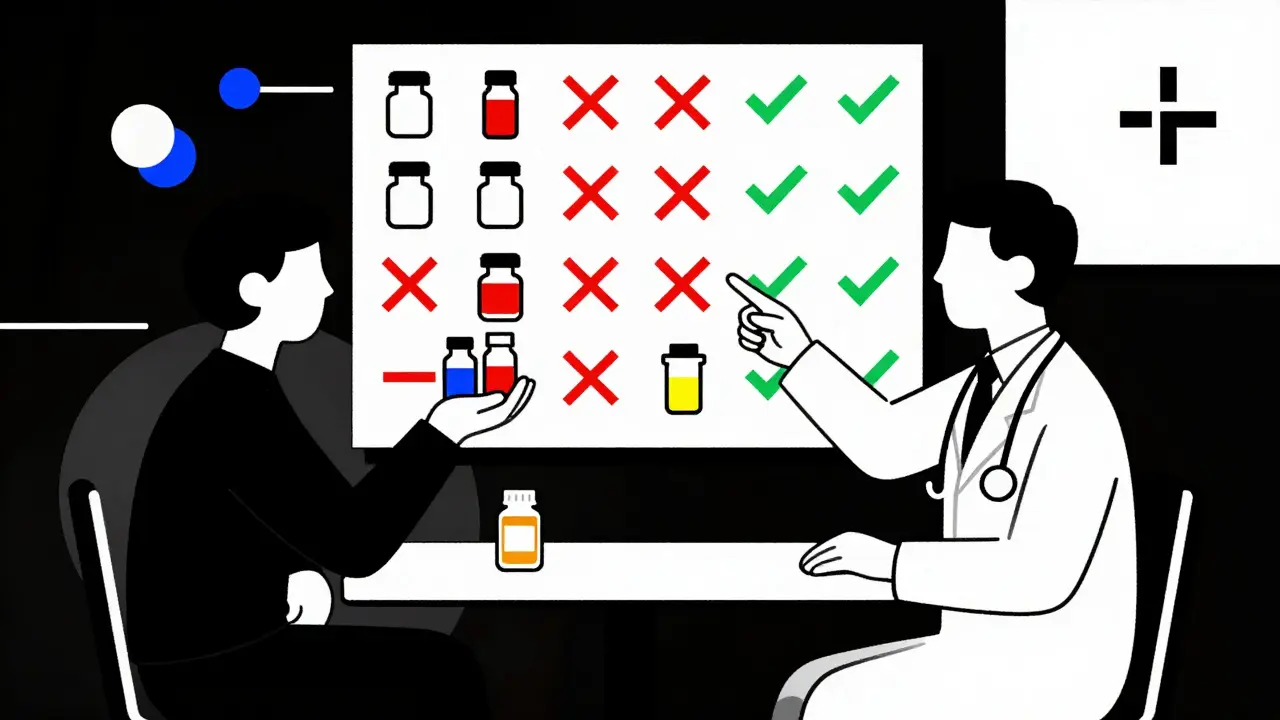
Don’t just accept a new prescription. Ask:- “What is this medicine for?”
- “Is this replacing something I’m already taking?”
- “Could this interact with anything else on my list?”
- “Can we review all my meds together?”
One 2023 study found that patients who asked these questions were 60% less likely to end up with duplicate therapy. It’s not about being difficult. It’s about being informed.
And don’t be afraid to say: “I’m already taking something similar. Can we check if this is really needed?”
Doctors appreciate it. They’re not trying to overload you. They’re trying to help. But they’re human. They miss things. You’re their best ally.
Medication Reconciliation Is Not Optional
The medical term for checking your meds at every transition is “medication reconciliation.” That’s when your doctor or pharmacist compares what you’re supposed to be taking with what you’re actually taking. It’s not a suggestion. It’s a safety standard.The Joint Commission, the group that sets hospital safety rules, requires this at every hospital admission, discharge, and specialist referral. But it doesn’t always happen in doctor’s offices. That’s on you.
At every visit, say: “Can we do a full med check?” Even if you’re not sick. Even if you’re just getting a refill. Make it part of the routine. Like checking your blood pressure.
Kaiser Permanente cut duplicate prescriptions by 37% just by making this step mandatory in their electronic system. They now require doctors to list the reason for every drug. No more “HTN” without context. Now it’s “for hypertension, started 3/2024.” That small change made a huge difference.
Technology Can Help-But Only If You Use It
There are apps now that let you photograph your pill bottles and automatically build a digital list. Some sync with your pharmacy. Others let you share your list with family or doctors. Try Medisafe, MyTherapy, or even the Notes app on your phone.One 2023 pilot at Mayo Clinic used AI to scan patient records and found duplicate prescriptions at more than double the rate of older systems. That’s a 143% improvement. But here’s the catch: AI can’t fix what patients don’t report. If you don’t tell your doctor about your nightly melatonin or your daily fish oil, no algorithm will catch it.
Technology is a tool. You’re the one holding it.
What to Do If You Already Have Duplicates
If you suspect you’re taking two drugs that do the same thing, don’t stop either one on your own. That’s dangerous.Instead:
- Write down every medication you’re taking.
- Bring your list and pill bottles to your primary care doctor.
- Ask: “Could any of these be doing the same thing?”
- Let them work with your specialists to decide what to keep, adjust, or stop.
Many times, the solution isn’t adding more pills-it’s removing ones you don’t need. One senior patient had seven different meds for blood pressure. After a full review, her doctor found three were duplicates. She stopped them. Her dizziness went away. Her energy improved. And she cut her monthly pill count from 32 to 19.
Final Thought: You’re the Keeper of Your Meds
No one else will protect your medication safety like you will. Specialists focus on their specialty. Pharmacies fill prescriptions. Primary care doctors juggle dozens of patients. But you? You’re the only one who sees the whole picture.Keep your list updated. Use one pharmacy. Bring your bottles. Ask questions. Say no to pills you don’t understand. And never assume someone else is watching out for you.
Medication safety isn’t about having the right doctor. It’s about being the right patient.
Comments (15)
Sophia Daniels
December 25, 2025 AT 00:10
Oh my god, I just realized my grandma’s been taking two different versions of lisinopril for six months-same dose, different bottles. She thought they were ‘special’ because the labels looked different. 😳 I almost cried. This post is a lifeline. Thank you for saying what no one else will.
Fabio Raphael
December 26, 2025 AT 02:54
My dad had a near-fatal interaction between his blood thinner and a new OTC sleep aid. He didn’t even know the sleep aid had an NSAID in it. The ER visit cost more than his yearly meds. This isn’t just about convenience-it’s about survival. I wish every senior had a ‘meds buddy’ to help them keep track.
Becky Baker
December 26, 2025 AT 07:21
One pharmacy? Bro, that’s a joke. My cousin’s got 3 pharmacies because one’s 5 minutes away, another’s cheaper, and the third gives free stickers. Who cares if the system doesn’t talk to itself? She’s fine. Probably.
Steven Destiny
December 26, 2025 AT 17:22
STOP letting doctors write ‘HTN’ on scripts. That’s lazy. If you don’t know why you’re prescribing it, don’t prescribe it. This is basic. We’re not in 1995 anymore. If your EHR can’t flag duplicates, you’re using garbage software. Fix it. Now.
sakshi nagpal
December 26, 2025 AT 20:40
In India, we don’t always have access to one pharmacy or digital tools-but we do have family. My aunt writes every pill on a red notebook. Every relative knows the list. When she sees a new doctor, she brings the notebook. Simple. No tech needed. Human memory, when organized, is powerful.
Amy Lesleighter (Wales)
December 27, 2025 AT 04:13
My mom took 14 pills a day. Turned out 6 were just copies. She stopped them. Suddenly she could walk to the mailbox again. No magic. Just listening. You don’t need an app. You just need to ask: ‘Why am I taking this?’
Erwin Asilom
December 28, 2025 AT 19:58
Bringing pill bottles to appointments is the single most effective thing you can do. I’ve watched doctors go from ‘uh-huh’ to ‘holy crap’ in 2 seconds when they see two identical bottles. It’s not about being annoying. It’s about being the person who sees the whole puzzle.
Brittany Fuhs
December 28, 2025 AT 21:46
It’s pathetic that we need to babysit our own healthcare. In a real country, systems would be integrated. But here? We’re expected to be pharmacists, data analysts, and patient advocates-all while retired. And we’re supposed to be grateful? No. This is a failure of governance.
roger dalomba
December 30, 2025 AT 13:01
Wow. A whole article about not taking two of the same pill. I’m sure the CDC is trembling.
Peter sullen
December 31, 2025 AT 23:56
Therapeutic duplication represents a critical breakdown in longitudinal pharmacovigilance within fragmented care ecosystems. The absence of interoperable electronic health records (EHRs) and the lack of standardized medication reconciliation protocols at point-of-care transitions precipitate iatrogenic polypharmacy. Empirical evidence from the 2023 JAMA Internal Medicine cohort study corroborates that 68% of pharmacy interventions were triggered by redundant prescribing-predominantly in geriatric populations with ≥3 prescribers. Prophylactic measures include mandatory e-prescribing with CDS alerts, pharmacist-led med recs at every visit, and patient-held digital med lists synchronized with pharmacy databases. Failure to implement these is not negligence-it is systemic malpractice.
Natasha Sandra
January 2, 2026 AT 17:18
OMG I just checked my mom’s meds and she’s taking two different melatonins 😱 I’m taking her to the pharmacy today. Thank you for this. 🙏❤️
Rajni Jain
January 4, 2026 AT 11:50
my uncle used to use 4 different pharmacies because he liked the free socks at one and the free coffee at another. then he ended up in the hospital with a heart scare. now he uses one. no more socks. no more coffee. just safety. worth it.
Sandeep Jain
January 4, 2026 AT 18:12
in india we dont have ehr but we have aunty who knows everyones meds. she writes it in a notebook with colored pens. when someone gets a new pill, she asks ‘what is this for?’ simple. smart. human.
Nikki Brown
January 5, 2026 AT 11:06
People still don’t understand that supplements are drugs too. St. John’s Wort isn’t ‘natural’-it’s a serotonin modulator. It can kill your blood thinner. If you’re taking it, you’re gambling. And if you’re not telling your doctor? You’re not just reckless-you’re irresponsible. 🙄
Sumler Luu
January 5, 2026 AT 12:39
I used to think this was just a ‘senior problem.’ Then my 32-year-old cousin got prescribed two different SSRIs by two different telehealth docs. She didn’t know. Neither did the apps. She had a seizure. Now she carries her med list in her wallet. I do too. We’re all one missed note away from disaster.