Every year, Americans spend over $600 billion on prescription drugs. But here’s the surprising part: generic medications are responsible for 90% of all prescriptions filled - and yet they make up just 1.5% of total drug spending. That’s not a typo. You’re paying nearly 10 times less for the exact same medicine when you choose a generic.
Why Generics Cost So Much Less
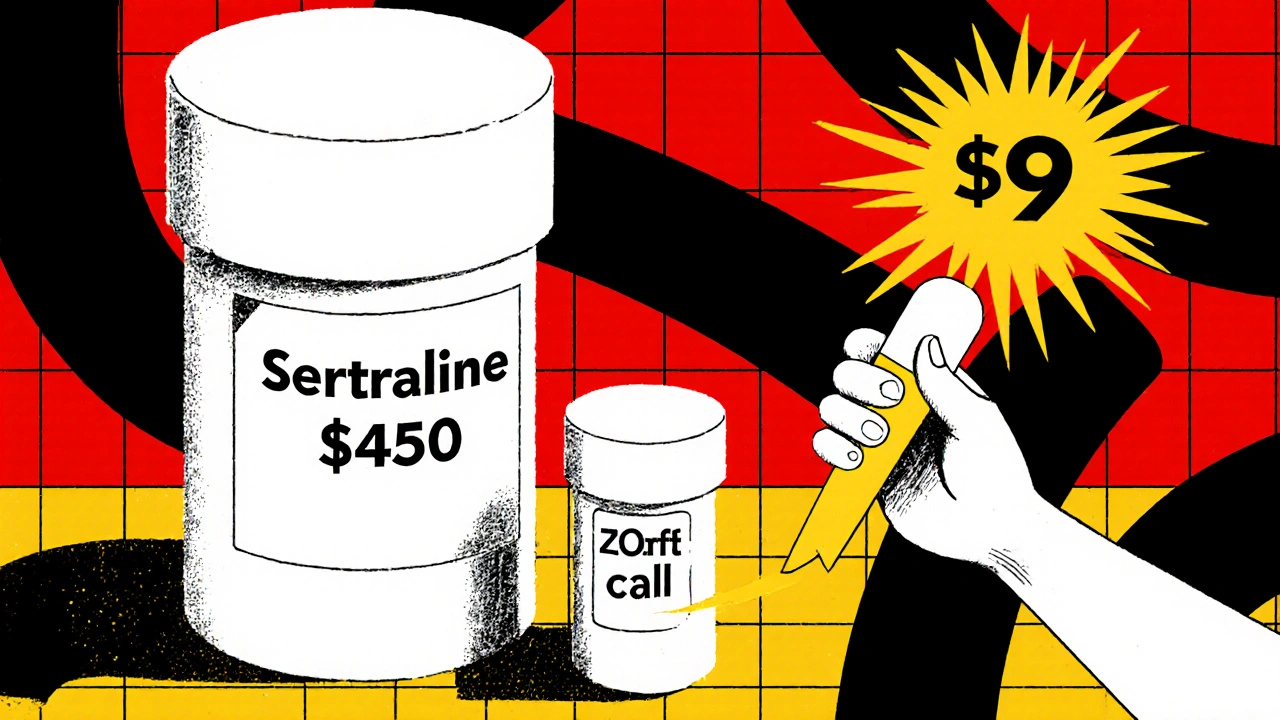
Generic drugs aren’t cheaper because they’re lower quality. They’re cheaper because they don’t need to repeat the billion-dollar clinical trials that brand-name drugs do. Once a patent expires, other companies can make the same drug using the same active ingredients. The FDA requires these generics to match the brand-name version in strength, purity, dosage form, and how quickly the body absorbs it. That’s called bioequivalence - and it’s not a suggestion. It’s a legal requirement.Take sertraline, the generic version of Zoloft. In 2023, a 30-day supply of brand-name Zoloft cost around $450 out-of-pocket. The generic? $9. That’s a 98% drop. And this isn’t rare. A 2023 report from IQVIA found that the average generic copay is $6.16, while the average brand-name copay is $56.12. Nine out of ten generic prescriptions cost under $20. Only six in ten brand-name ones do.
How Much Have Generics Saved the System?
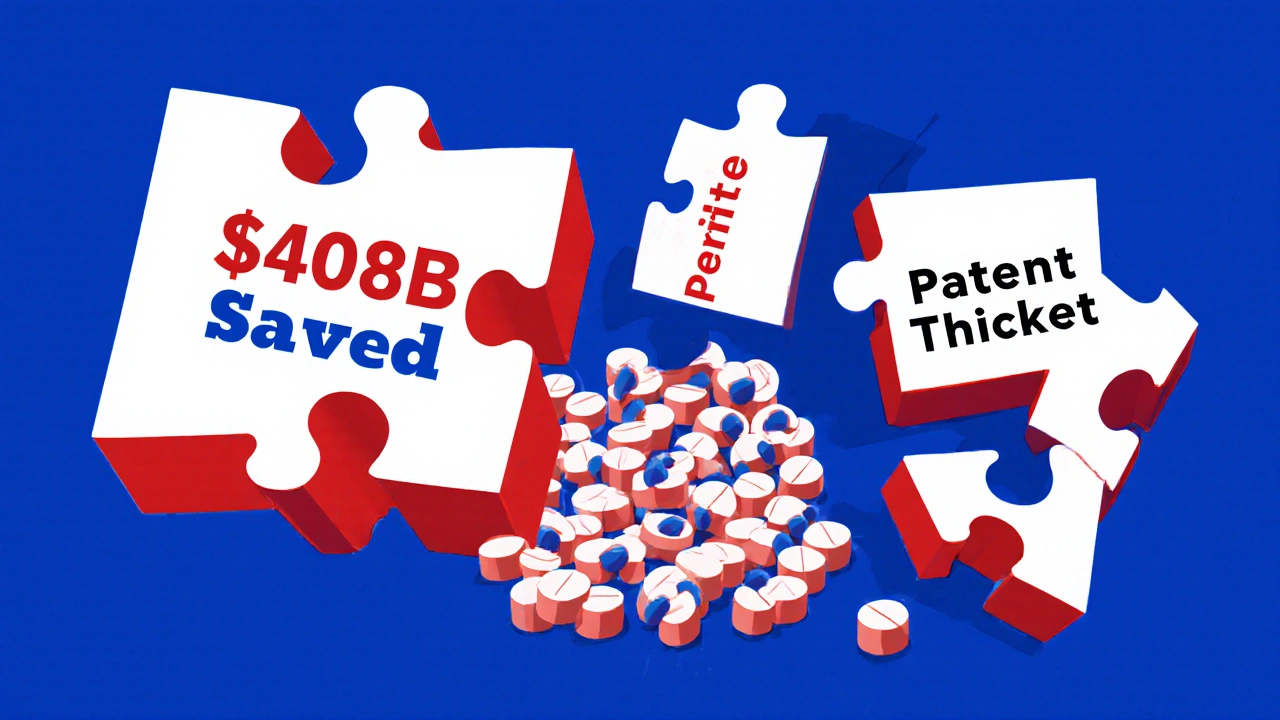
Over the last decade, generic and biosimilar drugs have saved the U.S. healthcare system $2.9 trillion. In 2022 alone, they saved $408 billion - more than the entire annual budget of the Department of Education. That money didn’t just disappear into corporate profits. It went straight to patients’ pockets, insurers, and Medicare.Medicare saved $130 billion in 2022 because of generics. Commercial insurers saved $194 billion. And for people on high-deductible plans, that difference between a $50 and a $5 prescription can mean the difference between filling a prescription or skipping it.
Even within the generic market, there’s room to save more. A 2022 study from Johns Hopkins found that some generic drugs were priced 15 times higher than other generics in the same drug class - even though they worked the same. By switching to the cheaper generic version, patients could save an average of 95%. That’s not just a small discount. That’s life-changing for someone managing diabetes, high blood pressure, or depression.
Generics Aren’t Just Cheaper - They’re Just as Safe
A lot of people worry that generics aren’t as effective. That’s mostly myth. The FDA tests every generic before it hits the market. They look at how the drug dissolves in the body, how much of it enters the bloodstream, and how long it stays active. The standard? 80-125% bioequivalence. That means the generic performs within 20% of the brand - a range so tight, it’s clinically meaningless.There are rare exceptions. For drugs with a narrow therapeutic index - like levothyroxine for thyroid issues or warfarin for blood thinning - even tiny differences can matter. That’s why some doctors and patients stick with the brand in those cases. But even then, switching between different generic manufacturers is usually fine. The real problem isn’t the generic itself - it’s inconsistent supply or pharmacy switching that causes confusion.
A Harvard Medical School survey found that when doctors explain the FDA’s bioequivalence rules to patients, 87% of those worried about generics change their minds. Most people just don’t know how rigorously these drugs are tested.
Who’s Making the Most Money?
The biggest players in the generic market are Teva, Viatris, and Amneal. Together, they control nearly 40% of all generic prescriptions in the U.S. But here’s the twist: even these giants are under pressure. Generic prices keep falling because more companies keep entering the market. When a second generic hits, prices drop another 30-50%. With five or more competitors, they can fall below 10% of the original brand price.Meanwhile, brand-name companies are fighting back. They file dozens of patents - sometimes 17 or more - on a single drug just to delay generics. The FTC says this tactic, called "patent thicketing," has delayed generic entry for years on drugs like Humira and EpiPen. That’s why some brand-name drugs still cost hundreds of dollars even after their patents expired.
What’s Holding Patients Back?
You’d think with all these savings, everyone would choose generics. But many don’t. Why?First, some patients are stuck with brand-name prescriptions because their doctor didn’t write "dispense as written" or "substitution allowed." In 49 states, pharmacists can swap a brand for a generic automatically. In New York, they can’t unless the doctor says so. That means you might be paying more without even knowing it.
Second, copay structures are broken. Some insurance plans charge the same copay for generics and brands - or even higher for generics if they’re on a "preferred" list. That makes no sense. A 2023 survey found that 41% of Medicare beneficiaries still struggle to afford their meds, even though 91% of their prescriptions are generics. The problem isn’t the drug cost - it’s how insurance plans are designed.
Third, misinformation. On forums like Reddit and Drugs.com, some users report side effects after switching to generics. Often, it’s not the drug - it’s the inactive ingredients. A generic might use a different dye, filler, or coating. For most people, that’s harmless. But for someone with a rare allergy or sensitivity, it can cause issues. That’s why it’s important to talk to your pharmacist if you notice a change in how you feel after switching.
How to Start Saving Today
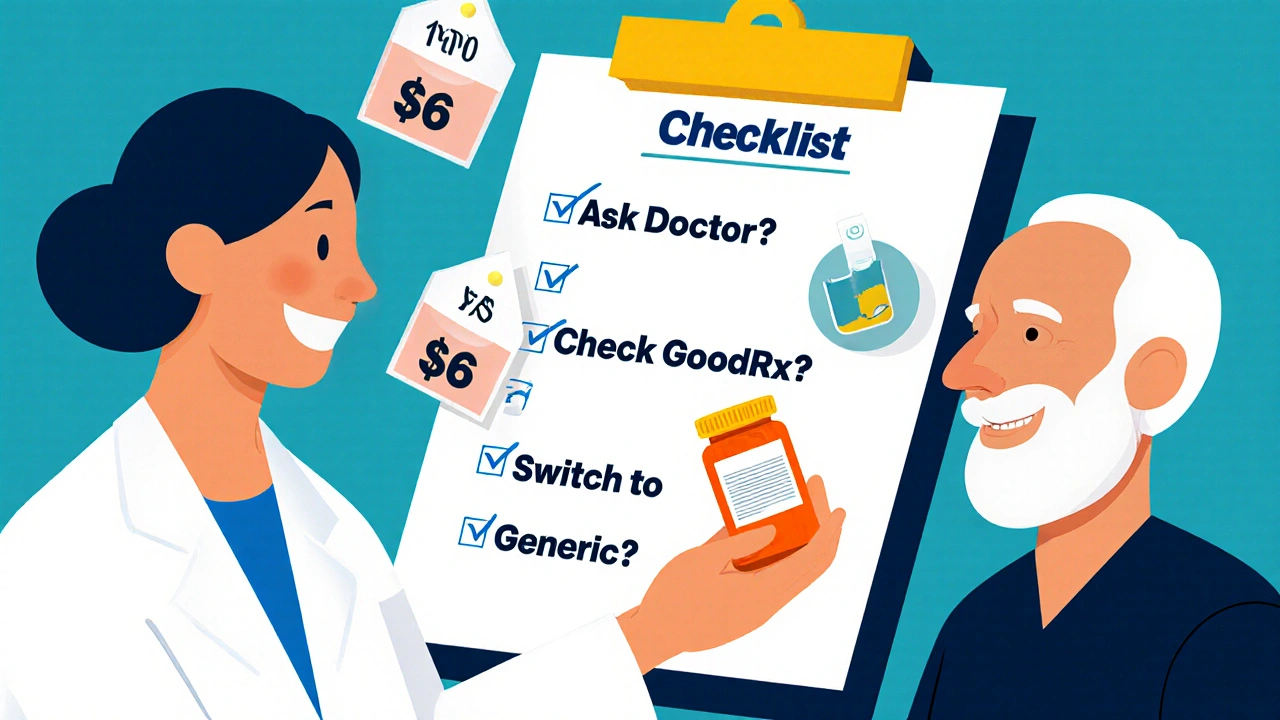
You don’t need to wait for your doctor to suggest it. Here’s how to take control:- Ask your doctor: "Is there a generic version of this medication?" If they say no, ask why. Often, it’s just habit.
- When you get your prescription, ask the pharmacist: "Is there a cheaper generic alternative?" They know the prices better than anyone.
- Use tools like GoodRx or SingleCare. They show real-time cash prices for generics at nearby pharmacies - often lower than your insurance copay.
- Check the FDA’s Orange Book. It lists all approved generics and their therapeutic equivalence ratings. AB-rated means fully interchangeable.
- If you’re on Medicare, know your Part D plan’s formulary. Some plans have tiered pricing - generics are usually Tier 1, meaning the lowest cost.
One patient in Colorado switched from a $280 monthly generic for high blood pressure to a $12 alternative - same active ingredient, same results. Her out-of-pocket savings? Over $3,000 a year.
What’s Next for Generics?
The Inflation Reduction Act capped Medicare Part D out-of-pocket costs at $2,000 a year starting in 2025. That’s going to push even more people toward generics. The FDA approved 831 new generics in 2022 - the second-highest number ever. More are coming. Biosimilars - the generic version of complex biologic drugs like insulin and rheumatoid arthritis treatments - are starting to enter the market. They’re not as cheap as small-molecule generics yet, but they’re already saving billions.The real opportunity? Therapeutic substitution - swapping one generic for another that’s cheaper but just as effective. That’s where the next $15 billion in savings could come from. But it needs better education, better pharmacy systems, and better incentives for doctors and patients.
Right now, generics are the most powerful tool we have to make healthcare affordable. They’re safe, proven, and massively underused. If you’re paying full price for a brand-name drug when a generic exists, you’re leaving money on the table - and possibly risking your health by skipping doses because you can’t afford it.
Don’t Assume - Ask
The system isn’t perfect. Drug prices are still too high. Insurance plans are confusing. Some companies game the system. But for the average person, choosing a generic isn’t a compromise - it’s a smart, science-backed decision. You’re not settling. You’re saving.Next time you get a prescription, don’t just take it. Ask. Compare. Switch. It could save you hundreds - or thousands - a year.
Are generic medications as effective as brand-name drugs?
Yes. The FDA requires generic drugs to have the same active ingredients, strength, dosage form, and bioequivalence as the brand-name version. That means they work the same way in your body. Over 98% of approved generics are rated "AB" - meaning they’re fully interchangeable with the brand.
Why do some people say generics don’t work for them?
In rare cases, differences in inactive ingredients - like fillers, dyes, or coatings - can cause minor side effects in sensitive individuals. This is most common with drugs that have a narrow therapeutic index, such as levothyroxine or warfarin. If you notice a change in how you feel after switching, talk to your doctor or pharmacist. But for 95% of people, generics work just as well.
Can pharmacists substitute generics automatically?
In 49 states, yes - unless the doctor writes "dispense as written" or "no substitution." New York is the only state that requires explicit permission from the prescriber. Even then, pharmacists can still suggest a cheaper generic alternative. Always ask if one is available.
Why are some generic drugs more expensive than others?
Price differences happen because of supply, manufacturing, and market competition. Sometimes a generic is priced higher simply because it’s the only one available. Once more manufacturers enter the market, prices drop. You can always compare prices using tools like GoodRx - often, a different generic version of the same drug costs half as much.
Do generics cause more side effects?
No. The active ingredient - the part that treats your condition - is identical. Side effects come from that ingredient, not the fillers. If you experience new side effects after switching, it’s likely due to a change in inactive ingredients, not the drug’s effectiveness. Report it to your pharmacist or doctor. But most people experience no difference at all.
Is it safe to switch between different generic brands?
Yes. The FDA requires all approved generics to meet the same standards. Switching between different generic manufacturers is common and safe for most medications. The only exceptions are drugs with a narrow therapeutic index, where consistency matters more. If you’re unsure, ask your pharmacist.
How can I find the cheapest generic version of my medication?
Use free price-comparison tools like GoodRx, SingleCare, or Blink Health. They show cash prices at local pharmacies - often lower than your insurance copay. You can also ask your pharmacist to check if there’s a lower-cost generic alternative. Sometimes, switching to a different dosage form (like a tablet instead of a capsule) or strength can cut the price in half.
Comments (8)
Sullivan Lauer
December 1, 2025 AT 06:55
Let me tell you, I was skeptical at first - I thought generics were just cheap knockoffs, you know? Like, how could something that costs $8 possibly be the same as the $400 brand-name pill? But then my dad got diagnosed with hypertension, and we switched him to generic lisinopril - same exact active ingredient, same FDA approval, same results. His blood pressure? Stable. His wallet? Still intact. I started digging into the FDA’s bioequivalence standards - turns out they require generics to hit 80–125% absorption rates compared to the brand. That’s not a loophole - that’s a scientific sweet spot. And the kicker? The inactive ingredients? Sometimes they’re *better*. Less dye, less filler, less junk your body doesn’t need. I’ve switched over 12 of my own prescriptions now. My annual drug bill dropped from $5,200 to $890. That’s not saving money - that’s reclaiming your life. And yeah, I’ve seen people freak out about switching - ‘I feel weird!’ - but 9 times out of 10, it’s just their brain playing tricks because the pill looks different. Talk to your pharmacist. Use GoodRx. Stop letting Big Pharma guilt-trip you into paying for marketing, not medicine.
Sohini Majumder
December 2, 2025 AT 16:19
OMG I JUST REALIZED I’VE BEEN PAYING FOR ZOLOFT FOR 5 YEARS??!!?? I’M SO STUPID 😭😭😭 Like… I literally thought generics were ‘watered down’ or something?? Like, what even IS my brain?? And now I’m crying because I could’ve bought a LUXURY CAR with all that money?? 😭😭😭 Also, why does my pharmacy keep giving me the EXPENSIVE generic?? I feel betrayed. Someone help me fix my life.
Sara Shumaker
December 3, 2025 AT 15:21
There’s something deeply human here - we’re not just talking about pharmacology, we’re talking about trust. We’ve been conditioned to equate price with quality, even when the science says otherwise. The brand-name drug isn’t just a chemical compound - it’s a symbol. A promise. A story we’ve been sold for decades. But when you strip away the packaging, the ads, the celebrity endorsements - what’s left? The same molecule. The same mechanism. The same biological effect. The real tragedy isn’t the cost of the drug - it’s the cost of our own ignorance. We’re not refusing generics because they’re unsafe. We’re refusing them because we’ve been taught to fear the unfamiliar, the unbranded, the unglamorous. And that fear? It’s expensive. It’s lethal. It’s why people skip doses. It’s why diabetes goes untreated. It’s why depression festers. This isn’t about savings - it’s about justice. Access isn’t a privilege. It’s a right. And generics? They’re the most democratic medicine we’ve ever had.
Scott Collard
December 4, 2025 AT 09:05
Stop pretending generics are perfect. I switched to a generic for my thyroid med and my TSH went haywire. Your ‘FDA-approved’ nonsense doesn’t mean squat when your body reacts. And don’t give me that ‘95% of people’ line - I’m not 95%. I’m the 5% you ignore. You think this is about money? It’s about control. Doctors don’t want to explain. Pharmacies don’t want to track. Patients get stuck with inconsistent batches. That’s not science - that’s negligence.
Steven Howell
December 4, 2025 AT 11:15
As a pharmacist with over 22 years of experience in community practice, I can confirm that generic medications represent one of the most remarkable success stories in modern healthcare. The FDA’s bioequivalence requirements are among the most stringent in the world, and the manufacturing standards for generics are identical to those for branded products. I have personally counseled thousands of patients on switching to generics - and in nearly all cases, therapeutic outcomes remained unchanged. The most common issue is not pharmacological, but psychological: patients perceive a difference because the pill’s color, shape, or imprint has changed. I always recommend checking the National Drug Code (NDC) on the bottle to confirm consistency across refills. Furthermore, price comparison tools like GoodRx are indispensable - I often print them for patients who are uninsured. The systemic barriers - formulary restrictions, lack of prescriber awareness, and pharmacy automation errors - are administrative, not pharmacological. The solution lies in education, not skepticism.
Robert Bashaw
December 5, 2025 AT 12:14
Bro. I switched from brand-name Adderall to generic amphetamine salts because I was broke AF. First week? Felt like my brain was wrapped in wet socks. Second week? I was crushing deadlines like a goddamn machine. The only difference? The pill was white instead of orange. No more panic attacks. No more ‘why am I so tired?’ BS. My therapist asked if I’d changed meds. I said, ‘Nah, just stopped being a sucker.’ Now I buy my generics in bulk off Amazon with a coupon code. I’m not ‘settling.’ I’m winning. And if you’re still paying $150 for a 30-day supply of something that costs $12? You’re not being careful - you’re being played.
Brandy Johnson
December 7, 2025 AT 10:01
Let’s not romanticize this. The generic drug industry is dominated by a handful of Chinese and Indian manufacturers with questionable regulatory oversight. The FDA inspects less than 5% of foreign facilities. And yet we’re told to trust these pills blindly? The $408 billion in savings? That’s not a victory - it’s a compromise. We’re exporting our health risks to countries with lax labor and environmental standards. This isn’t affordable healthcare - it’s American healthcare outsourcing its conscience. If you want real savings, fix the system. Don’t just swallow pills from unknown factories and call it progress.
jamie sigler
December 8, 2025 AT 09:20
I just… I don’t even know anymore. I’ve been on the same generic for 8 years. I used to feel fine. Now I’m tired all the time. My anxiety’s worse. My doctor says it’s ‘probably not the med.’ But what if it is? What if the generic changed and no one told me? I don’t have the energy to fight this. I just want to feel normal again. And I’m tired of being told I’m paranoid. Maybe I am. But I’m also broke. And scared. And I just want someone to listen.