FDA Medication Safety Interaction Checker
This tool simulates FDA-referenced drug interaction checks based on data from top medication safety apps. It shows potential risks based on common medications. Always consult your healthcare provider before making medication changes.
Interaction Results
Enter medications to see interaction results.
Every year, over 1.3 million people in the U.S. end up in the emergency room because of medication errors. Many of these mistakes happen because people don’t know what side effects to watch for, or they mix drugs that shouldn’t be taken together. The good news? Mobile apps built with FDA-referenced data can help you avoid these dangers - if you know which ones to trust.
What Makes an App a Real FDA Medication Safety Tool?
Not every app that says "FDA-approved" actually is. The FDA doesn’t approve most medication apps. Instead, they regulate only those that act like medical devices - meaning they diagnose, treat, or prevent disease. Apps like Somryst, which treats chronic insomnia with digital therapy, are FDA-approved because they directly change patient outcomes. But apps like Medisafe or Drugs.com? They’re not approved devices. They’re trusted tools that pull data from FDA databases, clinical studies, and drug labels. If an app gives you real-time warnings about drug interactions, tells you how to handle an overdose, or flags dangerous side effects based on your age or other meds - it’s using FDA-backed science. That’s what makes it valuable. But if it just lists side effects without context or updates, it’s not reliable.Top 3 Apps That Actually Help You Stay Safe
- Drugs.com: This is the most visited medication resource in the U.S., with over 25 million monthly users. It doesn’t just list side effects - it shows you what to do if you overdose, how alcohol affects your drug, and whether it’s safe during pregnancy. Its interaction checker tracks up to 50 medications and foods at once. It’s free, works offline for previously viewed pages, and updates daily with new FDA alerts.
- Medisafe: Used by over 7 million people, Medisafe is the top-rated medication reminder app. It doesn’t just remind you to take your pills - it learns your habits. Data from 7 million users shows Fridays and Saturdays are the hardest days to stick to a schedule. Medisafe sends smarter alerts on those days. It also lets caregivers track your adherence, which is huge for seniors on 8+ meds. The free version covers basics; the premium version ($4.99/month) adds unlimited caregiver reports and body measurement tracking.
- UpToDate: This isn’t for casual users. It’s used by 78% of U.S. teaching hospitals. Doctors rely on it for clinical decisions because it pulls from 11,000+ peer-reviewed topics. If you’re on complex meds or have multiple conditions, UpToDate gives you the same level of detail your doctor sees. It costs $499-$699/year - too steep for most, but worth it if you’re managing a chronic illness.
How These Apps Prevent Real Harm
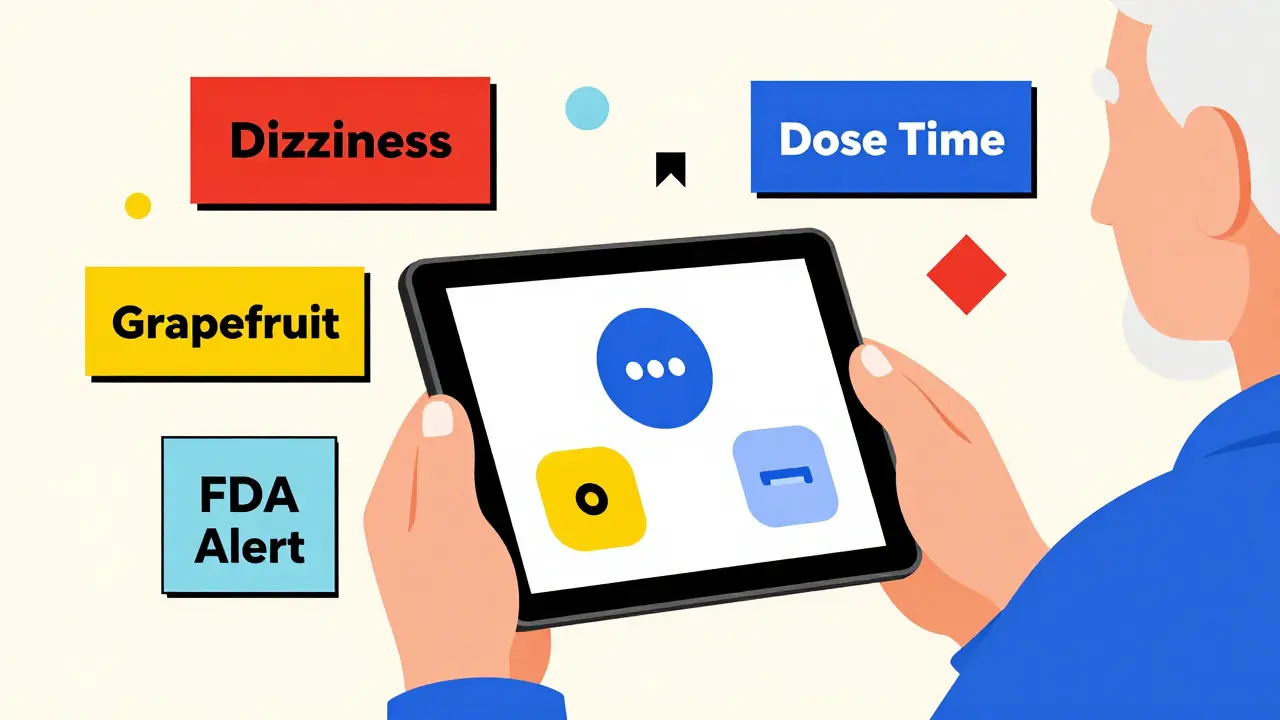
A 2025 study found AI-powered safety apps can cut medication errors by 30-50%. Here’s how:- Drug interaction alerts: Taking blood pressure meds with grapefruit? Drugs.com warns you before you swallow the pill.
- Side effect tracking: Medisafe lets you log symptoms like dizziness or nausea. Over time, it shows patterns - like whether a side effect started after you changed your dose.
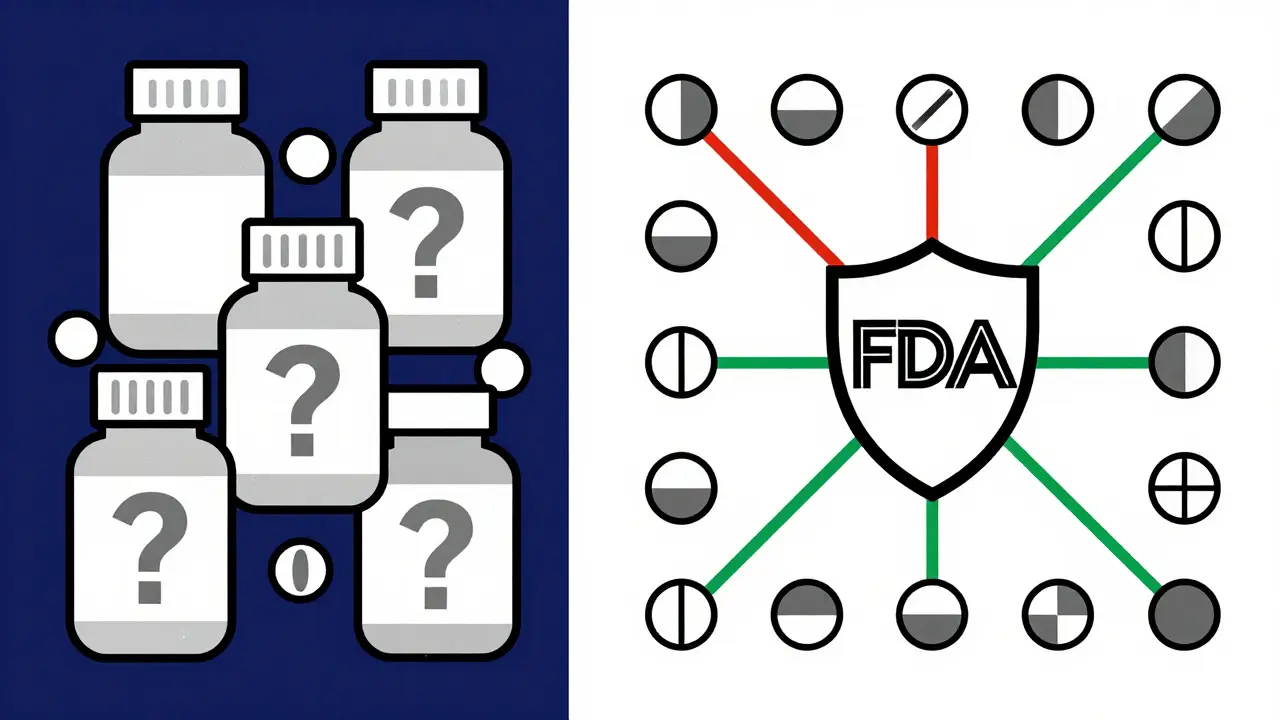
- Pill identification: The Pill Identifier & Med Scanner app (updated in July 2025) uses your phone’s camera to scan pills. It matches shape, color, and imprint to FDA drug databases - no more guessing what that white oval is.
- Real-time FDA alerts: If the FDA issues a warning about a drug’s safety, Drugs.com pushes it to users within hours. You don’t have to wait for your doctor to mention it.
One user, Jessica, said after a seizure left her with aphasia, she was on eight different medications. “I couldn’t remember what to take or when,” she said. “Medisafe saved me. Now I don’t need someone to remind me.”
What You Can’t Rely On
Many apps promise safety but fall short:- Apps without updates: If a drug’s side effect profile changed last month, but the app hasn’t updated since 2022 - it’s dangerous.
- Apps that don’t cite sources: If it says “studies show” without linking to FDA or peer-reviewed journals, it’s guesswork.
- Apps that make treatment claims: If an app says “this pill will cure your anxiety,” it’s crossing into medical device territory - and likely unregulated.
Reddit users on r/medapps point out that while Drugs.com’s symptom checker works well for common issues like headaches or rashes, it’s unreliable for rare diseases. Always double-check with your provider.
Who Uses These Apps - And Why
In 2025, 68% of U.S. adults use at least one medication safety app. But usage isn’t even:- Seniors (65+): 79% use them. Many struggle with memory or multiple prescriptions. Apps with large fonts, simple layouts, and caregiver sharing features (like mySeniorCareHub’s Feb 2025 update) are winning here.
- Chronic illness patients: 85% use apps to track side effects and manage complex regimens.
- Younger users: They use them for quick checks - like whether a new OTC painkiller will clash with their birth control.
Hospitals are catching on too. 63% of U.S. hospitals now integrate these apps with electronic health records. That means your doctor might see your app-reported side effects - helping them adjust your treatment faster.
What’s Changing in 2025
The FDA is rolling out new rules called Prescription Drug Use-Related Software (PDURS) in late 2025. This means apps that give advice on prescription drugs - like dosing, interactions, or safety warnings - will need to prove their data is accurate, up-to-date, and clinically validated.- Apps like Medisafe and Drugs.com are already preparing.
- Apps that just list side effects without context may be forced to shut down or add disclaimers.
- AI tools that predict adverse reactions based on your genetics or history will face stricter review.
By 2027, analysts predict 40% of medication safety apps will need some level of FDA review. That’s a big shift - but it’s also a good thing. It means the ones that survive will be more trustworthy.
How to Get Started
You don’t need to be tech-savvy. Here’s how to set up safely:- Download Drugs.com or Medisafe from the App Store or Google Play.
- Enter your meds - name, dose, time, reason. Use the pill scanner if you’re unsure what something is.
- Turn on notifications. Set them for 15-30 minutes before your dose.
- Check for FDA alerts weekly - they pop up in the news section.
- Share access with a caregiver if you’re 65+ or managing complex meds.
Most users get comfortable in under 15 minutes. Seniors might need 3-5 help sessions, but apps like mySeniorCareHub now offer step-by-step video guides for caregivers.
Bottom Line: Use These Apps - But Stay Alert
Medication safety apps aren’t magic. They won’t replace your doctor. But they’re the best tool you have between visits to catch errors before they hurt you. The apps that work best combine clear data, real-time updates, and smart alerts. Stick with ones that cite the FDA, update often, and let you track symptoms over time.And remember: if an app feels too simple, too vague, or too good to be true - it probably is. Your health isn’t a game. Use tools that treat it like the serious thing it is.
Are FDA medication safety apps free?
Most core features are free. Drugs.com and Medisafe let you track medications, check side effects, and get interaction alerts at no cost. Premium upgrades - like unlimited caregiver access or advanced analytics - cost $2.99-$9.99/month. UpToDate is subscription-only at $499+/year and meant for professionals.
Can these apps replace my pharmacist?
No. Apps give you information, but pharmacists give you personalized advice. If an app flags a possible interaction, still ask your pharmacist. They know your full history, including OTC meds, supplements, and even what you eat. Apps can’t replace human judgment - they just make it better.
Do these apps work offline?
Drugs.com lets you view previously loaded drug pages without internet. Medisafe works offline for reminders but needs a connection to update drug info or send alerts. If you’re in an area with poor signal, download key info ahead of time. Don’t rely on real-time features without Wi-Fi or data.
Why does my app say a drug is safe but my doctor says it’s not?
App data is general. Your doctor knows your specific health history - kidney function, allergies, other conditions. An app might say “safe for most people,” but your body might react differently. Always follow your provider’s advice over an app’s general warning.
Are there apps for seniors with vision or memory problems?
Yes. mySeniorCareHub launched a simplified Drug Interaction Checker in February 2025 with large text, voice-guided setup, and caregiver alerts. Medisafe also has a “Senior Mode” with bigger buttons and fewer pop-ups. Look for apps labeled “senior-friendly” or ask your local Area Agency on Aging for recommendations.
Can these apps report side effects to the FDA?
Most don’t report directly - yet. But Medisafe and Drugs.com let you export your side effect logs so you can submit them manually to FDA’s MedWatch program. The next wave of apps, under the 2025 PDURS rules, will likely include one-tap reporting. That’s coming soon.
Comments (14)
Meghan O'Shaughnessy
December 16, 2025 AT 16:33
Drugs.com is my go-to. I keep it open on my phone like a second brain. Found out my blood pressure med and grapefruit were a bad combo before I even took it. Saved me a trip to the ER.
Kaylee Esdale
December 17, 2025 AT 23:11
Medisafe got me through chemo. My mom set it up for me. Big buttons. Loud alarms. She gets alerts when I miss a dose. No guilt trips. Just quiet help.
Jody Patrick
December 18, 2025 AT 18:10
These apps are great but dont forget your pharmacist. They know your pills better than any algorithm. I always double check with mine before trusting an app.
Radhika M
December 19, 2025 AT 12:42
Used UpToDate when my dad was on five meds. It felt like having a doctor in my pocket. Worth every penny if you’re juggling complex conditions.
Philippa Skiadopoulou
December 20, 2025 AT 20:00
The FDA’s new PDURS framework is long overdue. Many apps operate in a regulatory gray zone. Clinical validation isn’t optional-it’s essential for patient safety.
Pawan Chaudhary
December 22, 2025 AT 13:50
Love that apps are finally getting serious about safety. My aunt started using Medisafe last year and now she’s the one reminding *us* to take our vitamins 😊
CAROL MUTISO
December 24, 2025 AT 12:12
Oh wow. FDA-approved apps. Right. Next they’ll tell us the moon landing was real and your phone doesn’t track your dreams. These apps are just glorified Google searches with push notifications. They don’t know your kidney function, your sleep schedule, or whether you drank three beers last night. But sure, trust the algorithm. 😏
Erik J
December 25, 2025 AT 17:07
Interesting that UpToDate is used by 78% of teaching hospitals. Makes me wonder how many of those apps are actually integrated into EHRs or just used as standalone references. Data point: 63% of hospitals integrate them. But integration doesn’t equal clinical decision support. Still, promising.
BETH VON KAUFFMANN
December 26, 2025 AT 10:23
Let’s be real-Drugs.com’s interaction checker is a joke. It flags everything. Caffeine with my antidepressant? Red alert. Water with my thyroid med? Flagged. It’s not safety-it’s anxiety marketing. And don’t get me started on ‘AI-powered adverse reaction prediction.’ That’s not medicine, that’s sci-fi fantasy wrapped in a UI.
Brooks Beveridge
December 27, 2025 AT 10:12
You’re not alone if you’re skeptical. But I’ve seen these apps change lives-especially for seniors with 8+ meds. My grandma used to mix up her pills. Now she’s got Medisafe + a caregiver alert. She’s alive because of it. Don’t dismiss tech because it’s not perfect. Use it as a tool, not a crutch.
Joe Bartlett
December 27, 2025 AT 18:11
UpToDate costs $700 a year? That’s ridiculous. If you’re not a doctor, you don’t need it. Stick to Drugs.com. Free. Fast. Actually useful.
Marie Mee
December 28, 2025 AT 14:55
These apps are just a front for Big Pharma. They collect your data, sell it, then tell you what to take. I don’t trust any app that says ‘FDA-backed.’ The FDA’s been bought out. They approve anything with a lobbyist. I take my meds and turn off my phone.
Josh Potter
December 29, 2025 AT 17:01
Bro I downloaded Drugs.com after my friend had a seizure from mixing ibuprofen and blood thinners. Now I scan every pill I pick up. It’s wild how many pills look identical. This app saved my life. 10/10 recommend. Also, I’m gonna start using the pill scanner for my dog’s meds. He’s on two. He’s basically a senior citizen now 🐶💊
Evelyn Vélez Mejía
December 31, 2025 AT 02:27
While the proliferation of digital health tools is undeniably transformative, one must not conflate accessibility with efficacy. The epistemic authority of algorithmically derived medical guidance remains contingent upon the integrity of its underlying data corpus. Absent rigorous clinical validation and longitudinal outcome tracking, these platforms risk engendering a false sense of security-an epistemic hazard of the highest order. The FDA’s PDURS initiative, though tardy, represents a necessary epistemological recalibration. We must demand not merely utility, but veracity.