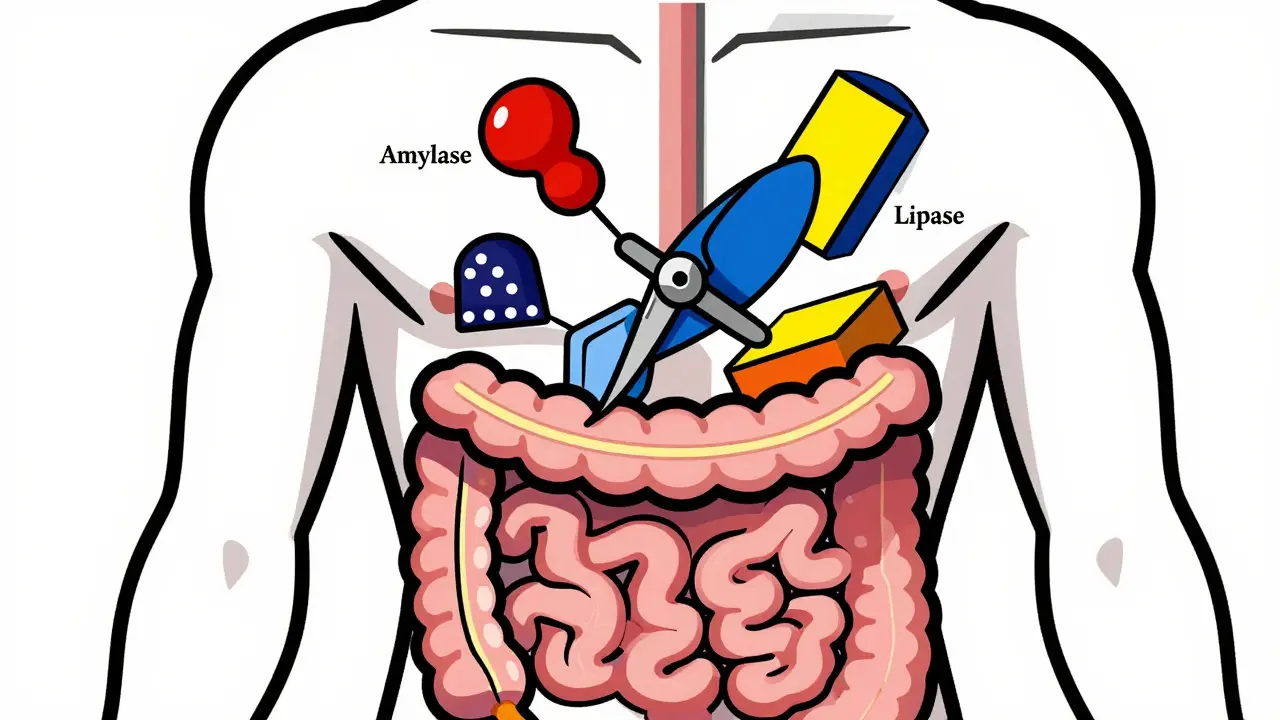
When you eat a meal and still feel bloated, gassy, or like your stomach is sitting like a rock afterward, it’s easy to blame the food. But sometimes, the problem isn’t what you ate - it’s what your body can’t break down. Digestive enzymes are the body’s natural tools for turning food into usable nutrients. When they’re missing or not working right, symptoms like diarrhea, floating stools, or constant discomfort can follow. For some people, enzyme supplements make a real difference. For others, they’re just another expensive placebo. So when do they actually help?
What Digestive Enzymes Actually Do
Your body makes enzymes every day - mostly from your pancreas. Think of them as molecular scissors. Amylase cuts up carbs, protease breaks down proteins, and lipase handles fats. Without enough of these, undigested food moves into your colon, where bacteria feast on it and produce gas, bloating, and loose stools. This isn’t just "indigestion." It’s malabsorption. Prescription enzyme replacements, like Creon or Zenpep, are made from pig pancreas and contain precise amounts of lipase, protease, and amylase. They’re coated to survive stomach acid so they work in the small intestine where digestion happens. Over-the-counter (OTC) enzymes? Many are made from fungi or plants. They’re cheaper, easier to get, but often less reliable. Some don’t even contain what’s on the label.When Enzyme Supplements Work - And When They Don’t
If you have exocrine pancreatic insufficiency (EPI), enzyme supplements aren’t optional - they’re life-changing. EPI happens when your pancreas doesn’t make enough enzymes. It’s common in people with chronic pancreatitis, cystic fibrosis, or after pancreatic surgery. Studies show prescription enzymes reduce fatty stools by 70-85% in these patients. One Reddit user, u/PancreasWarrior, said after starting Creon: "I went from losing 20 pounds in 3 months to eating normally again. It’s not a supplement. It’s medicine." But EPI only affects 1-5% of the general population. Most people with digestive issues don’t have it. For those with lactose intolerance, a simple lactase enzyme (like Lactaid) works well. About 82% of users report being able to eat dairy without symptoms. That’s solid science. For IBS? The picture is murkier. Some people find relief from OTC enzymes like Digestive Gold. Dr. Russell Havranek, a gastroenterologist, recommends them as a first step for IBS-related bloating and gas. In one 2021 study, OTC enzymes reduced symptoms in 50-60% of IBS patients. But another 2022 survey found 41% of IBS users quit within three months because they didn’t feel better. Here’s the catch: if your symptoms are caused by small intestinal bacterial overgrowth (SIBO), adding enzymes can make things worse. More undigested food = more fuel for bad bacteria = more bloating. That’s why self-treating without a diagnosis can backfire.Prescription vs. Over-the-Counter: What’s the Real Difference?
| Feature | Prescription PERT (Creon, Zenpep) | OTC Enzymes (NOW Foods, Enzymedica) | |---------|----------------------------------|-------------------------------------| | Enzyme Source | Porcine (pig pancreas) | Fungal, plant, or bacterial | | Lipase per capsule | 10,000-40,000 units | 10,000-20,000 units (often less) | | Enteric coating | Yes - survives stomach acid | Usually no - breaks down in stomach | | Dosage consistency | FDA-regulated, exact amounts | 20-30% batch variation; 15-25% underdosed per ConsumerLab | | Cost per dose | $1.50-$3.00 (often covered by insurance) | $0.50-$1.00 | | Proven for EPI | 70-85% effective | 30-40% effective | | Proven for IBS/lactose | Limited evidence | 50-60% symptom reduction in some studies | Prescription enzymes are drugs. OTC enzymes are supplements. That means the FDA doesn’t require OTC brands to prove they work before selling them. In 2022, the FDA issued 12 warning letters to enzyme companies for making false claims like "boosts metabolism" or "detoxifies the gut." Those claims aren’t just misleading - they’re illegal.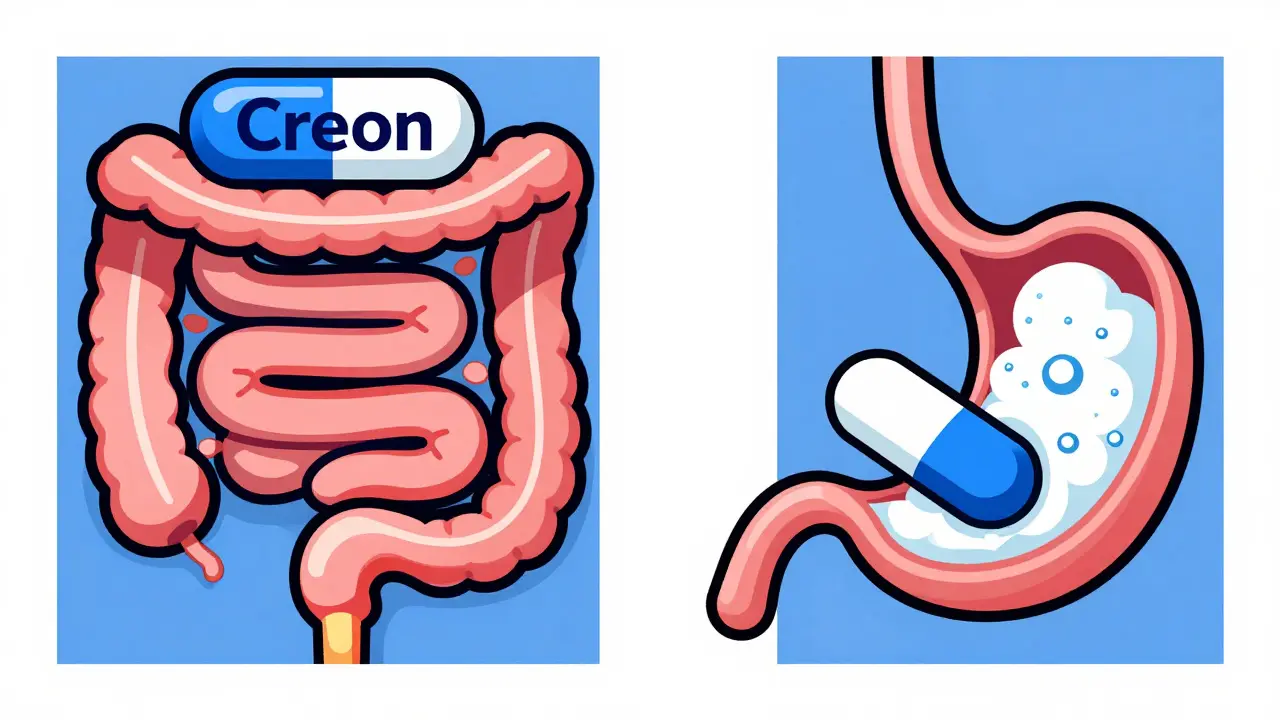
How to Use Enzymes Right (If You’re Going To)
If you’re trying enzymes, timing matters more than the brand. Take them right before you eat - not 30 minutes before, not after. The goal is to have them in your small intestine when food arrives. If you’re a slow eater, split the dose: take half at the start of the meal, half halfway through. Start low. Begin with 10,000 lipase units per meal. Wait a week. If symptoms don’t improve, increase by 10,000 units. Most people find their sweet spot between 25,000 and 50,000 units per meal. Don’t go over 80,000 unless your doctor says so. Also, pay attention to fat. Lipase needs to match your fat intake. One gram of fat needs about 500 lipase units. A cheeseburger? You’ll need more than a salad. Keep a simple food and symptom log for two weeks. Note what you ate, when you took enzymes, and how you felt.Who Should Avoid Enzymes?
Don’t use them if you have acute pancreatitis. Enzymes can trigger more inflammation. Also, avoid them if you’re on proton pump inhibitors (PPIs) like omeprazole without talking to your doctor. Stomach acid helps activate some enzymes. If you’ve lowered your acid too much, the enzymes might not work right. People with allergies to pork should avoid prescription enzymes. There are plant-based alternatives, but they’re harder to find and often less effective. And if you’re taking them because you think they’ll help you lose weight? That’s a myth. No study shows enzymes boost metabolism or burn fat. That’s marketing, not science.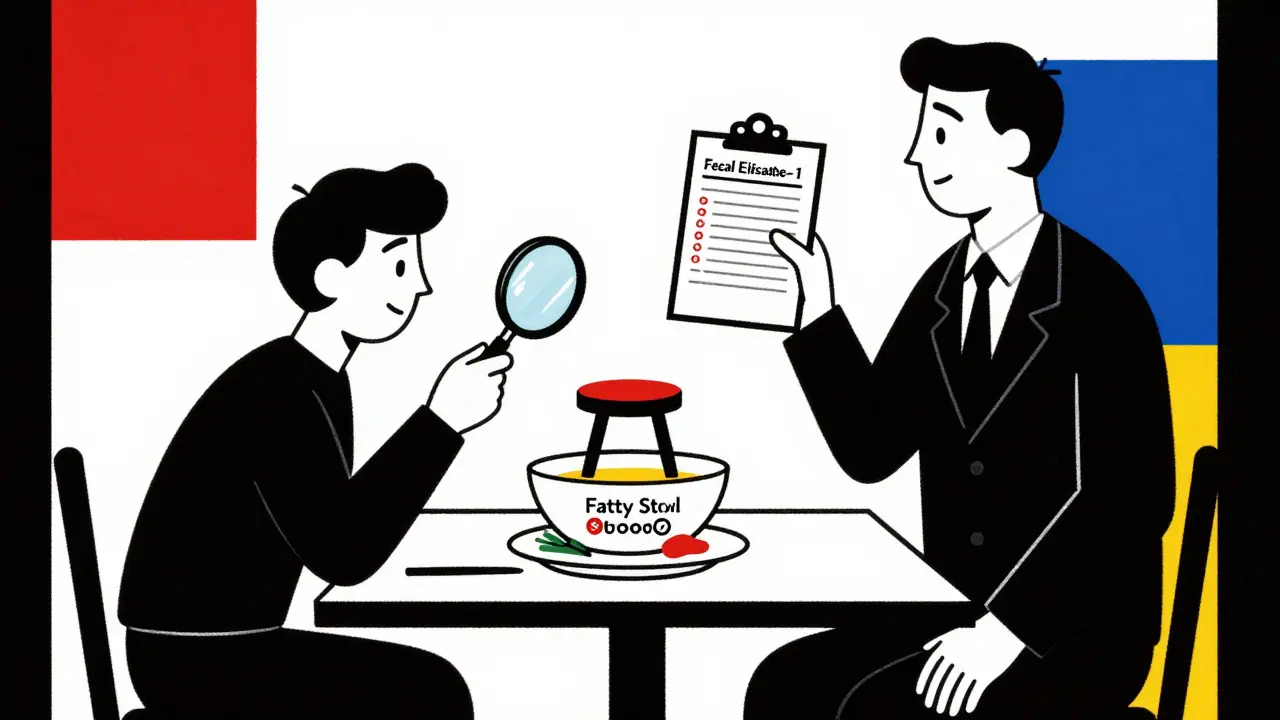
What to Do If You’re Still Not Sure
If you’re regularly bloated, gassy, or have oily stools that float, see a doctor. Get tested for EPI with a fecal elastase-1 test. It’s simple, non-invasive, and covered by most insurance. If that’s negative, ask about SIBO testing or food intolerances. Don’t treat symptoms without knowing the cause. Enzymes can mask problems like celiac disease, Crohn’s, or even pancreatic cancer. Early diagnosis saves lives.The Bottom Line
Digestive enzyme supplements aren’t magic pills. But they’re not useless, either. For people with EPI or lactose intolerance, they’re essential. For others, they might help - but only if used correctly and with realistic expectations. If you’re considering OTC enzymes, choose brands that have been independently tested (like those certified by ConsumerLab or USP). Avoid anything promising "detox," "weight loss," or "gut healing." Stick to the basics: protease, amylase, lipase, and maybe lactase if dairy bothers you. And remember: if symptoms persist after a few weeks, stop. Talk to a doctor. There’s probably a better explanation - and a better solution - than another bottle of pills.Can digestive enzymes help with IBS?
Some people with IBS do report less bloating and gas after using OTC digestive enzymes, especially those containing protease and amylase. Studies show about 50-60% symptom reduction in certain cases. But it doesn’t work for everyone. If you’ve tried them for 3-4 weeks with no change, they’re probably not helping you. Also, if you have SIBO, enzymes can make symptoms worse by feeding bad bacteria.
Are prescription enzymes better than over-the-counter ones?
For exocrine pancreatic insufficiency (EPI), yes - prescription enzymes are far superior. They’re standardized, enteric-coated, and proven to reduce fatty stools by 70-85%. OTC enzymes often lack coating and contain inconsistent enzyme levels. For lactose intolerance or mild IBS, OTC enzymes can work fine and cost much less. But for true pancreatic disease, OTC isn’t enough.
How do I know if I need digestive enzymes?
Look for signs like oily, floating stools, unexplained weight loss, or constant bloating after meals - especially with fatty foods. If you have a history of pancreatitis, cystic fibrosis, or pancreatic surgery, you should be tested for EPI. A simple stool test (fecal elastase-1) can confirm if your pancreas is producing enough enzymes. Don’t guess. Get tested before spending money on supplements.
Can digestive enzymes help with gluten sensitivity?
For people with celiac disease, no - enzymes won’t replace a gluten-free diet. But some newer enzyme blends, like those with gluten-specific proteases, are being studied to reduce the damage from accidental gluten exposure. Early results show they can cut gluten toxicity by up to 80% in lab settings. Still, this isn’t a license to eat bread. These are experimental and not yet approved as treatment.
Do digestive enzymes have side effects?
Generally, they’re well-tolerated. Some people report mild constipation, nausea, or stomach cramps, especially at high doses. Rarely, improper use can lead to bezoars - hard masses of undigested food in the gut. Also, if you’re on acid-reducing medications like PPIs, enzymes may not work as well. Always take them right before meals and talk to your doctor if you’re unsure.
Comments (12)
Aishah Bango
January 26, 2026 AT 12:12
People just swallow these supplements like candy and wonder why nothing changes. You don’t need enzymes if you’re not missing them. It’s not a magic fix for eating too much pizza. If your gut’s acting up, get tested. Not Googled. Not Reddit-diagnosed. Tested.
Simran Kaur
January 28, 2026 AT 10:33
Oh my goodness, I cried reading this. In India, we grow up with natural remedies - ginger, cumin, fennel - but when my sister got diagnosed with EPI after years of suffering, we had no idea. Creon saved her life. I’m so glad someone finally wrote this with truth and heart. Not all supplements are scams. Some are lifelines.
Jessica Knuteson
January 29, 2026 AT 22:53
Enzymes work for EPI. Enzymes don’t work for IBS. Enzymes are not magic. Enzymes are not detox. Enzymes are not weight loss. Enzymes are not a solution to poor diet. Enzymes are not a replacement for medical care. Enzymes are not a cure. Enzymes are not a bandaid. Enzymes are not a trend. Enzymes are not a marketing ploy. Enzymes are biological catalysts. End of story.
rasna saha
January 30, 2026 AT 03:16
I know someone who tried OTC enzymes for months and felt worse. She was so discouraged until her doctor tested her for SIBO. Turned out the enzymes were feeding the bad bacteria. She’s on antibiotics now and finally feels like herself again. Don’t give up - but don’t guess either. Ask for the stool test. It’s easy.
Skye Kooyman
January 31, 2026 AT 15:40
My mom takes Creon after pancreatic surgery. She’s 72. She eats steak now. Not just soup. I used to think supplements were all hype until I saw her life change. Still, I won’t touch OTC ones. Too many shady brands out there.
James Nicoll
January 31, 2026 AT 22:24
So let me get this straight. You’re telling me the same enzyme that helps someone with cystic fibrosis survive is also being sold in a bottle labeled "Gut Revival™" with a picture of a yoga cat? And we’re surprised people are confused? The FDA’s just sitting there sipping chamomile tea while the supplement industry turns human suffering into a Walmart aisle.
Uche Okoro
February 1, 2026 AT 04:31
The pathophysiological implications of exogenous proteolytic enzyme administration in the context of dysbiosis-mediated gastrointestinal symptomatology are profoundly non-linear. While lipase supplementation may transiently ameliorate steatorrhea in EPI, it exacerbates mucosal inflammation in SIBO-positive phenotypes due to substrate-driven bacterial proliferation. The clinical utility of OTC formulations remains statistically insignificant in randomized controlled trials with adequate blinding.
Ashley Porter
February 1, 2026 AT 10:41
Just read the label. If it doesn’t say "enteric-coated" and "USP verified," it’s probably garbage. I’ve seen too many people waste money on brands that list "plant enzymes" but have zero lipase units. The FDA doesn’t regulate supplements like drugs. That’s not a bug - it’s the business model.
Peter Sharplin
February 2, 2026 AT 22:41
I’m a GI nurse. I’ve seen this a thousand times. Someone comes in bloated, says they tried every enzyme under the sun. We test for fecal elastase - negative. Then we ask about their meds. Oh, they’ve been on omeprazole for 5 years. So you’re suppressing acid, then taking enzymes that need acid to activate? That’s like putting a fire extinguisher on a candle. Start with the basics: timing, dose, food log. Then test. Don’t skip steps.
John Wippler
February 4, 2026 AT 19:23
Imagine your body’s digestive system is a high-end kitchen. Enzymes are the knives, the blender, the oven. If your pancreas is broken, you’re trying to cook a steak with your fingers. Prescription enzymes? That’s a professional chef stepping in. OTC enzymes? That’s a kid with a butter knife and a dream. And the marketing? That’s a TikTok influencer yelling "GUT CLEANSE!" while shoving a bottle in your face. Don’t let the noise drown out the science.
Geoff Miskinis
February 5, 2026 AT 09:53
It’s amusing how the American healthcare system has turned biological necessity into a consumerist spectacle. You require a pharmaceutical-grade enzyme replacement to survive? That’s covered by insurance. You want to optimize your digestion for a mediocre brunch? That’s a $25 bottle of powdered mystery from Amazon. The market doesn’t care about truth - only perceived efficacy and profit margin. The real tragedy isn’t the supplement industry. It’s that we’ve stopped demanding better.
Mohammed Rizvi
February 6, 2026 AT 15:46
My uncle in Delhi used to chew raw papaya after every meal. Said it helped. Turns out papaya has papain - a natural protease. He didn’t know what an enzyme was. But he knew his gut. Sometimes the old ways work because they’re grounded in observation, not ads. Still, if you’re losing weight or your poop floats like a dinghy - go get tested. No shame in science.