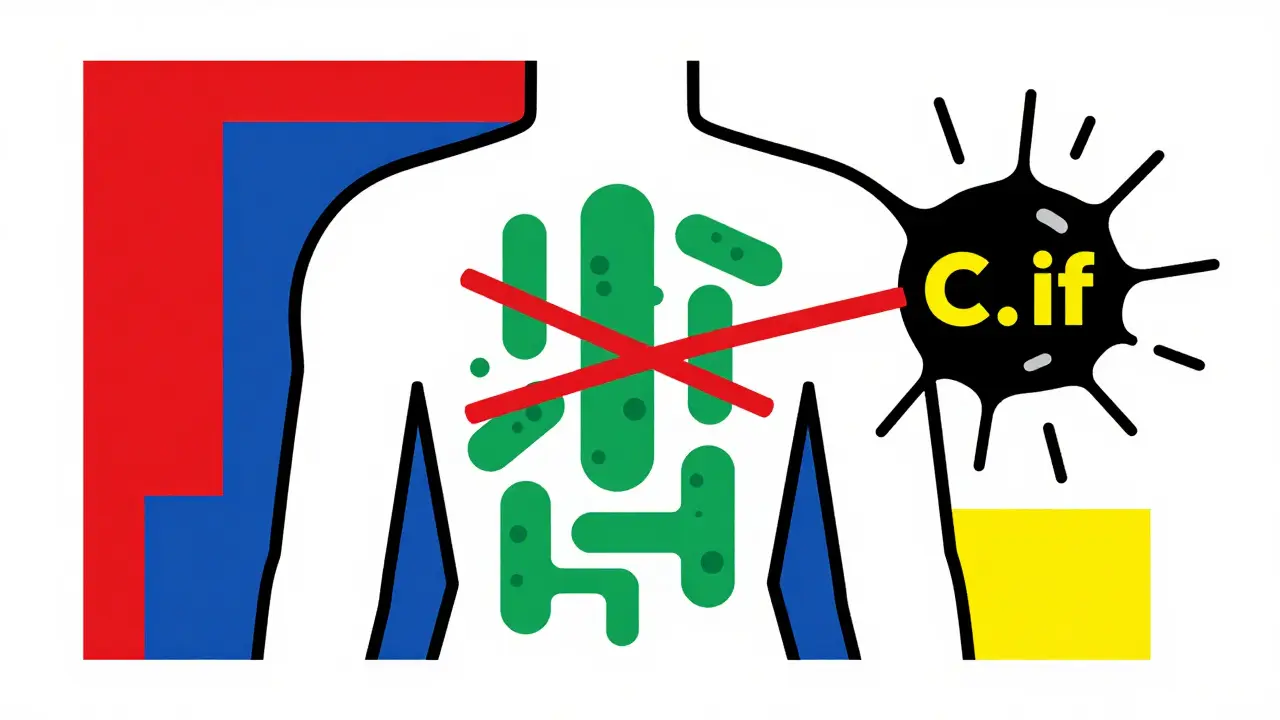
Most people think diarrhea after antibiotics is just a side effect-something you endure and move on from. But for thousands of Americans every year, it’s not just an upset stomach. It’s Clostridioides difficile, or C. diff, a dangerous infection that can turn a simple course of antibiotics into a life-threatening illness.
Every year, nearly half a million cases of C. diff occur in the U.S. alone. About one in five of those cases lead to hospitalization. And for older adults, the risk of death is 10 to 15 times higher than for younger people. What’s worse? Many cases start right in your own home, not the hospital. You take an antibiotic for a sinus infection, a urinary tract infection, or even a dental procedure. A few days later, you’re having watery diarrhea, cramps, and fever. You assume it’s just the antibiotics messing with your gut. But it might be something far more serious.
What Exactly Is C. diff?
Clostridioides difficile is a bacterium that lives harmlessly in the intestines of about 5% of healthy adults. But when antibiotics wipe out the good bacteria that keep it in check, C. diff takes over. It multiplies rapidly and releases two powerful toxins-Toxin A and Toxin B-that attack the lining of your colon. This causes inflammation, swelling, and severe diarrhea.
The name has changed over time. It used to be called Clostridium difficile, but scientists reclassified it in 2016 based on genetic differences. That’s why you might still see the old name in older articles. But today, it’s officially Clostridioides difficile.
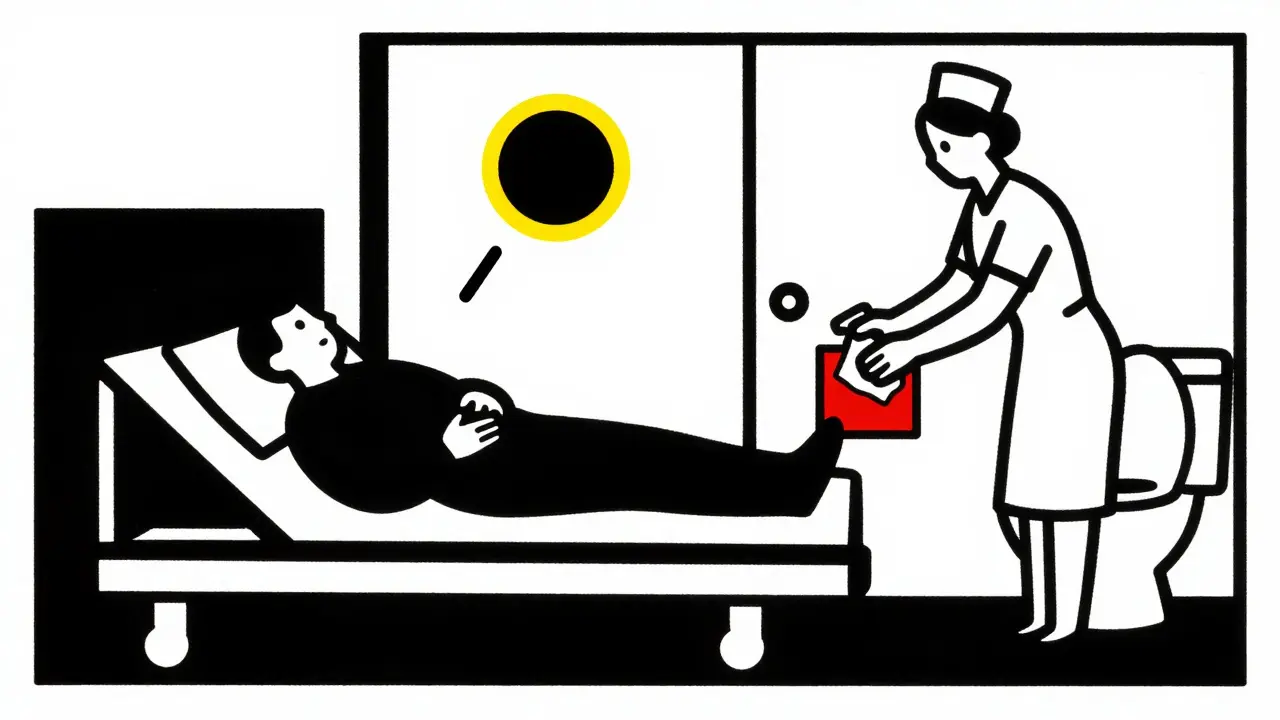
What makes C. diff so dangerous isn’t just the infection itself-it’s how it survives. This bacterium forms spores. These aren’t regular cells. They’re like tiny, hardened capsules that can live for months on doorknobs, bed rails, toilets, and even clothing. Regular hand soap won’t kill them. Most hospital cleaners won’t either. Only EPA-registered disinfectants on List K-those containing bleach or hydrogen peroxide-can destroy them.
How Antibiotics Trigger C. diff
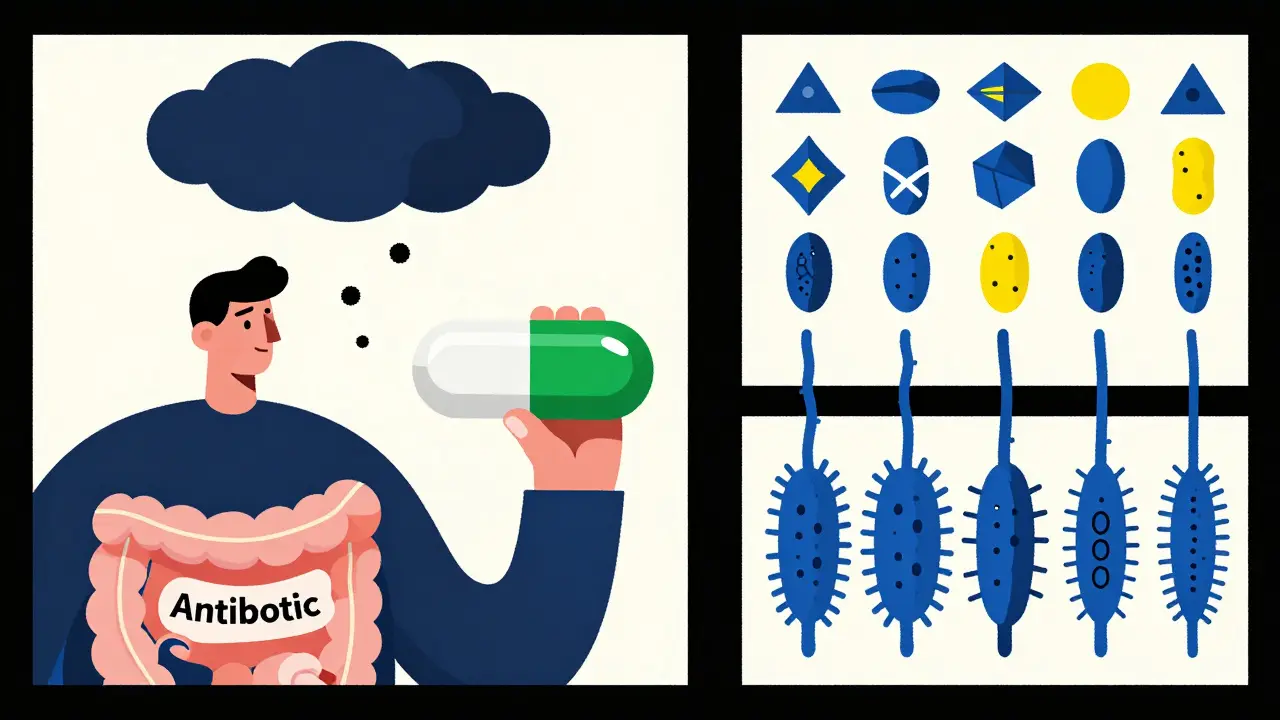
Your gut is full of trillions of bacteria. Most are helpful. They help digest food, make vitamins, and keep harmful bugs like C. diff from taking over. Antibiotics don’t distinguish between good and bad bacteria. They hit everything.
Some antibiotics are far more likely to trigger C. diff than others. Fluoroquinolones like ciprofloxacin, clindamycin, and third- or fourth-generation cephalosporins (like ceftriaxone) are the top offenders. Even a short course-three to five days-can be enough to throw your gut microbiome out of balance.
Symptoms usually start 5 to 10 days after you begin antibiotics. But they can appear as early as the first day or as late as two months after finishing. The classic sign? Three or more loose, watery stools per day, often with a strong odor. You might also have abdominal cramps, fever, nausea, or loss of appetite. In severe cases, you’ll see blood in your stool, intense pain, a swollen belly, or a rapid heartbeat. These are warning signs of pseudomembranous colitis-a condition where the colon becomes lined with patches of inflamed tissue and pus.
Who’s Most at Risk?
While anyone on antibiotics can get C. diff, some people are at much higher risk:
- People over 65-they make up 80% of all cases and are far more likely to die from it.
- Those recently hospitalized-each extra day in the hospital increases your risk by about 1.5%.
- People with inflammatory bowel disease (IBD)-they’re over four times more likely to get C. diff.
- Those who’ve had gastrointestinal surgery-post-op C. diff rates can hit 8-12%.
- People on long-term or multiple antibiotics-the more you take, and the longer you take them, the higher your risk.
Even healthy young adults aren’t immune. A growing number of cases now occur in people with no recent hospital stays-so-called community-associated C. diff. These cases are harder to track and often missed because doctors don’t suspect it.
How Is It Diagnosed?
Testing for C. diff isn’t as simple as a quick swab. Many tests give false results. That’s why experts now recommend a two-step process:
- First, a test for glutamate dehydrogenase (GDH). This detects a protein common in C. diff. A negative result rules out infection.
- If GDH is positive, a second test checks for the actual toxins (toxin EIA) or the bacterium’s genetic material (NAAT).
Why two steps? Because C. diff can live in your gut without causing symptoms. About 5-15% of healthy adults carry it silently. Up to half of hospitalized patients do. If you test positive for the bacteria but have no diarrhea, you don’t have an infection-you’re colonized. Treating colonization with antibiotics only makes things worse.
Doctors must match your symptoms with test results. If you’re having frequent diarrhea while on antibiotics, and the test confirms C. diff toxins, that’s an infection. If you’re not sick, even with a positive test, you usually don’t need treatment.
Treatment: What Works Now (and What Doesn’t)
Treatment has changed dramatically in the last five years. In the past, metronidazole was the go-to drug. Today, it’s no longer recommended as first-line therapy.
According to the 2021 guidelines from the Infectious Diseases Society of America (IDSA) and the Society for Healthcare Epidemiology of America (SHEA), the best first treatment is:
- Fidaxomicin (200 mg twice daily for 10 days)-this drug targets C. diff specifically, sparing other gut bacteria. It reduces recurrence rates by nearly half compared to vancomycin.
- Vancomycin (125 mg four times daily for 10 days)-an effective alternative if fidaxomicin isn’t available or too expensive.
Metronidazole is no longer used for mild to moderate cases because studies show it fails more often and leads to more recurrences. It’s only reserved for very rare cases where the other options aren’t possible.
For severe cases-defined by a white blood cell count over 15,000, low albumin levels, or signs of toxic megacolon-doctors may use oral vancomycin plus intravenous metronidazole. In life-threatening situations, surgery to remove part of the colon may be necessary.
What If It Comes Back?
One in five people who get C. diff will have it come back. And if you’ve had one recurrence, you have a 40-60% chance of having another.
Standard antibiotics don’t work well for recurrent cases. That’s where two breakthrough treatments come in:
- Fecal microbiota transplant (FMT)-this involves transferring stool from a healthy donor into the patient’s colon. It restores the gut’s natural bacteria. Success rates? 85-90%. That’s far better than repeating vancomycin, which works only 40-60% of the time.
- SER-109-a new FDA-approved treatment from 2023. It’s not raw stool. It’s a purified, capsule-based mixture of bacterial spores from carefully screened donors. In clinical trials, it prevented recurrence in 88% of patients over eight weeks.
These aren’t experimental anymore. FMT is now a standard option for patients with two or more recurrences. SER-109 is becoming more widely available, though it’s still expensive and not yet covered by all insurers.
Prevention: The Real Key
Here’s the hard truth: you can’t always avoid C. diff if you need antibiotics. But you can drastically reduce your risk.
1. Use antibiotics only when necessary. Many infections-like colds, most sore throats, and some sinus infections-are viral. Antibiotics don’t work on viruses. Yet, they’re still overprescribed. Studies show that hospitals with strong antibiotic stewardship programs cut C. diff rates by 25-30%.
2. Talk to your doctor about alternatives. If you’re being prescribed an antibiotic known to trigger C. diff (like clindamycin or ciprofloxacin), ask: Is there a narrower-spectrum option? Can I take a shorter course?
3. Practice smart hygiene. Wash your hands with soap and water-not hand sanitizer. Alcohol-based sanitizers don’t kill C. diff spores. If you’re in a hospital or care facility, ask staff if they’ve cleaned surfaces with bleach-based disinfectants. If you’re visiting someone with C. diff, wear gloves and a gown, and don’t touch anything unnecessarily.
4. Don’t use probiotics to prevent C. diff. Many people take probiotics hoping to protect their gut. But the American College of Gastroenterology and a major 2022 Cochrane review found no strong evidence that probiotics prevent C. diff. They may help reduce general antibiotic-associated diarrhea, but not this specific infection.
5. Clean your environment. If you or a family member has had C. diff, clean bathrooms and high-touch surfaces daily with a bleach solution (1:10 dilution). Launder clothes and bedding in hot water. Use separate towels.
The Bigger Picture
C. diff isn’t just a medical problem-it’s a system problem. Overuse of antibiotics in hospitals, nursing homes, and even outpatient clinics has created the perfect storm. The rise of hypervirulent strains like NAP1/027, which produce more toxins and form more spores, has made outbreaks harder to control.
But there’s hope. The FDA’s approval of SER-109, the growing use of FMT, and stricter antibiotic prescribing rules are turning the tide. Research into microbiome-based therapies is accelerating. In five years, we may have vaccines or targeted antimicrobials that spare our good bacteria while killing C. diff.
For now, the best defense is simple: don’t take antibiotics unless you really need them. If you do, watch for diarrhea. If it starts while you’re on antibiotics-or within two months after-you need to get tested. Don’t assume it’s just a side effect. It might be the start of something much worse.
Can you get C. diff without taking antibiotics?
Yes, though it’s less common. About 20-30% of new C. diff cases happen in people who haven’t taken antibiotics recently. These are called community-associated infections. They often occur in people who’ve been in hospitals or long-term care facilities, or who’ve had close contact with someone infected. Contaminated surfaces and poor hand hygiene are the main drivers.
Is C. diff contagious?
Yes. C. diff spreads through the fecal-oral route. If someone with the infection doesn’t wash their hands after using the bathroom, they can leave spores on doorknobs, phones, or food. Others touch those surfaces and then touch their mouth. It’s not airborne, but it’s highly transmissible in healthcare settings and homes.
Can you die from C. diff?
Yes. In severe cases, C. diff can lead to toxic megacolon, sepsis, or colon rupture. About 12,800 people died from C. diff in the U.S. in 2017, and older adults are at the highest risk. Early diagnosis and proper treatment are critical to survival.
Do probiotics help prevent C. diff?
No. Despite popular belief, multiple large reviews-including a 2022 Cochrane analysis of nearly 10,000 patients-show no significant benefit from probiotics in preventing C. diff. They may help with general antibiotic-related diarrhea, but not this specific infection. The American College of Gastroenterology advises against using them for this purpose.
How long does it take to recover from C. diff?
Most people start feeling better within a few days of starting the right antibiotic. Full recovery usually takes 1-2 weeks. But even after symptoms disappear, spores can remain in the gut, and recurrence can happen weeks or months later. That’s why follow-up care and avoiding unnecessary antibiotics afterward are so important.
Comments (9)
Andrew Poulin
March 5, 2026 AT 17:54
Antibiotics are overprescribed like candy. I've seen docs hand out cipro for sinus infections like it's a free sample. C. diff isn't some rare horror story-it's the direct result of lazy medicine. Stop treating every sniffle like it's the plague.
phyllis bourassa
March 7, 2026 AT 00:32
I had C. diff after a simple tooth extraction. My doctor said it was 'just a side effect.' I spent three days in the ER vomiting up bile. Now I ask every doctor: 'Is this antibiotic really necessary?' I don't trust them anymore. Not after this.
Joe Prism
March 7, 2026 AT 04:03
Fidaxomicin works. Vancomycin works. Metronidazole doesn't. The guidelines changed. Why are we still talking about old protocols? Science moves. Medicine should too.
Sean Callahan
March 9, 2026 AT 00:45
I think probiotics are a scam but i also think bleach is too harsh for homes. we need better disinfectants. maybe like a probiotic spray? that kills bad bugs but feeds good ones? just a thought lol
Weston Potgieter
March 10, 2026 AT 19:22
The real villain isn't the antibiotic. It's the system that treats bodies like machines. You don't fix a gut with a bullet. You fix it with context. Culture. Sleep. Stress. Diet. We ignore all that and then wonder why people keep getting sick. C. diff is just the screaming result of a broken model.
Adebayo Muhammad
March 11, 2026 AT 04:58
You know, in Nigeria, we don't have access to fidaxomicin, or even vancomycin in many places. We use metronidazole because it's cheap, and because it's what we have. The guidelines are written in ivory towers. People on the ground? They're just trying to survive. You can't preach precision when you're choosing between antibiotics and food.
Vikas Verma
March 11, 2026 AT 14:51
The microbiome is a complex ecosystem requiring systemic intervention. Empirical antibiotic use without stewardship leads to dysbiosis cascade. FMT and SER-109 represent paradigm shifts in microbial reconstitution. We must align clinical protocols with ecological principles.
Joey Pearson
March 11, 2026 AT 17:39
I'm so glad this got shared. My mom almost died from C. diff after a UTI. She's fine now, but we changed everything-no more antibiotics unless absolutely needed. And yes, we use bleach on the toilet. No shame.
Tim Hnatko
March 12, 2026 AT 21:21
I work in a rural clinic. We see community C. diff all the time now. No hospital stay. Just someone who took amoxicillin for a cold last month. We don't test for it unless diarrhea lasts more than 48 hours. We should screen everyone on antibiotics. It's not paranoia. It's prevention.