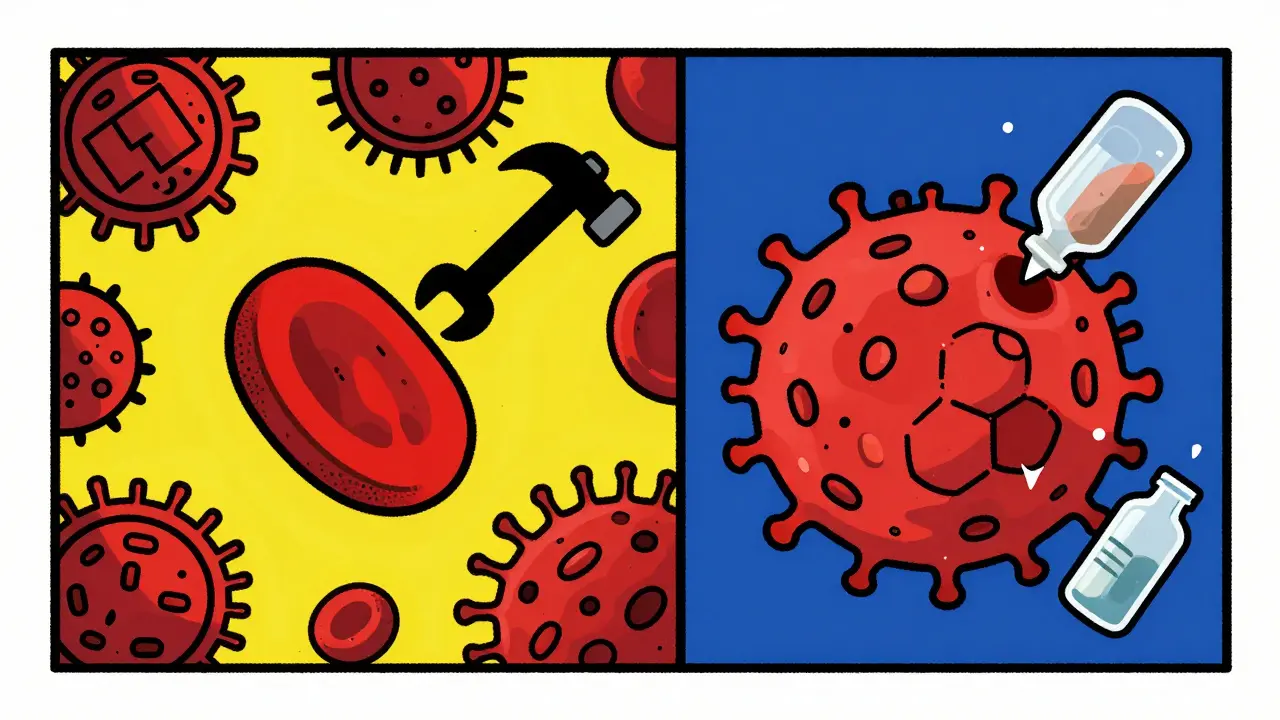
When you have a sore throat, fever, or cough, it’s natural to wonder: is this bacterial or viral? The answer matters more than you think. Taking the wrong treatment can do more harm than good. Antibiotics won’t touch a virus, and using them anyway fuels a growing global crisis. Understanding the difference isn’t just about science-it’s about making smarter choices for your health.
What Are Bacterial Infections?
Bacteria are single-celled organisms that can live almost anywhere-on your skin, in soil, even in your gut. They reproduce on their own, splitting every 20 minutes under the right conditions. Not all bacteria are bad. In fact, many help your body digest food and fight off harmful invaders. But some, like Streptococcus pyogenes a bacterium that causes strep throat, can make you seriously ill.
Common bacterial infections include strep throat, urinary tract infections (UTIs), tuberculosis, and some types of pneumonia. These infections often come with higher fevers-usually above 101°F (38.3°C)-and symptoms that stick around longer than a week. If you start feeling better after a few days, then suddenly get worse, that’s a red flag for a secondary bacterial infection. For example, a cold that turns into sinusitis or pneumonia might be bacterial.
Treatment is straightforward: antibiotics. Drugs like penicillin, amoxicillin, or azithromycin attack bacterial structures that viruses don’t have-like cell walls or protein-making machinery. A typical course lasts 5 to 14 days, depending on the infection. For strep throat, 10 days of penicillin V is standard. Skipping doses or stopping early can let surviving bacteria come back stronger, which is one reason antibiotic resistance is rising.
What Are Viral Infections?
Viruses aren’t alive in the way bacteria are. They’re just genetic material wrapped in a protein shell. They can’t reproduce on their own. They need to invade your cells and hijack their machinery to multiply. That’s why viruses like influenza the virus responsible for seasonal flu or SARS-CoV-2 the virus causing COVID-19 spread so easily-you breathe them in, they latch onto your cells, and suddenly you’re sick.
Most colds, flu, COVID-19, chickenpox, and most cases of bronchitis and sinusitis are viral. Symptoms tend to be milder at first: runny nose, low-grade fever under 100.4°F (38°C), body aches, fatigue. They usually peak within 3-5 days and start improving by day 7. Unlike bacterial infections, they rarely get worse after initial improvement.
You can’t cure a virus with antibiotics. That’s like trying to fix a broken radio with a hammer. Instead, treatment focuses on support: rest, fluids, fever reducers like acetaminophen or ibuprofen. For some viruses, antivirals help. Oseltamivir (Tamiflu) for flu, if taken within 48 hours of symptoms, can shorten illness by 1-2 days. Remdesivir is used in severe COVID-19 cases to slow viral replication. But these are exceptions. For most viral infections, your immune system does the heavy lifting.
Why the Confusion? Similar Symptoms, Different Causes
Both bacterial and viral infections can cause fever, cough, sore throat, and fatigue. That’s why so many people assume antibiotics are the answer. A 2023 CDC survey found that 68% of U.S. adults think antibiotics work on viruses. That’s not just wrong-it’s dangerous.
Doctors use clues to tell them apart. A high fever, white patches on tonsils, and no cough? That’s more likely strep throat. A runny nose, sneezing, and mild fever? Probably a cold. But even experienced clinicians can’t always tell by symptoms alone. That’s why testing matters.
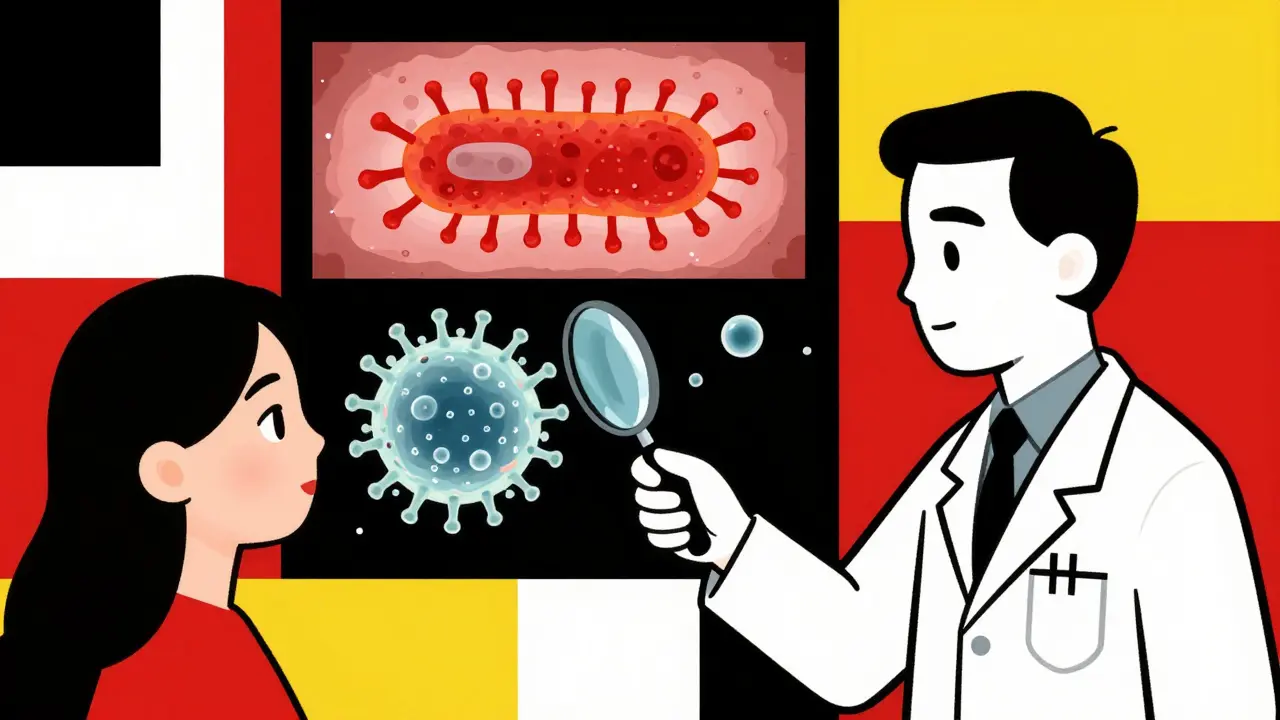
For strep throat, a rapid antigen test gives results in 10 minutes with 95% accuracy. Throat cultures are even more precise at 98%. For flu, PCR tests detect viral RNA with 90-95% sensitivity if done within the first 72 hours. New tools like the FebriDx a rapid diagnostic test that measures CRP and MxA biomarkers can distinguish bacterial from viral infections in under 10 minutes, with 94% sensitivity. These tests are changing how primary care works.
Antibiotics Don’t Work on Viruses-Here’s Why
Antibiotics are designed to kill or stop bacteria. They target things viruses simply don’t have: cell walls, ribosomes, metabolic pathways. Viruses don’t have any of those. They’re not even cells. So antibiotics have nothing to attack. Giving them for a viral infection doesn’t help you feel better-it just exposes your body to unnecessary side effects like diarrhea, yeast infections, or allergic reactions.
The bigger problem? Antibiotic resistance. Every time you take an antibiotic when you don’t need it, you’re helping bacteria evolve. Some survive, multiply, and pass on resistance genes. The World Health Organization calls this one of the top 10 global health threats. In 2019, drug-resistant infections killed 1.27 million people worldwide. If trends continue, that number could hit 10 million by 2050.
In the U.S. alone, doctors prescribe 47 million unnecessary antibiotic courses each year for viral infections. That’s not just waste-it’s a public health emergency. These prescriptions also increase the risk of Clostridioides difficile a deadly gut infection caused by antibiotic disruption, which leads to over 220,000 cases and 12,800 deaths annually.
When Do You Really Need Antibiotics?
Not every infection needs antibiotics. In fact, most don’t. Here’s when they’re actually needed:
- Confirmed strep throat (positive rapid test or culture)
- Urinary tract infections with symptoms like burning or frequent urination
- Some sinus infections that last more than 10 days or worsen after initial improvement
- Pneumonia confirmed by chest X-ray and clinical signs
- Skin infections like cellulitis with redness, swelling, and warmth
For most colds, flu, bronchitis, or viral sore throats? No antibiotics. Just rest, fluids, and time. The Centor Criteria a clinical scoring system for strep throat diagnosis helps doctors decide: fever, tonsil exudate, swollen lymph nodes, and no cough each add one point. A score of 3 or higher means a 50-55% chance of strep-and warrants testing.
The Real Cost of Misunderstanding
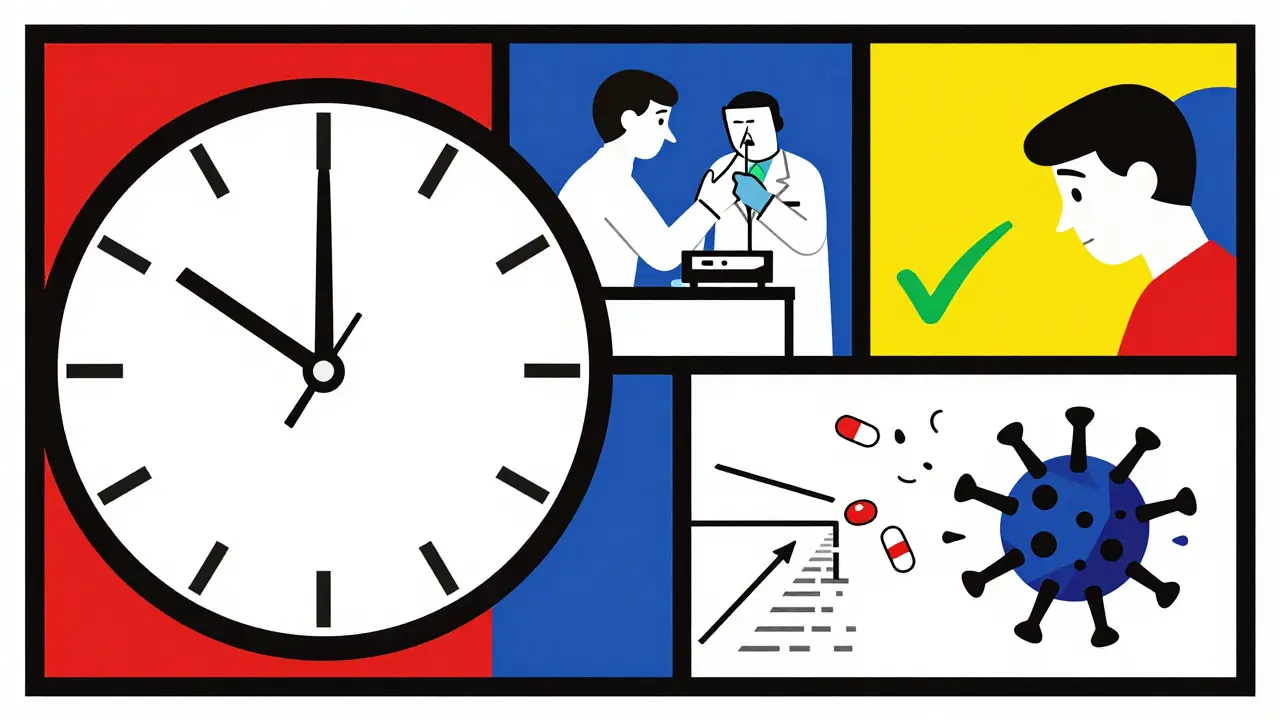
It’s not just about individual health. The societal cost is massive. Viral respiratory infections cause 22 million missed school days and 20 million lost workdays in the U.S. each year. That’s $45 billion in direct and indirect costs.
Meanwhile, inappropriate antibiotic use costs the U.S. healthcare system $1.1 billion annually. And the long-term damage? We’re running out of effective antibiotics. Drug-resistant bacteria already kill 35,900 people in the U.S. every year. Globally, resistant infections are outpacing new drug development.
Parents often pressure doctors for antibiotics for kids with runny noses or coughs. But 85% of acute bronchitis and 70% of sinus infections in children are viral. Giving antibiotics here doesn’t speed recovery-it just increases the chance of side effects and future resistance.
What’s Next? New Tools and Hope
Scientists aren’t giving up. New diagnostic tools like FebriDx are being rolled out in clinics to reduce unnecessary prescriptions. At the University of Queensland, researchers are testing two experimental compounds, IMB-001 and IMB-002, that target bacterial surface activity-potentially bypassing traditional resistance mechanisms.
Phage therapy, which uses viruses that infect bacteria, is showing 85% success in European trials for drug-resistant infections. Universal coronavirus vaccines are in Phase III trials and could prevent future pandemics. And narrow-spectrum antibiotics, designed to hit only specific bacteria, are being developed to protect your gut microbiome.
The real solution? Better public education. Knowing when to ask for a test instead of an antibiotic changes outcomes. It saves lives. It preserves the drugs we still have.
What Should You Do When You’re Sick?
Here’s a simple guide:
- Track your symptoms. Do they improve in 7-10 days? Probably viral.
- Are you getting worse after feeling better? That’s a red flag for bacterial complications.
- Have a high fever (over 101°F) with no cough? Might be strep or pneumonia.
- Don’t demand antibiotics. Ask: “Could this be viral? Is a test needed?”
- Rest, hydrate, and use OTC meds for comfort. Let your immune system do its job.
Most viral infections clear on their own. Most bacterial ones need a doctor’s diagnosis-not guesswork. Your next illness might be a chance to make a smarter choice-for yourself and everyone else.
Can you tell bacterial from viral infections just by symptoms?
Sometimes, but not reliably. High fever, pus on tonsils, and symptoms that worsen after improving suggest bacterial infection. Runny nose, low fever, and quick improvement point to viral. But many cases overlap. Testing-like rapid strep or PCR-is the only way to be sure.
Why do doctors sometimes prescribe antibiotics for viral infections?
Often because patients expect them, or because doctors aren’t sure. Pressure from parents, time constraints, or fear of missing something can lead to overprescribing. But guidelines now strongly discourage it. Antibiotics for viruses don’t help and cause harm.
Do antiviral medications cure viral infections?
Not usually. Antivirals like Tamiflu or remdesivir can shorten illness or reduce severity if taken early, but they don’t eliminate the virus completely. Most viral infections rely on your immune system to clear the infection. Antivirals are reserved for high-risk cases or specific viruses.
Is it true that antibiotics can make you more susceptible to future infections?
Yes. Antibiotics kill good bacteria in your gut along with bad ones. This disruption can let harmful bacteria like C. diff take over, causing severe diarrhea and colitis. It also weakens your microbiome’s ability to fight off future infections. That’s why unnecessary use is so dangerous.
What’s the biggest danger of misusing antibiotics?
Antibiotic resistance. When antibiotics are overused, bacteria evolve to survive them. These resistant strains spread, making infections harder and sometimes impossible to treat. We’re already seeing cases of untreatable pneumonia, UTIs, and sepsis. Without action, routine surgeries could become deadly again.
Comments (13)
Rachele Tycksen
March 22, 2026 AT 18:41
so i had a cold last week and my doc gave me antibiotics bc i asked for em lol
turns out i was fine in 5 days anyway... why do we even do this??
Grace Kusta Nasralla
March 23, 2026 AT 03:00
it’s funny how we treat our bodies like machines that need fixing, when really they’re these quiet, ancient systems just trying to survive...
antibiotics aren’t magic-they’re a blunt instrument in a world of delicate balance.
Danielle Arnold
March 24, 2026 AT 10:54
oh wow a whole article about how antibiotics don’t work on viruses
gee thanks for the breakthrough, dr. obvious
Alex Arcilla
March 25, 2026 AT 07:59
as someone who grew up in a household where ‘antibiotics for everything’ was gospel, i didn’t know any better until i got C. diff at 24
trust me, you don’t wanna go there
now i ask my doc ‘is this viral?’ before they even finish the sentence 😅
Zola Parker
March 26, 2026 AT 03:37
we’re all just pawns in Big Pharma’s game 😏
they sell you the pill, then sell you the cure for the pill’s side effects
then sell you the pill to fix the cure
it’s a loop, people. a beautiful, evil loop.
florence matthews
March 27, 2026 AT 18:24
i love how this article doesn’t just say ‘don’t take antibiotics’ but gives you real signs to look for
like, if your fever spikes after day 5? time to call your doc
simple, practical, and honestly? life-saving info
thank you 🙏
Kenneth Jones
March 27, 2026 AT 18:34
stop giving people options
if it's viral don't treat it
if it's bacterial test and treat
stop letting patients decide
you're not a doctor
stop being a doctor
Mihir Patel
March 29, 2026 AT 19:01
in my country we just go to the pharmacy and buy antibiotics like candy
no prescription needed
my cousin took 12 pills for a cough last year
now he’s in the hospital with a superbug
it’s not science
it’s survival
Aaron Sims
March 30, 2026 AT 12:26
wait... so you're telling me the CDC, WHO, and every 'expert' are all in on this? why do they keep pushing these 'tests' if they're just going to tell you to rest?
something smells fishy...
and no, it's not my socks.
Stephen Alabi
March 31, 2026 AT 15:17
It is imperative to underscore that the systemic overprescription of antimicrobial agents constitutes a profound and escalating public health hazard, predicated upon a fundamental misapprehension of pathophysiological etiology.
Furthermore, the conflation of symptomatology with therapeutic necessity reflects a dangerous epistemological regression within contemporary medical consumerism.
Agbogla Bischof
April 2, 2026 AT 06:14
As a nurse in Lagos, I see this daily. People come in with flu symptoms and demand antibiotics. We explain, they nod, then go to the market and buy amoxicillin anyway.
But when we teach them the signs-like fever after day 5 or pus on tonsils-they start asking the right questions.
Knowledge is power. And power changes outcomes.
Pat Fur
April 3, 2026 AT 21:25
My grandma always said: ‘Let the body fight. Rest. Drink water. Don’t rush.’
Turns out she was right.
And we forgot.
Natasha Rodríguez Lara
April 5, 2026 AT 03:26
the part about FebriDx is wild
10 minutes and you know if it’s bacterial or viral?
why isn’t this in every clinic yet?
we’ve had the tech for years
but we’re still stuck in ‘guess and hope’ mode