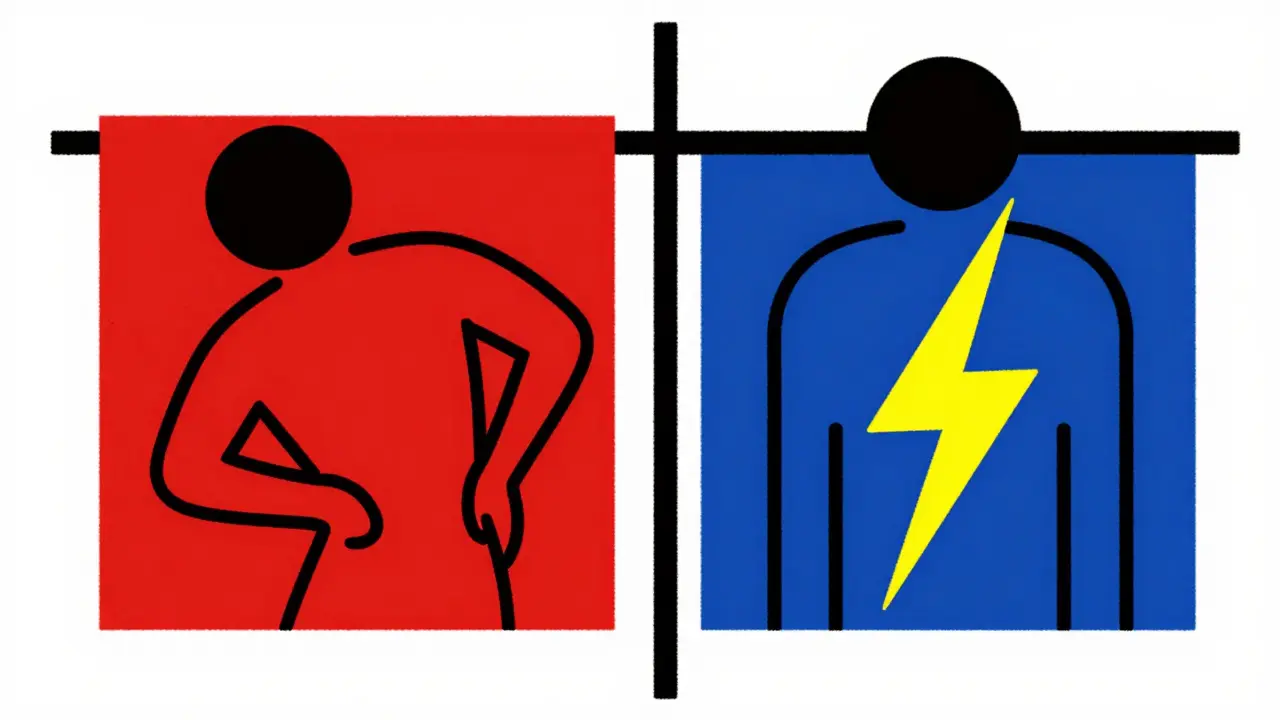
Most of us have dealt with a "kink" in our back or a dull ache after a long day at the office. In about 90% of cases, acute low back pain is nonspecific-meaning it's just a muscle strain or a joint acting up-and it usually gets better on its own. But there is a small, critical 10% where the pain isn't just an annoyance; it's a warning sign of something serious. Knowing the difference between a typical sore back and a medical emergency can be the difference between a quick recovery and permanent nerve damage.
The goal isn't to panic every time your back hurts, but to recognize back pain red flags is a set of clinical indicators that suggest a potentially serious underlying pathology requiring urgent medical investigation . When these signs appear, the standard "wait and see" approach is dangerous. Instead, these markers trigger the need for immediate imaging and specialist referrals to rule out infections, tumors, or spinal cord emergencies.
The "Must Not Miss" Red Flags
Some symptoms are non-negotiable. If you experience these, you shouldn't be looking for stretching videos; you should be heading to the emergency room. The most critical is Cauda Equina Syndrome is a surgical emergency where the bundle of nerve roots at the lower end of the spinal cord is severely compressed . This often shows up as "saddle anesthesia"-numbness in the areas that would touch a saddle-along with sudden bladder or bowel dysfunction. If not treated with surgical decompression within 48 hours, the results can be permanent.
Other high-priority warnings include:
- Unrelenting Pain: Pain that doesn't budge even with strong painkillers. About 78% of people with spinal infections report this, compared to only 22% with mechanical back pain.
- Neurological Deficits: Sudden weakness in the legs, difficulty walking, or a loss of reflexes.
- Systemic Signs: Unexplained fever, chills, or unintentional weight loss, which can point toward a spinal infection or malignancy.
Identifying Risks: Age and History
Your personal history tells a big part of the story. A doctor doesn't just look at where it hurts, but who is hurting. Age is a major factor. For example, patients over 70 are significantly more likely to suffer from Vertebral Compression Fractures is a type of break in the vertebrae often caused by osteoporosis or trauma . Data shows these occur in 36.5% of seniors with back pain, compared to only 9.1% of those under 50.
Certain lifestyle and medical markers also raise the alarm. If you have a history of Osteoporosis is a condition where bones become fragile and more likely to break , or if you've used long-term steroids, a simple trip or fall could cause a fracture that needs imaging immediately. Similarly, a history of cancer is one of the strongest predictors for malignancy-related back pain, with a high positive likelihood ratio that pushes clinicians to order scans much sooner than they would for a healthy adult.
When is Imaging Actually Necessary?
There is a huge temptation to demand an MRI the moment pain starts. However, doing this too early often does more harm than good. Many people have "abnormal" scans but zero pain. For instance, 79% of 80-year-olds show disc degeneration on an MRI even if they've never had a backache in their life. This leads to unnecessary surgeries and anxiety.
The American College of Radiology is the professional organization that sets the Appropriateness Criteria for medical imaging in the US generally recommends against imaging for acute low back pain if no red flags are present. The rule of thumb is often to try conservative management for four to six weeks first.
| Imaging Tool | Best For... | Sensitivity/Accuracy | Key Limitation |
|---|---|---|---|
| X-ray (Radiography) | Bone fractures in high-risk patients | 64% for fractures (>50 yrs) | Poor for soft tissue/nerves |
| CT Scan | Detailed bone structure, acute fractures | 98% for fracture detection | Higher radiation exposure |
| MRI | Nerves, discs, infections, tumors | 95% for Cauda Equina | Expensive, slower, claustrophobic |
The Referral Process: Who Do You See?
If red flags are spotted, the referral path changes based on the suspected cause. If there's a suspected nerve emergency or a major fracture, the destination is the Emergency Department. For suspected spinal infections or tumors, a primary care physician will typically coordinate a referral to a neurologist or an orthopedic surgeon.
Physical therapists also play a key role. They are often the first to notice a patient isn't responding to treatment. If a patient doesn't show improvement after one month of conservative care, they are nearly 20 times more likely to eventually need surgery. This "lack of progress" is a red flag in itself, signaling that it's time to move from physical therapy to diagnostic imaging and specialist consultation.
Avoiding the Imaging Trap
Over-imaging is a billion-dollar problem. In the U.S., billions are spent annually on lumbar scans that don't change the treatment plan. The "Choosing Wisely" campaign emphasizes that unless there is a strong clinical suspicion of serious pathology, a scan is usually a waste of resources. This is because the findings often lead to "over-diagnosis," where a doctor treats a picture (like a bulging disc) instead of the patient's actual symptoms.
The modern approach is moving toward risk-stratification. Instead of a simple "yes/no" red flag list, doctors are starting to use tools like the STarT Back tool to predict who will recover naturally and who needs a deeper dive. We're even seeing the introduction of point-of-care ultrasound (POCUS) to check for things like bladder retention, which can help decide if an emergency MRI is actually needed.
Does a history of back pain mean I need an MRI every time it flares up?
No. In most cases, flare-ups are mechanical and don't require new imaging. You only need a new scan if you develop new red flags, such as sudden leg weakness, loss of bowel/bladder control, or if the pain is fundamentally different from your previous episodes.
How do I know if my back pain is a "red flag" or just a strain?
A strain usually improves with rest and gentle movement over a few days. Red flags are characterized by "systemic" symptoms-like fever or weight loss-or severe neurological changes like numbness in the groin area or a sudden inability to walk.
Is an X-ray enough to rule out serious spinal issues?
Not necessarily. X-rays are great for seeing bone alignment and major fractures, but they are blind to soft tissues. They cannot detect spinal cord compression, infections, or most tumors. For those, an MRI is the gold standard.
What should I do if I have saddle anesthesia?
Go to the emergency room immediately. Saddle anesthesia is a primary indicator of Cauda Equina Syndrome, which requires urgent surgical intervention to prevent permanent paralysis or loss of bladder/bowel control.
Why do doctors suggest waiting 6 weeks before imaging?
Because most back pain resolves on its own. Imaging too early often reveals "normal" age-related wear and tear (like disc degeneration) that can mislead doctors into performing unnecessary procedures on a problem that would have healed naturally.
Next Steps and Troubleshooting
For the general patient: If you have a dull ache, start with gentle walking, heat/cold therapy, and over-the-counter pain relief. Keep a log of your symptoms. If the pain doesn't improve after two weeks, schedule a visit with your primary care provider.
For those with high-risk factors: If you are over 70, have osteoporosis, or have a history of cancer, be more vigilant. Any new, sharp, or localized back pain should be reported to a doctor immediately, as the threshold for imaging is much lower for these groups.
If you are currently in physical therapy: Communicate clearly with your therapist. If you notice any new numbness in your legs or a change in your bathroom habits, tell them immediately; they are trained to recognize the signs that require an urgent referral to an orthopedic surgeon or neurologist.