
Bleeding Risk Assessment Calculator
Assess Your Bleeding Risk
Enter your medications and health factors to see your personalized bleeding risk assessment based on the latest medical guidelines.
Combining aspirin with other blood thinners isn’t just a small tweak to your medication routine-it’s a decision that can seriously increase your chance of dangerous bleeding. If you’re taking aspirin daily and your doctor added a blood thinner like warfarin, rivaroxaban, or apixaban, you need to understand the real risks. This isn’t theoretical. People on this combo are twice as likely to bleed internally compared to those on just one drug.
Why Aspirin and Blood Thinners Don’t Mix Well
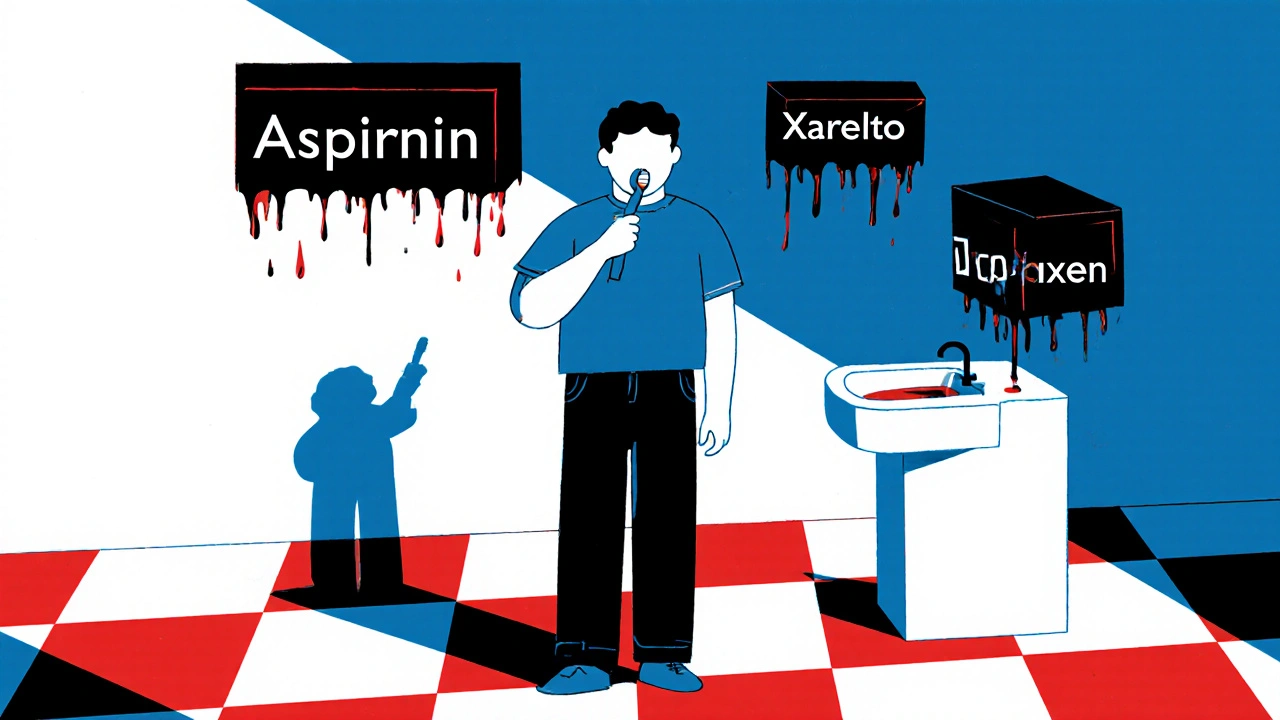
Aspirin doesn’t work like most blood thinners. While drugs like warfarin or Eliquis slow down the blood’s clotting factors, aspirin stops platelets from sticking together. Platelets are the first responders to a cut-you don’t want them clumping up when you’re trying to prevent a clot, but you also don’t want them completely shut down when you get a scrape or bump. When you combine aspirin with a direct oral anticoagulant (DOAC), you’re hitting the clotting system from two angles at once. The result? Your blood takes much longer to stop flowing when something goes wrong.This isn’t just about big injuries. Even minor things-brushing your teeth too hard, shaving with a regular razor, or a fall on the sidewalk-can lead to serious internal bleeding. The most common sites? Your stomach, brain, lungs, and urinary tract. Studies show that combining aspirin with an anticoagulant raises the risk of stomach bleeding by more than double. Intracranial bleeding? That risk jumps by over three times.
Which Blood Thinners Are Riskiest with Aspirin?
Not all blood thinners behave the same when mixed with aspirin. Research from 2024, analyzing 24 separate studies, found that rivaroxaban (Xarelto) had the highest bleeding risk when paired with aspirin. Dabigatran (Pradaxa) and apixaban (Eliquis) also showed elevated risks, though slightly lower. Warfarin, the older drug, carries its own dangers, especially if your INR levels aren’t tightly controlled. The problem isn’t just the drugs themselves-it’s how they interact.And it’s not just prescription blood thinners. Over-the-counter painkillers like naproxen (Aleve) and diclofenac can be just as dangerous. Taking aspirin with naproxen increases bleeding risk by over four times. Ibuprofen (Advil) is a bit safer, but still raises the risk nearly 80%. These aren’t harmless supplements-they’re active drugs that interfere with your body’s ability to heal itself.
Who Should Avoid This Combo?
If you’re over 60 and healthy-with no history of heart attack, stroke, or stents-you likely don’t need aspirin at all. The ASPREE trial, which followed nearly 20,000 older adults, found that daily low-dose aspirin didn’t prevent heart problems but did increase the chance of serious brain bleeds by 38%. The National Institute on Aging now advises against routine aspirin use in healthy seniors.People with high blood pressure, kidney disease, or a history of ulcers or bleeding are at even higher risk. If you’ve ever had a gastrointestinal bleed, your doctor should strongly reconsider adding aspirin to any blood thinner. The same goes for anyone on steroids or with a bleeding disorder like hemophilia. Even moderate alcohol use can worsen the risk.
When Is the Combo Actually Necessary?
There are a few situations where the benefits outweigh the risks-but they’re rare. For example, someone with a mechanical heart valve might need both aspirin and a blood thinner to prevent clots from forming on the valve. Patients who’ve had a stent placed after a heart attack sometimes get aspirin plus a DOAC for a short time, under strict supervision. But even then, the goal is to get off the combo as soon as possible.For most people with atrial fibrillation, aspirin doesn’t help prevent strokes. In fact, guidelines from the American Heart Association say it’s not recommended for stroke prevention in AFib. If you’re on a DOAC for AFib, adding aspirin doesn’t improve outcomes-it just adds bleeding risk.
What to Watch For: Signs of Hidden Bleeding
Bleeding from this combo doesn’t always come with a scream. Often, it’s quiet. You might feel more tired than usual. Your skin looks paler. You notice bruises without remembering bumping into anything. Your stool turns dark and sticky-like tar. That’s a sign of stomach bleeding. Urine that looks rusty or bloody? That’s internal bleeding too.These signs don’t always show up right away. Anemia from slow, ongoing blood loss can develop over weeks. That’s why regular blood tests are critical if you’re on this combo. Your doctor should check your hemoglobin levels every 3 to 6 months. If you’re on warfarin, your INR needs to be monitored even more often.
How to Reduce Your Risk
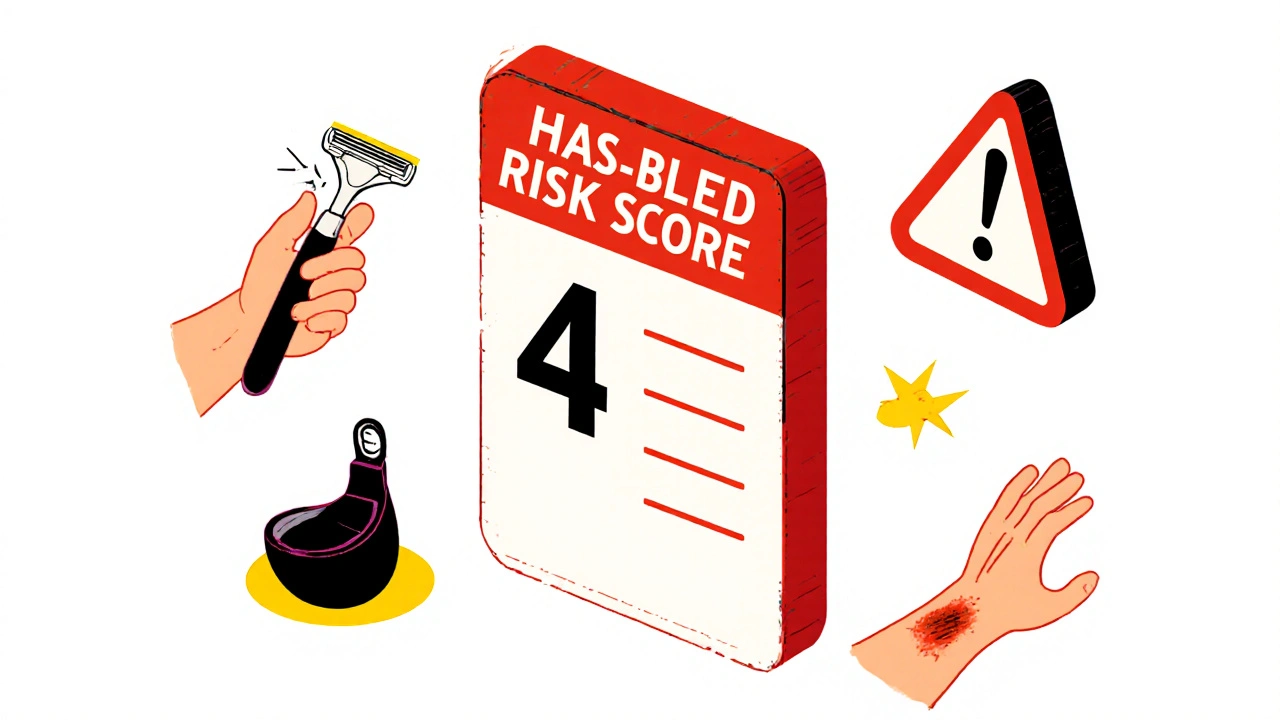
If you’re stuck on this combo for medical reasons, there are ways to lower your risk:- Take aspirin with food to reduce stomach irritation
- Use an electric razor instead of a blade
- Switch to a soft-bristle toothbrush and avoid flossing too hard
- Wear shoes with good grip to prevent falls
- Avoid contact sports or activities with high injury risk
- Limit alcohol-no more than one drink a day, if any
- Never take NSAIDs like ibuprofen or naproxen without checking with your doctor
Your doctor should use a tool called HAS-BLED to assess your bleeding risk. It looks at things like high blood pressure, kidney or liver disease, stroke history, and lab values. A score of 3 or higher means you’re at high risk-and that’s when you need to question whether the combo is truly necessary.
The Bigger Picture: Why This Combo Is Still Common
About 29 million Americans take daily aspirin. That number has dropped since 2022, when the U.S. Preventive Services Task Force updated its guidelines to discourage routine aspirin for healthy older adults. But many people still take it out of habit-or because their doctor did years ago and never revisited it.Meanwhile, the global market for blood thinners is growing fast, expected to hit $66 billion by 2029. More people are on DOACs now than on warfarin. But many still get prescribed aspirin alongside them, even when it’s not supported by evidence. That’s partly because doctors are cautious about stopping something that’s been “working,” and partly because patients don’t always question their meds.
There’s hope on the horizon. Researchers are testing genetic tests to see how individuals metabolize warfarin and aspirin. Some people have gene variants (like CYP2C9 or VKORC1) that make them more sensitive to bleeding. In the future, we might personalize these regimens instead of using one-size-fits-all dosing.
What to Do Next
If you’re on aspirin and a blood thinner, don’t stop either one on your own. But do schedule a review with your doctor. Ask:- Why was I put on both?
- Is this still necessary based on my current health?
- What’s my bleeding risk score?
- Are there safer alternatives?
- Can I stop one of them?
Many people can safely switch to a single blood thinner without aspirin. Others may need to stop both and use a different approach entirely. The goal isn’t to take fewer pills-it’s to take the right ones. And for most, that means avoiding the combo altogether.
Can I take aspirin with warfarin?
You can, but only under close medical supervision. Combining aspirin with warfarin significantly increases the risk of bleeding, especially in the stomach and brain. Your INR levels must be checked frequently, and you should avoid NSAIDs and alcohol. Most experts recommend avoiding this combo unless absolutely necessary-like after a mechanical heart valve replacement.
Is it safe to take aspirin with Eliquis or Xarelto?
It’s generally not recommended. Studies show that adding aspirin to Eliquis (apixaban) or Xarelto (rivaroxaban) doubles the risk of major bleeding without improving heart protection. For most patients with atrial fibrillation or deep vein thrombosis, the single drug is enough. Only in rare cases, like after certain heart stents, might a doctor temporarily combine them-then plan to stop aspirin within weeks.
What happens if I accidentally take ibuprofen with aspirin and a blood thinner?
Taking ibuprofen with aspirin and a blood thinner increases your bleeding risk by nearly 80%. If you took one dose by accident, monitor for signs of bleeding-unusual bruising, dark stools, dizziness, or weakness. Don’t take another dose. Call your doctor or pharmacist. In the future, use acetaminophen (Tylenol) instead for pain or fever-it doesn’t interfere with clotting.
Can aspirin prevent heart attacks if I’m on a blood thinner?
For most people on a blood thinner, aspirin doesn’t add extra protection. If you’ve had a heart attack or stent, aspirin may still be part of your plan-but only for a limited time. For people with atrial fibrillation, high blood pressure, or no prior heart events, aspirin doesn’t reduce heart attack risk enough to justify the bleeding danger. Your blood thinner is doing the main job.
How often should I get blood tests if I’m on this combo?
If you’re on warfarin, you’ll need INR checks every 2 to 4 weeks. If you’re on a DOAC like Eliquis or Xarelto, you don’t need routine blood tests-but you should still get a hemoglobin check every 3 to 6 months to watch for hidden bleeding. If you’re on both aspirin and a blood thinner, your doctor should check your blood count more often than if you were on one drug alone.
Should I stop aspirin if I’m over 70 and healthy?
Yes, if you’re healthy and have never had a heart attack, stroke, or stent. The latest guidelines from the U.S. Preventive Services Task Force and the National Institute on Aging say the bleeding risks of daily aspirin outweigh the benefits for healthy older adults. Stopping it reduces your chance of serious internal bleeding without increasing your risk of heart problems.
Comments (8)
Hannah Machiorlete
November 19, 2025 AT 22:07
My grandpa took aspirin with Xarelto for years and ended up in the ER with a stomach bleed so bad they had to transfuse him. No one ever told him it was dangerous. Now he’s on just the Xarelto and feels better. Why do doctors just keep prescribing this combo like it’s nothing?
Bette Rivas
November 21, 2025 AT 01:30
The data is unequivocal: dual antiplatelet and anticoagulant therapy significantly elevates major bleeding events, particularly gastrointestinal and intracranial hemorrhage. The 2024 meta-analysis referenced in the post, which pooled 24 studies, demonstrated a hazard ratio of 2.14 (95% CI: 1.87–2.46) for major bleeding when aspirin was co-administered with DOACs. This is not anecdotal-it’s evidence-based medicine. The HAS-BLED score, while imperfect, remains a clinically validated tool for risk stratification. For patients with atrial fibrillation without concomitant coronary artery disease, aspirin confers no net benefit. The American Heart Association’s 2023 guidelines explicitly recommend monotherapy with DOACs in this population. The persistence of this practice reflects systemic inertia, not clinical rationale.
prasad gali
November 22, 2025 AT 11:02
Let’s cut through the noise. Aspirin is a non-selective COX-1 inhibitor that irreversibly acetylates platelet cyclooxygenase, suppressing thromboxane A2 synthesis-this is why it impairs primary hemostasis. When you layer that on top of a direct Factor Xa inhibitor like rivaroxaban, you’re creating a pharmacodynamic synergy that overwhelms compensatory mechanisms. The bleeding risk isn’t additive-it’s multiplicative. Most clinicians don’t understand the pharmacokinetics, so they default to ‘just in case’ prescribing. That’s not medicine-it’s liability management. If you’re on a DOAC for AFib, you don’t need aspirin. Period.
Paige Basford
November 23, 2025 AT 05:01
I just talked to my cardiologist about this and he was like, ‘Oh wow, you’re on both? Let’s fix that.’ I had no idea it was that risky! I’ve been taking aspirin since my 50s because my mom did, and now I’m on Eliquis for AFib. He took me off the aspirin and I haven’t had a single headache since. Who knew? Thanks for posting this-I’m sharing it with my book club!
Arun Mohan
November 23, 2025 AT 15:14
It’s pathetic how the medical-industrial complex keeps pushing this combo. Big Pharma doesn’t care if you bleed out-they care about your monthly refill. Aspirin is a century-old drug with no patent. DOACs? $500 a month. Add them together and you’ve got a profit engine. Meanwhile, people are dying quietly from GI bleeds because no one had the guts to say, ‘You don’t need this.’ Wake up, folks. This isn’t healthcare. It’s a revenue stream dressed in white coats.
Tyrone Luton
November 25, 2025 AT 04:09
There’s a deeper truth here: we’ve confused vigilance with vulnerability. We take aspirin not because it helps us, but because we fear death more than we fear bleeding. We think if we take enough pills, we’re somehow in control. But the body doesn’t negotiate with fear. It responds to chemistry. And when you flood it with anticoagulants and antiplatelets, you’re not preventing death-you’re just changing its shape. Maybe the real question isn’t whether to take aspirin with a blood thinner… but whether we’ve forgotten how to live without pretending we can outsmart mortality.
Ankita Sinha
November 25, 2025 AT 15:27
Thank you for this! I’m a nurse in Mumbai and I see this ALL the time-patients on aspirin + apixaban because their doctor ‘just always did it.’ I’ve started handing out one-pagers on bleeding risks and now my clinic has reduced combo prescriptions by 60% in 6 months. Small wins matter. Keep sharing facts like this!
darnell hunter
November 27, 2025 AT 00:17
As a veteran of the U.S. military medical system, I can confirm: this practice persists because of bureaucratic inertia, not clinical necessity. The VA still has thousands of veterans on aspirin + DOAC combinations based on outdated protocols from the 2010s. The 2022 USPSTF guidelines were clear, but implementation is slow. It’s not about patient care-it’s about system compliance. If your doctor can’t cite the latest AHA/ACC guidelines, ask for a second opinion. Your life isn’t a policy memo.