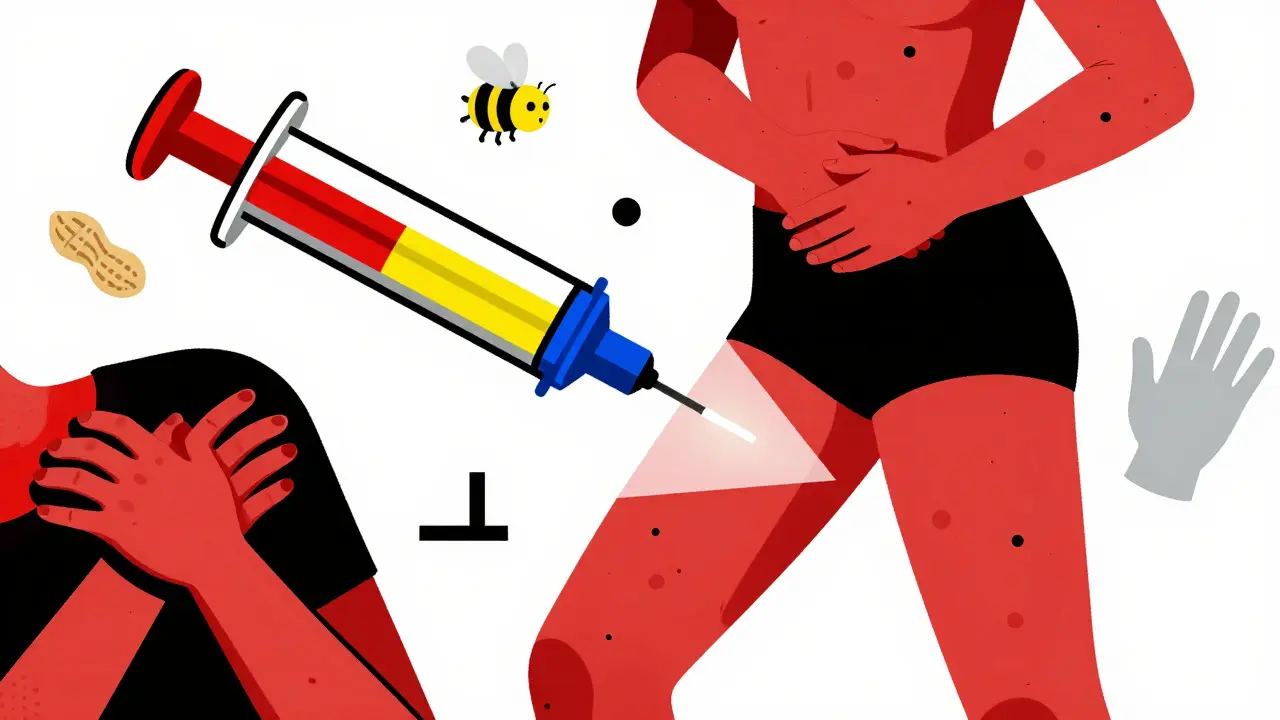
When your body overreacts to something harmless-like a peanut, a bee sting, or a medication-it can trigger a life-threatening emergency called anaphylaxis. This isn’t just a bad rash or a stuffy nose. It’s a full-body storm that can shut down your airway, drop your blood pressure, and stop your heart-all within minutes. And the difference between life and death often comes down to one thing: whether epinephrine is given right away.
What Exactly Is Anaphylaxis?
Anaphylaxis is a sudden, severe allergic reaction that affects multiple systems in your body at once. It doesn’t always start with a skin rash, though that’s common. You might notice swelling in your lips or throat, trouble breathing, a sudden drop in blood pressure, or even vomiting and diarrhea. The key is speed: symptoms usually show up within minutes after exposure to an allergen, but sometimes they take up to two hours.The medical community defines anaphylaxis by clear criteria: if you have skin symptoms (like hives or swelling) plus trouble breathing, low blood pressure, or ongoing stomach issues after contact with a likely trigger-you’re having anaphylaxis. No need to wait for all symptoms to appear. If you’re unsure, treat it like an emergency.
Common triggers include:
- Food: peanuts, tree nuts, shellfish, milk, eggs (account for 90% of food-related cases)
- Insect stings: bees, wasps, hornets (responsible for nearly 10% of emergency cases in the U.S.)
- Medications: penicillin and other antibiotics (cause 75% of drug-induced reactions)
- Latex: found in gloves, balloons, medical devices
One in 50 Americans has experienced anaphylaxis. That’s over 5 million people. And the number is rising-peanut allergies in children have tripled since the late 1990s.
Why Epinephrine Is the Only Lifesaver
Epinephrine, also called adrenaline, is the only medication that can reverse the deadly effects of anaphylaxis. It works fast: within seconds, it tightens blood vessels to raise blood pressure, opens airways to help you breathe, and stops the runaway immune response.Other treatments? They don’t cut it.
- Antihistamines (like Benadryl) might help with a mild rash-but they do nothing for breathing or blood pressure problems. Studies show they have 0% effectiveness as a standalone treatment.
- Corticosteroids (like prednisone) might help prevent a second wave of symptoms hours later, but they don’t stop the immediate danger.
Emergency medicine specialists agree: epinephrine is non-negotiable. A 2019 survey found 97% of ER doctors consider it the only first-line treatment. Delaying it is the biggest reason people die.
How Epinephrine Auto-Injectors Work
Most people carry epinephrine in a simple device called an auto-injector. It looks like a thick pen. You don’t need to be a doctor to use it. Here’s how:- Remove the safety cap.
- Place the tip firmly against the outer thigh-through clothing if needed.
- Press hard until you hear a click. Hold it in place for 3 seconds.
- Remove and massage the area for 10 seconds.
The injection goes into the muscle of the thigh, not under the skin. That’s important. Intramuscular delivery gets epinephrine into your bloodstream in about 8 minutes. Subcutaneous? It takes 20. In a crisis, every minute counts.
Dosing depends on weight:
- Adults and teens over 30 kg (66 lbs): 0.3 mg
- Children 15-30 kg (33-66 lbs): 0.15 mg
Brands like EpiPen, Auvi-Q, and Adrenaclick all do the same thing. Auvi-Q even talks you through the steps with voice prompts-a big help if you’re panicked. EpiPen remains the most common, but generic versions now make up 70% of U.S. prescriptions, cutting costs significantly.
When to Use It-and When to Use It Again
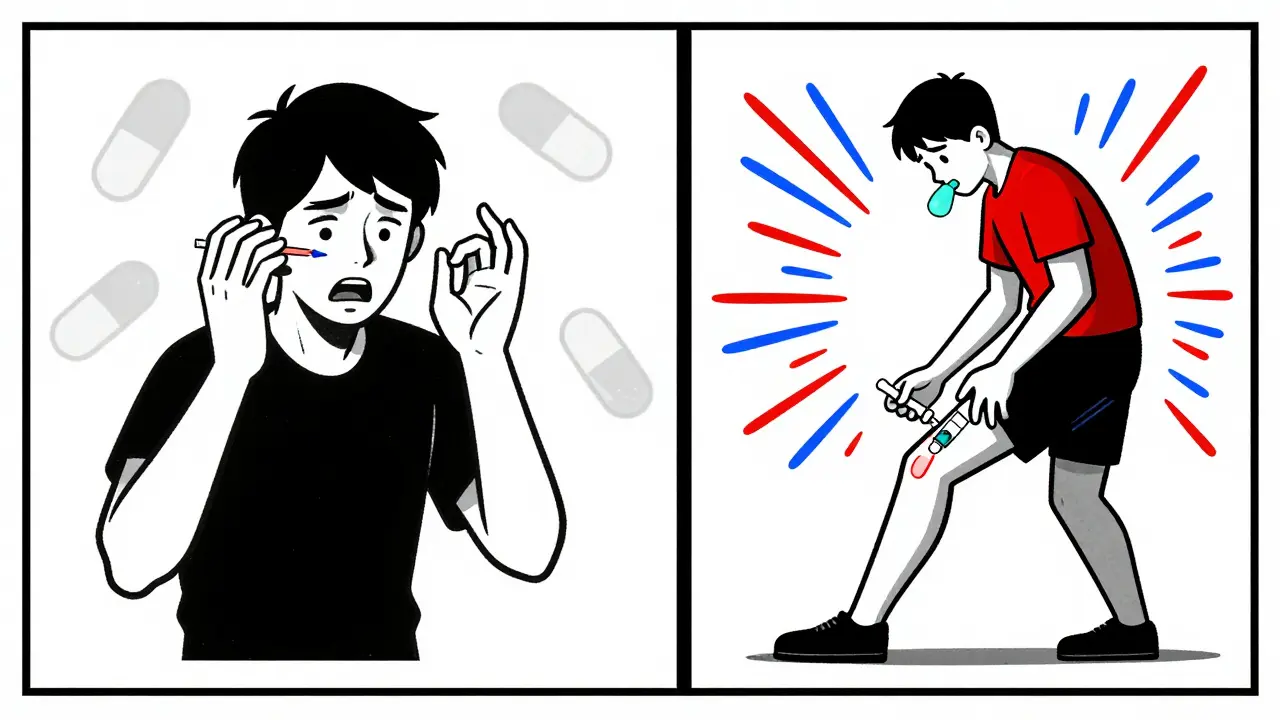
Use epinephrine at the first sign of trouble. Don’t wait for wheezing or collapse. If you feel your throat tightening, your skin breaks out in hives, or you get dizzy after eating, injecting is the right move.And if symptoms don’t improve-or get worse-give a second dose after 5 minutes. Many people don’t know this is safe. Guidelines from the Resuscitation Council UK and the American Academy of Allergy, Asthma & Immunology both say: yes, repeat if needed. About 20% of cases require more than one dose.
Even if you feel better after the shot, you still need to call 911. Anaphylaxis can come back hours later (called a biphasic reaction). You’ll need to be monitored for at least 12 hours in the ER, especially if you have asthma or heart disease.
The Hidden Problems: Why People Don’t Get Help in Time
It’s not just about having the device. It’s about using it.- 43% of people wait too long because they think symptoms aren’t “bad enough.”
- 22% avoid using it because they’re afraid of needles.
- 68% of users don’t inject correctly during practice drills.
And it’s not just patients. In emergency rooms, over half of patients with clear anaphylaxis don’t get epinephrine right away. Hospitals still sometimes try antihistamines first. That’s dangerous.
One study found that the average time to epinephrine after symptom onset is still 15 minutes-despite guidelines saying “give it now.” That delay is why death rates hover around 0.3% to 1%.
Keeping Your Auto-Injector Ready
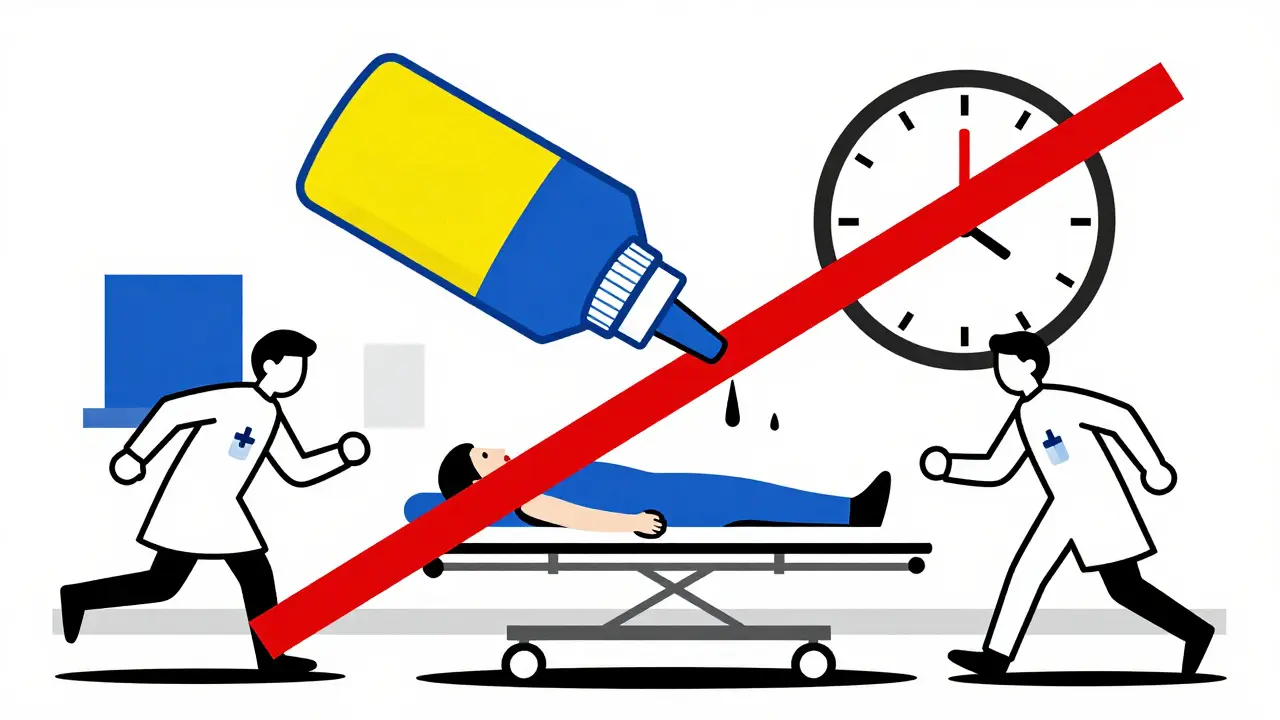
These devices aren’t forever. Most last 12 to 18 months. Heat and cold ruin them. Don’t leave yours in the car, on a windowsill, or in a backpack on a hot day. Store it at room temperature-between 68°F and 77°F.Set phone reminders. Use apps that alert you when it’s expiring. Practice with a training device once a month. If you’re a parent, make sure teachers, babysitters, and coaches know where it is and how to use it. Schools in all 50 states now keep stock epinephrine on hand for emergencies.
Cost is still a barrier. While prices have dropped from $325 in 2016 to $185 out-of-pocket today, 30% of people still skip filling prescriptions because of cost. Insurance helps, but gaps remain. Generic versions are widely available and just as effective.
New Hope: Beyond the Needle
In August 2023, the FDA approved Neffy-a nasal spray version of epinephrine. It’s needle-free, easy to use, and works almost as fast as the injection. For people who freeze up at the sight of a needle, this is a game-changer.Other innovations are coming:
- Smart injectors with Bluetooth that send alerts to your emergency contacts when used
- Longer-lasting formulations (currently in testing)
- Universal school training programs set to roll out in 34 states by 2025
There’s also promising research on omalizumab (Xolair), a monthly injection that can reduce the need for epinephrine by 67% in high-risk food-allergy patients. It’s not a replacement-but it’s a shield.
What You Need to Remember
- Anaphylaxis is fast, dangerous, and treatable-but only with epinephrine.- Don’t wait for symptoms to get “worse.” Act at the first sign.
- Inject into the outer thigh. Hold for 3 seconds. Call 911 even if you feel better.
- Keep your auto-injector at room temperature. Check the expiration date monthly.
- Practice with a trainer. Teach everyone around you.
- Generic epinephrine works just as well as brand names.
- Nasal spray (Neffy) is now an FDA-approved alternative for those afraid of needles.
If you or someone you care about has allergies, this isn’t just medical advice-it’s survival knowledge. The right tool, used at the right time, saves lives. Don’t let fear, confusion, or cost keep you from being ready.
Comments (9)
Jeff Card
March 2, 2026 AT 01:23
I never realized how fast anaphylaxis can hit until my sister had her first reaction. One minute she was laughing, next she couldn’t breathe. We didn’t have an EpiPen on hand. Thank god the cafeteria nurse did. I carry two now. Always.
Matt Alexander
March 2, 2026 AT 06:10
epinephrine is the only thing that stops this. benadryl is a myth. i’ve seen too many people waste time with antihistamines while their airway shuts down. if you think you’re having a reaction, inject first, ask questions later. no exceptions.
Gretchen Rivas
March 2, 2026 AT 12:36
My son’s school keeps a stock injector in the office. They trained all staff last year. I cried when I saw the video. It’s not just about having the tool-it’s about knowing how to use it. Thank you for this.
Mike Dubes
March 4, 2026 AT 11:46
i used to be scared of needles but after my cousin almost died i got over it. got my auvi-q with voice prompts. it says 'inject now' and i swear it saved me from panicking. neffy is a game changer for people like me who freeze up. no judgment, just facts.
Helen Brown
March 5, 2026 AT 09:05
this whole thing is a pharmaceutical scam. epinephrine is just adrenaline. they made it expensive so you’d buy more. i don’t trust the FDA or the drug companies. why not just use ephedrine? it’s cheaper and works the same. why aren’t they telling us this?
John Cyrus
March 5, 2026 AT 19:53
people who wait for symptoms to get worse deserve what they get. if you don’t inject right away you’re not just risking your life you’re wasting paramedics time. stop being lazy and learn how to use your autoinjector. its not that hard
John Smith
March 6, 2026 AT 05:57
y’all act like epinephrine is some magic potion. nah. it’s just a shot. if you’re too scared to stick yourself with a needle then maybe you shouldn’t be eating peanuts or walking around with a bee nest in your pocket. grow a pair. get the damn thing. practice. don’t be a statistic.
Sharon Lammas
March 6, 2026 AT 13:47
i think about how much fear surrounds this. not just of the reaction, but of the shot. we treat it like a failure to have to use it. but really, using it is the bravest thing you can do. it’s not weakness. it’s survival. and we should celebrate that.
marjorie arsenault
March 6, 2026 AT 19:19
if you’re a parent, teacher, or coach-don’t wait for someone to die before you learn this. practice with a trainer device. keep it in your bag. tell your kid’s friends’ parents. make it normal. this isn’t about allergies. it’s about community. we look out for each other.